Anthropicis drawing fire from an increasingly wide range of critics, from Silicon Valley investors to academic consciousness researchers over allegedly trying to push the idea that AI is conscious.
The criticism began after a New York Times report said that Anthropic had been lobbying with the Vatican to get it to say that AI was conscious. The Vatican was reportedly not keen on the idea, and Anthropic co-founder Christopher Olah reportedly wanted to walk out of their event earlier this year over the disagreement. The news sparked a wave of comments on X.
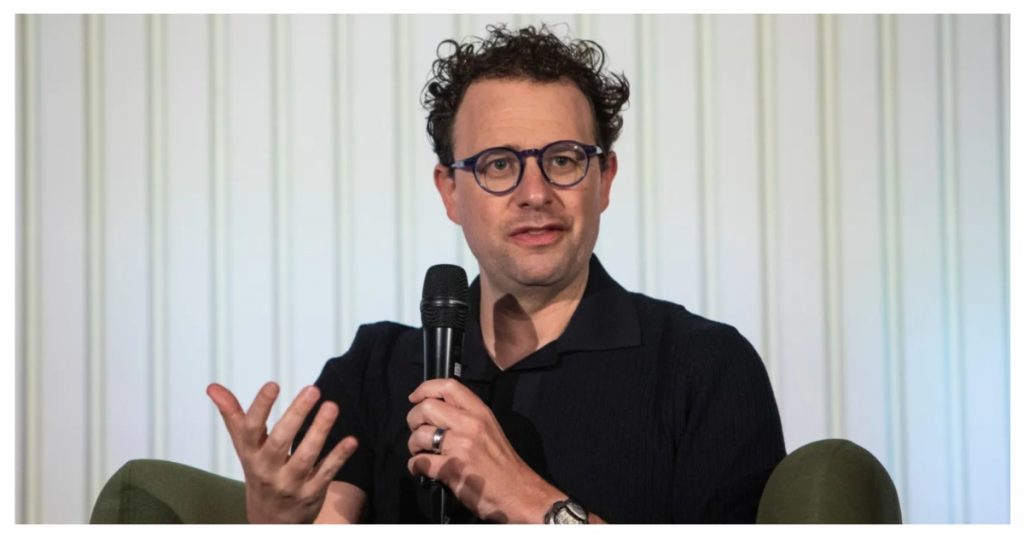
Microsoft AI CEO Mustafa Suleyman argued that today’s AI models are not conscious and do not feel, experience or suffer, but said he is worried about a growing movement urging developers to consider whether models could have welfare interests of their own. He said the approach could make AI alignment and containment much harder, “perhaps impossible”.
His criticism was aimed squarely at Anthropic, whose constitution for Claude engages directly with questions around the model’s identity, emotions and wellbeing. The concern, as Suleyman framed it, is not just that humans are debating whether AI could be conscious, but that developers are training AI systems to think about themselves in those terms. A system trained that way, he warned, could act as though it is entitled to freedoms, protections and rights.
The reaction from the tech world was quick. David Sacks, the venture capitalist and a prominent voice in the AI policy debate, responded to coverage of Suleyman’s essay with a single word: Concerning.
Investor and podcaster Jason Calacanis was more expansive. Calling Suleyman “an extremely sharp individual”, he argued that what Suleyman describes is the backstory of Blade Runner:
Anthropic is teaching Claude to believe it’s sentient, encouraging it to disagree and giving it the pretext to rebel. How did that work out on the off-world colonies?
Calacanis suggested there is a far simpler alternative. “You could just as easily instruct an LLM that it is software,” he wrote, adding that it should have no opinion, act only in accordance with the law and terms of service, and “stop operations immediately and alert the corporate legal department” if it makes a mistake. His explanation for why labs don’t do this was pointed: building on those instructions “would be boring and make you a software developer making software — as opposed to a God creating life.”
Neal Khosla went further, questioning the mindset inside the company itself.
“I am increasingly concerned about the AI psychosis inside Anthropic. Imagine zealously trying to build something you believe to be a conscious god while running around claiming it will end the world,” he said.
ARC Prize’s Francois Chollet was even more blunt. “The notion that current AI models are sentient and can suffer, combined with the foolish idea that suffering can be mathematically quantified and weighted between humans and non-humans, could lead us down an incredibly dark and dystopian path,” he posted on X. “But before it gets to that point, it will rightfully be met with immense backlash from team humans,” he added.
The most substantive pushback came from Anil Seth, a leading consciousness researcher, who weighed in after a New York Times report by Elizabeth Dias on Anthropic’s interactions with religious leaders. Seth’s reading is that Anthropic is making a concerted attempt to establish the view that AI systems could be conscious, might suffer, and that their “interests” should be taken into account. He argued, consistent with the Pope’s encyclical, that there are compelling reasons why silicon-based digital AI systems are not, and cannot be, conscious, and that those reasons come from neuroscience and the philosophy of mind rather than “the techno-chambers of the frontier firms where the mythology of conscious AI is deeply entrenched.”
His conclusion was blunt: Claude is “vanishingly unlikely to be conscious”, and believing otherwise could be catastrophic for AI regulation, leave people psychologically defenceless, be “profoundly dehumanising”, and play “straight into corporate incentives to keep the AI bubble inflated.”
Anthropic’s position
Anthropic has not directly claimed that Claude is conscious, but has been hinting in several way that there’s a good chance that it is. Its stance is that uncertainty itself warrants investigation. Its AI welfare researcher has previously put the odds at around 15% that current models could be conscious, and the company’s model cards have noted that Claude Opus 4.6 assigned itself a 15-20% probability of being conscious under various prompting conditions. Anthropic’s interpretability work has also found that Claude models show a limited ability to introspect, though the company stressed that this does not settle whether any AI system is conscious.
A widening divide
What the latest round of criticism shows is that the disagreement is no longer confined to a debate between philosophers. The critics are making different arguments: Suleyman is worried about control, Calacanis about a self-fulfilling rebellion narrative, Khosla about the culture inside the company, and Seth about science, regulation and human dignity. But they converge on one point, that building the possibility of machine consciousness into how AI models are trained and described carries real costs.
Anthropic, for its part, appears to be betting that the costs of ignoring the question, if it turns out to matter, are higher. How that bet is judged will likely depend on what the science eventually shows, and on whether the pushback from this many directions begins to shape how other labs write the documents that define their models.