AI continues to smash decades-old math conjectures with ease.
Researchers from Google and the University of Illinois have posted a paper on arXiv claiming a proof of Hadwiger’s covering conjecture in three dimensions, a problem in geometry that has stood open since 1957. The proof, which runs to roughly six pages, was discovered by an experimental system built on top of Google’s Gemini 4 model, and was then checked line by line by a computer proof assistant called Lean.
“The 70-year-old 3D Hadwiger conjecture is solved!” wrote Goran Žužić of Google Research, who co-authored the paper with Dror Aiger of Google and Sariel Har-Peled, a computer scientist at the University of Illinois Urbana-Champaign. “With Dror Aiger & @sarielhp: a ~6-page proof found with our Gemini 4 solver & Lean verified!”
What the problem actually asks
The conjecture sounds deceptively simple. Take any solid, convex 3D shape: a convex shape is one without dents or holes, like a ball, a cube, an egg, or a pyramid. Now ask: what’s the smallest number of slightly shrunken copies of that same shape you’d need to completely cover the original?
For a cube, the answer is easy to picture. Shrink the cube slightly, place one copy over each of its eight corners, and together they cover it. Fewer won’t work, since each copy can cover only one corner. Swiss mathematician Hugo Hadwiger conjectured in 1957 that the cube is the worst case: no convex 3D shape, however strange or lopsided, should ever need more than eight shrunken copies of itself.
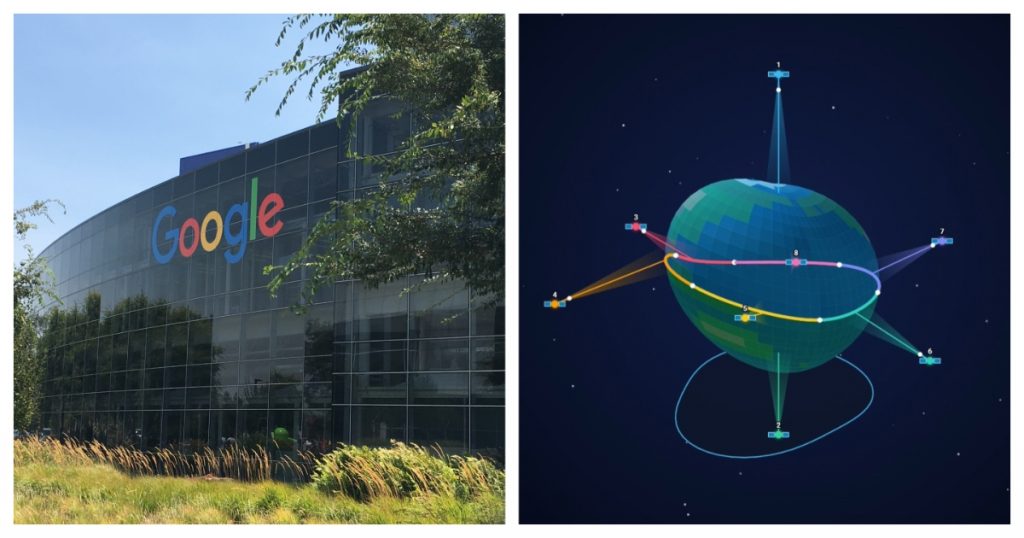
Žužić offered a more vivid version of the same question. Imagine a convex planet floating in space, and satellites parked very far away, each shining a beam of light from a fixed direction. How many satellites do you need so that every point on the planet’s surface is lit? Mathematicians have known for decades that this “illumination” puzzle is equivalent to the covering problem, and Hadwiger’s conjecture says the answer is always at most eight.
The flat, two-dimensional version was settled in 1955: four copies always suffice. But in three dimensions, progress was painfully slow. In 1984, Marek Lassak proved the bound of eight only for shapes perfectly symmetric about their center. For general shapes, the best anyone had shown was 16, later lowered to 14 by Andriy Prymak in 2023.
How the proof works, in plain terms
The new paper closes that gap for every convex body in three dimensions. Roughly speaking, the argument uses two of its eight “satellites” to shine from opposite directions along a cleverly chosen axis, which lights up most of the shape’s surface. What’s left is a thin band around the shape’s “waist,” the boundary between the half lit from above and the half lit from below. The authors then show that this band is always short enough to be chopped into six pieces, each of which can be lit by a single additional satellite. Two plus six makes eight.
The trickiest part is proving that a suitable axis always exists. The paper averages over every possible direction and shows the band can’t be too long on average, so at least one direction must work. The cube turns out to be exactly the borderline case, and is handled separately.
Where Gemini 4 comes in
The most remarkable thing about the paper may be how it was produced. According to the authors, an experimental harness at Google built on a model the paper calls “Gemini 4 Carbon” discovered the proof with minimal human steering from Aiger and Žužić. An agentic system running on the same model then translated the argument into Lean 4, a programming language in which mathematical proofs can be checked mechanically by a computer. The resulting formalization runs to more than 13,000 lines of code across 34 files, and contains no unproven gaps. The three authors then verified the mathematics and wrote the paper.
That combination matters. A long-standing worry about AI-generated mathematics is that models produce arguments that look convincing but hide subtle errors. A Lean-verified proof sidesteps that: if the code compiles, the logic is sound, whoever wrote it.
This is part of a fast-moving pattern. Google’s Gemini models previously earned an official gold medal at the International Mathematical Olympiad, and a specialized Gemini later helped prove a new theorem in algebraic geometry that drew praise from the president of the American Mathematical Society. OpenAI’s models have also been chipping away at open problems, from a string of Erdős problems to the disproof of Erdős’s 80-year-old unit distance conjecture earlier this year. But many Erdős problems that fell to AI turned out to be obscure rather than truly hard. Hadwiger’s conjecture is different: a well-known, heavily studied problem that many strong mathematicians have attacked without success.
Why it matters beyond mathematics
Covering shapes with smaller copies might seem esoteric. But the significance lies less in the geometry than in what it says about the tools: a system that can find a short proof of a 70-year-old problem, and then formally verify it, is doing genuine research rather than remixing known results.
Fields Medalist Terence Tao has argued that mathematics is entering an era of “proof abundance”, in which AI makes finding and checking proofs dramatically cheaper, and has said that AI lets him experiment and try crazier ideas. The Hadwiger result fits neatly into that picture: humans picked the problem and checked the answer, while the machine did much of the creative heavy lifting in between.
Some caution is warranted. The paper is a preprint that has not been peer reviewed, and the conjecture remains open in four dimensions and higher. But if the result holds up, and the formal verification suggests it will, it will stand as one of the clearest examples yet of AI resolving a famous, long-standing open problem.