When things aren’t going well at a company, it can sometimes help to go back to the drawing board.
NVIDIA CEO Jensen Huang recently opened up about a moment in the company’s early history that most people don’t know about, one where the company he’d just started was built on the wrong technology entirely, and the only way out was to admit it and start over from a textbook.
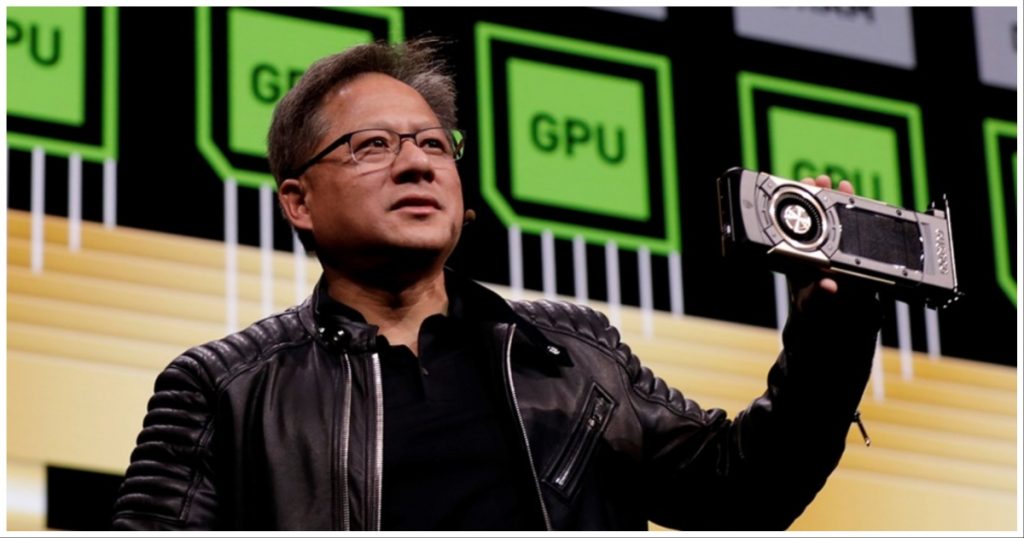
Huang recalled that NVIDIA’s founding bet on 3D graphics simply didn’t hold up. “Well, it turns out the algorithm was exactly wrong. And the technology that founded the company turns out to be exactly wrong,” he said. By 1995, when the company figured this out, the market had already filled up with competitors chasing the same prize. “It was almost too late, because by then there were some 35, 40 other companies that were building 3D graphics for PCs,” Huang said. He went back to his team with a blunt question: what were they going to do, given that what they’d built didn’t actually work?
The honest answer was worse than just picking the wrong approach. Nobody at the company knew what the right approach even looked like. “Not only did we choose the wrong technology, we didn’t know how to do it the right way,” Huang admitted. That’s the kind of realization that ends companies, particularly ones as young and undercapitalized as NVIDIA was at the time, competing against three dozen rivals with a head start.
Huang’s response to this was almost aggressively unglamorous. He had a couple hundred dollars on him, so he drove to Fry’s Electronics and bought three textbooks on OpenGL and pipeline design, then handed them to his engineers and told them to figure it out. There was no outside consultant, no acquisition, no pivot meeting with slide decks. Just three books bought with pocket money, given to the people who needed to relearn their own field from scratch.
It worked. NVIDIA rebuilt its graphics approach around what those textbooks taught, and the company that nearly folded over a wrong bet went on to define the field it had almost gotten thrown out of. “We reinvented computer graphics. We’re the world leader in modern computer graphics. We invented most of the major breakthroughs in the last 25 years,” Huang said. The company people assume was always ahead of the pack in 3D graphics actually learned the discipline from a book bought at an electronics store. As Huang put it, “we actually started the company, raised money, and bought textbooks, when you think about it.”
The story is a useful data point for how Huang thinks about running the company today, decades and roughly $4 trillion in market value later. His own account of NVIDIA’s org chart being built like a computing stack comes from the same instinct, to stay adaptable rather than lock the company into a structure that can’t respond when the ground shifts. His use of “Top 5” emails from employees to stay close to what’s actually happening across the company is the same logic applied at scale, catching problems before they turn into a 1995-style reckoning.
Huang has also spoken about crediting his willingness to absorb hard feedback to how he was raised, and the near-collapse in 1995 looks like an early, high-stakes example of that trait in action. Admitting the foundational technology was wrong, in front of the engineers who’d built it, is not a comfortable thing to do. Doing it anyway, and then handing out reading assignments instead of excuses, is presumably a big part of why NVIDIA is still around to tell the story.