Asian parents are notoriously hard on their children while they’re in school, but some of the effects can remain with them well into their more advanced years.
NVIDIA co-founder and CEO Jensen Huang — the man who has built one of the most valuable companies in the world — recently traced his capacity to absorb criticism, stay humble, and keep learning back to a single source: his parents. Speaking at an industry event, Huang, 63, offered an unusually candid and self-aware account of how his upbringing shaped not just his personal character, but his entire philosophy of leadership at NVIDIA.
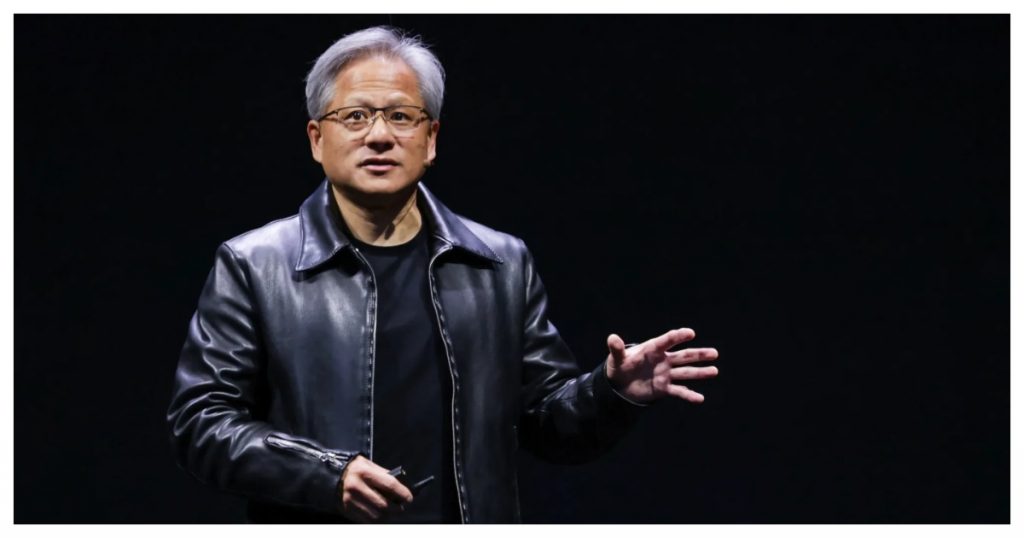
“Once you’ve been raised by Asian parents, you need therapy for life,” Huang opened to giggles from the audience. “My parents were hard on me. My parents are classical Asian parents. If there are any Asian parents in the room, you know what I’m talking about.”
Huang described growing up with parents who were relentless in their effort to push him toward his potential — something he framed as an expression of love rather than harshness. “So when I was growing up, I call my mom and dad the Chinese parents — they’re always improving you. And so I’m 63 years old, I think I worked longer than my dad worked. They always have ideas for how we can be better. They love us, and they want to help us realize our potentials.”
He then got to the heart of it — the particular grammar of affection that many children of Asian immigrant parents will recognise instantly. “Their way of showing love is to criticize you. That’s their way of saying, ‘I love you. I want you to be better. It looks like you did the best you could, but that’s not good enough.'”
What makes this more than a nostalgic aside is what Huang says it produced in him. “Because I was raised that way, I have no trouble taking criticism. I have no trouble learning new things. I have no trouble being humble. I treat NVIDIA that way. And so all the managers, all the executives — they go, ‘I know exactly what he’s talking about.'”
He closed with a pointed observation about what real investment in someone looks like. “If I care about you, I will dedicate myself to give you good criticism. Very thoughtful, very detailed criticism. It’s a lot easier to say ‘good job.’ Hey, good job.”
That last line cuts to the core of how Huang thinks about leadership. Praise is cheap and effortless. Serious, detailed criticism requires time, attention, and a genuine stake in someone’s growth. For Huang, defaulting to “good job” is a form of neglect dressed up as positivity.
This fits neatly with everything that has emerged about how Huang actually runs NVIDIA. He has long been described by his own employees as a demanding perfectionist who is not easy to work for — a label he accepted without hesitation when confronted with it directly. His logic: if you want to do extraordinary things, it shouldn’t be easy. The company’s internal systems reflect this too. NVIDIA’s “Top 5” email culture — in which employees at every level write weekly memos on their most important priorities, which Huang then samples by the hundreds — creates an environment of constant visibility and accountability. There is no place to hide mediocrity in a system like that, and that appears to be entirely by design.
What Huang is describing, at its core, is a cultural inheritance that Silicon Valley often struggles to articulate: the idea that rigorous, honest feedback is an act of respect. The alternative — a workplace full of easy affirmation — might feel kinder, but it tends to produce organisations that can’t diagnose their own problems. For NVIDIA, which has built its identity around radical technical depth and relentless self-improvement, the culture Huang describes from his childhood appears to be very much alive in how the company operates today.