As AI keeps making new breakthroughs in mathematics, humans might still have a way to stay relevant.
Elon Musk thinks the answer is Neuralink. Responding to a viral post about AI’s accelerating mathematical prowess, Musk offered a characteristically blunt diagnosis — and a characteristically audacious fix: “Our brains lack a math co-processor, but Neuralink can probably provide that one day.”
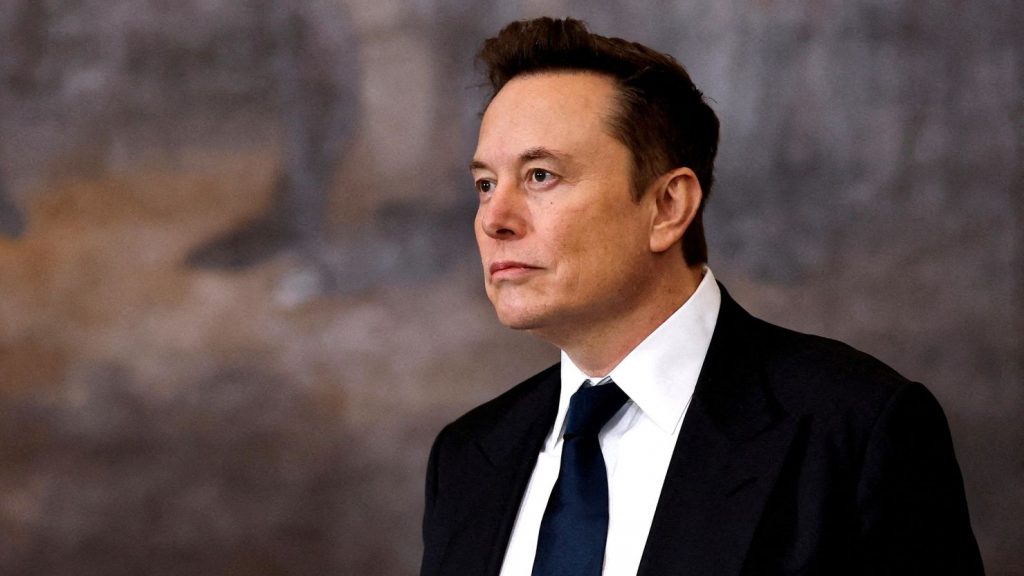
The comment came in response to Steve Newman, co-founder of Writely (which became Google Docs) and a two-time IMO silver medalist, who argued that humans may simply be poorly optimized for advanced mathematics. “A gibbon would scoff at an Olympic climber,” Newman wrote. “The human body is not optimized for climbing. We’re getting mounting evidence that our brain may be far from optimal for advanced math.” The post was a direct reaction to OpenAI’s latest breakthrough — an internal reasoning model solving the planar unit distance problem, an 80-year-old open conjecture in combinatorial geometry posed by mathematician Paul Erdős in 1946. The proof was independently verified by leading mathematicians, with Fields Medalist Tim Gowers calling it “a milestone in AI mathematics.” Marc Andreessen quoted the post with a simple “Sensible.” Musk’s reply followed.
The Evidence Is Piling Up
This isn’t an isolated event. AI models have been racking up mathematical milestones at a pace that would have seemed implausible just three years ago. OpenAI’s models have claimed gold medals at the International Mathematical Olympiad. GPT-5.2 helped crack Erdős Problem #281, which Terence Tao described as perhaps the most unambiguous instance of AI solving an open mathematical problem. Even programming legend Donald Knuth was reportedly stunned when Claude solved an open problem he had been working on for weeks.
The Erdős unit distance proof is significant because it isn’t a competition problem with a known solution structure. The AI autonomously connected discrete geometry to algebraic number theory — specifically applying Golod–Shafarevich theory — a leap that no researcher in the field had thought to make. It didn’t retrieve a known answer. It found a new one.
Newman places math somewhere on what he calls the midpoint of Moravec’s paradox — harder than chess (where computers surpassed humans some time ago), easier than cooking (where general machine capability remains years away). The implication: math is precisely the kind of task where machines are primed to pull ahead fast.
What Neuralink Has to Do With It
Musk’s framing is telling. He isn’t arguing that humans can beat AI at math as-is. He’s conceding the hardware gap and proposing an upgrade. Neuralink, his brain-computer interface company, has so far focused on medical applications — helping patients with paralysis control computers using only their thoughts. But the longer-term vision has always been cognitive augmentation: expanding what the human brain can perceive, process, and compute.
Musk’s original pitch for Neuralink was never limited to accessibility. From the start, he framed it as a hedge against AI — a way for humans to keep pace as machine intelligence scales. A math co-processor, in that context, isn’t a metaphor. It’s a literal product roadmap item.
Whether Neuralink can deliver on that in any meaningful timeframe is a different question. The implant currently works by picking up neural signals, converting them to electronic signals, and transmitting them via Bluetooth — useful for motor control, not yet for augmenting abstract reasoning. The gap between “move a cursor with your mind” and “solve open problems in combinatorial geometry” is vast.
The Assessment
Newman is careful to note what AI still can’t do. It has not demonstrated the ability to identify interesting research directions on its own, or develop new conceptual frameworks that others can build upon. The Erdős proof was creative, but it was a proof — a solution to an already-specified problem. Choosing which problems matter, building new mathematical language, and setting research agendas remain distinctly human activities. For now.
The honest read of the moment is this: AI is becoming superhuman at executing mathematical reasoning within existing frameworks. Humans retain an edge at deciding what’s worth reasoning about. Musk’s bet is that the former gap can be closed by upgrading human hardware before the latter gap closes on its own.
That’s either a reasonable contingency plan or a very optimistic timeline — probably both.