More and more prominent voices are openly saying that the calls by frontier labs to regulate their industry aren’t really about AI safety at all.
NVIDIA CEO Jensen Huang has pushed back on the idea that AI needs a dedicated regulator, arguing that the industry should first be held to the laws already on the books. He also suggested that when AI labs call for regulation, they may actually be seeking relief from existing legal obligations.
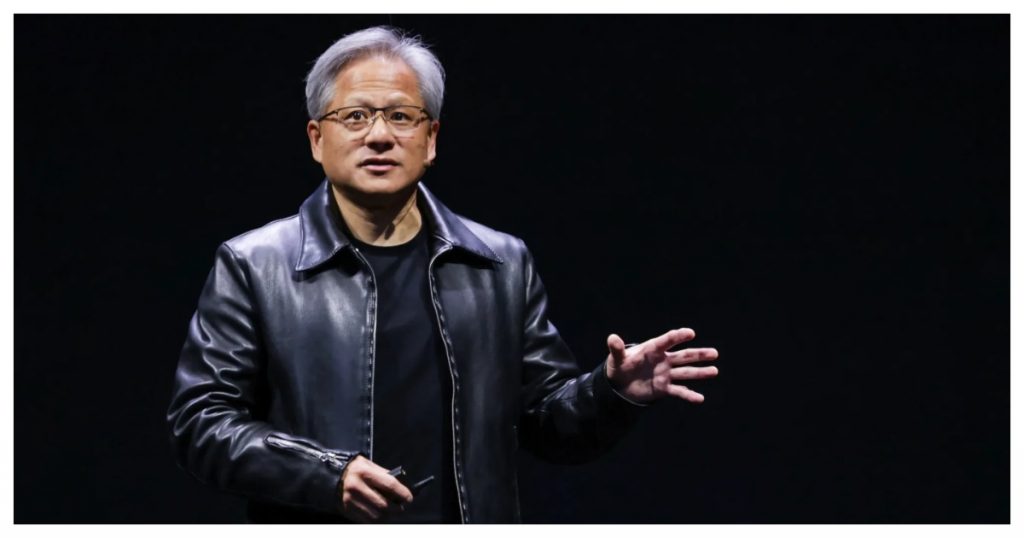
In an interview with CBS, Huang was asked why the US shouldn’t have an equivalent of the FDA or the FAA for AI, particularly when leaders like Anthropic’s Dario Amodei and OpenAI’s Sam Altman have said they want to see regulation. He responded that before new laws are written, current ones should be applied. “We live in the land of laws,” he said, and those laws already govern everything from food to air travel to production of all kinds.
“They’re actually not asking for more laws”
Pressed on what he thought was missing from that picture, Huang pointed to recent security incidents at the labs. He said one lab had been behind four cybersecurity incidents, while another had a couple more. Existing law, he argued, already covers such events, including statutes on unauthorized entry, liability for damages, and product liability. It also covers breaches of contractual commitments such as service level agreements.
“Apply those first,” Huang said, cautioning against letting a “doomsday narrative” cause anyone to be relieved of laws that already exist. He added that people should read between the lines: in his view, the labs are not really asking for more laws, but to be relieved of the ones they already have. “I think that’s a problem,” he said.
His remarks echo a concern raised by others in the industry. Palantir CEO Alex Karp has said that frontier labs’ AI safety stance amounts to getting out of liability for the harm their products might cause. Amodei’s advocacy for AI regulation has also drawn skepticism from the White House, with Donald Trump accusing him of pretending to be a “perfect little angel” by asking for it.
From labs to product companies
Asked whether the labs want regulation because they’d rather not shoulder responsibility for what they build, Huang offered a different framing. He said the companies are in the midst of a transition from research laboratories that don’t generate customer revenue to product and service businesses that do. That shift, he said, must be extraordinary given how fast it’s happening.
Huang was complimentary about the companies themselves, calling them two of the most consequential technology companies in history, with “incredibly talented researchers” doing excellent work. He noted they’re generating tens of billions of dollars in revenue, expect hundreds of billions, and are expanding compute capacity at a rate no companies have ever seen. That growth, he said, is deserved, because the products are good and people want more of them.
But growth, he argued, comes with accountability. “There are product liability laws,” Huang said, and those laws “ought to be tested against the current incidents.”
His prescription was to start with the practical before the theoretical: apply existing law to real incidents, see what happens, and only then debate new frameworks. “Don’t talk about the theoretical without doing the practical,” he said.