The AI boom has made billionaires out of chip designers, model builders, and cloud landlords. It has now also crowned the world’s wealthiest drawer-slide maker.
Lin Tsung-chi, the 85-year-old founder and chairman of Taiwan’s King Slide, has become the island’s richest person with a fortune of roughly $17.8 billion, according to Forbes’ real-time billionaires list. He passed Yageo founder Pierre Chen and Foxconn’s Terry Gou as King Slide’s stock climbed past NT$13,000 — only the third stock in Taiwan’s history to trade above NT$10,000.
What does King Slide sell? Nothing that would fit on an AI keynote stage. The company makes drawer slides and precision rail kits — the metal rails that let engineers slide hundred-kilo AI server chassis out of their racks for maintenance. It’s a component that accounts for perhaps 1% of a server’s cost, but a failure brings down an entire rack of GPUs worth hundreds of thousands of dollars. Hyperscalers, understandably, don’t bargain here.
That leverage shows in the numbers. King Slide controls an estimated 80% of the global market for server slides, holds more than 3,600 patents, and posted a gross margin of 87.4% last quarter — better than Nvidia’s.
Lin’s path to the top was anything but straight. He left school after the fourth grade, apprenticed as a furniture maker, and founded King Slide in 1986 in Kaohsiung as a humble drawer-slide factory. In 2000, when a customer representing 40% of his revenue demanded a 30% price cut, he refused and lost the account. The crisis pushed him into server racks. A $100,000 trial order from Compaq — delivered in a week — became the break, with IBM and Quanta following.
The comparison that captures the moment: the man who makes the rails inside the world’s AI data centers is now worth more than Anthropic CEO Dario Amodei ($15.5 billion), Foxconn founder Terry Gou ($15.5 billion), TSMC founder Morris Chang ($10.2 billion), SK Group chairman Chey Tae-won ($5.5 billion), and OpenAI CEO Sam Altman ($3.3 billion). Altman famously holds no equity in OpenAI; Amodei has pledged to give away most of his fortune as Anthropic heads toward a reported IPO. Lin makes hardware that slides.
AI has created some unprecedented wealth in recent years, and AI infrastructure has had a big role to play in it. DeepSeek’s Liang Wenfeng became the world’s richest AI founder while OpenAI signed infrastructure deals worth trillions. While Nvidia rearchitects its org chart around the computing stack; King Slide owns the humblest layer in it. The picks-and-shovels trade has never been this profitable.
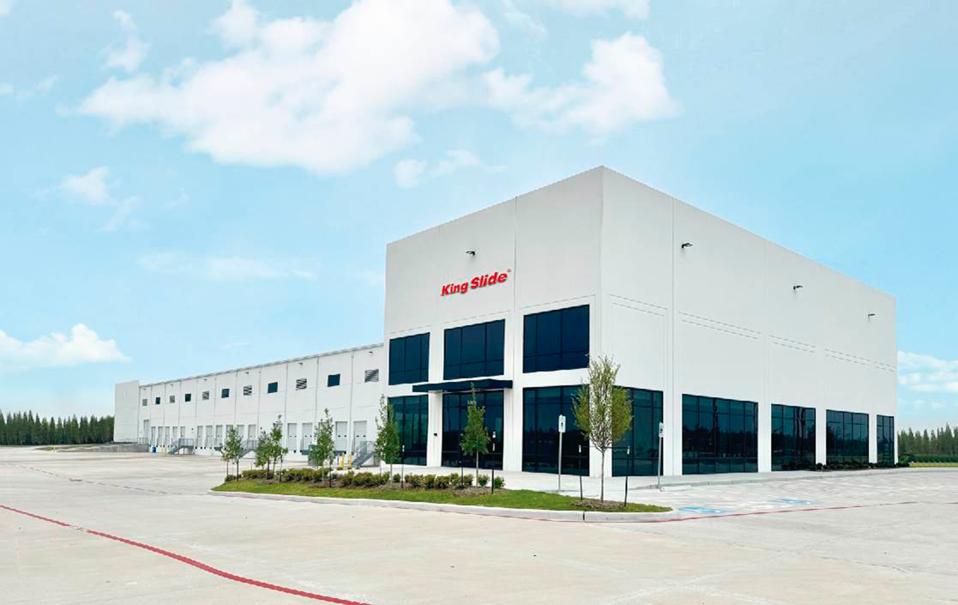
There are some cracks though. The Wall Street Journal reports Nvidia is qualifying second sources for rail kits, and King Slide’s share of Nvidia-related orders could slip toward 75% next year. Its new Houston plant, meant to serve US demand, is only starting production this quarter.
For now, though, Silicon Valley’s favorite abstraction has met its physical limit. The industry spent years debating AI alignment — getting models to align with human values. The most lucrative version turned out to be mechanical: two strips of steel, aligned precisely enough that a rack full of $40,000 GPUs never hits the floor.