NYU finance professor Aswath Damodaran, often called the “Dean of Valuation,” says Nvidia’s biggest long-term risk isn’t demand, it’s the sheer strangeness of the business model that has made the company the most profitable chipmaker on earth.
In a recent conversation, Damodaran drew a sharp contrast between Nvidia and a company like Coca-Cola. Coca-Cola, he said, is boring, but that’s precisely its strength: the business model is “set in stone,” margins are stable, and a company that predictable can be projected out ten years with reasonable confidence.
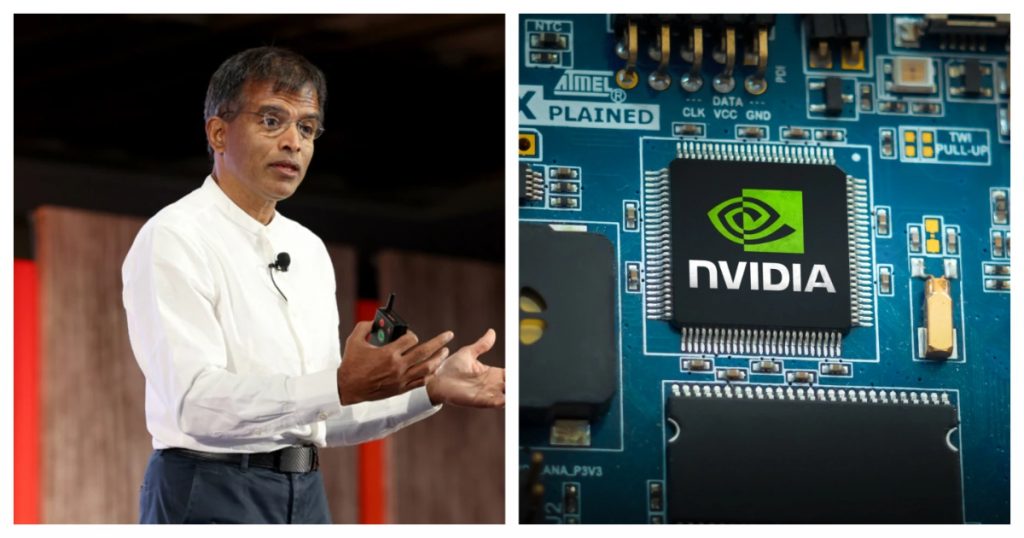
Nvidia is the opposite. “Nvidia has an astonishing business model, a business model that if I described it to you before Nvidia came along, you’d say there’s no way a company can pull that off,” Damodaran said. Here’s what it actually does: it designs chips, hands manufacturing entirely to TSMC so it carries none of the capital burden of owning fabs, then marks those chips up 800 to 900 percent and sells them to Meta, Alphabet, and Microsoft.
A Model Built On Tension At Both Ends
What makes this arrangement so unusual, in Damodaran’s view, is that it is “rife with tension at both ends.” On one side is TSMC, the company that actually manufactures the silicon and might reasonably ask why it’s letting Nvidia capture the bulk of the upside. On the other side are Nvidia’s own customers, Meta, Alphabet, and Microsoft, who could just as easily ask why they’re accepting such steep markups in the first place.
The answer, for now, is straightforward: these companies are in such a desperate race to build AI data centers that Nvidia’s chips have become the only practical way to do it, and they’ve decided, at least for the moment, that the premium is worth paying.
That dynamic isn’t new, Damodaran noted. It has “always been the case, even in its glory days.” What’s changed is the question investors should be asking. It was never really about whether Nvidia’s extraordinary margins would eventually compress, he argued, but about what forces would cause that compression to arrive sooner rather than later.
Why 70% Can’t Stay 70%
The numbers make the stakes clear. A typical chip company runs operating margins around 40 percent. Nvidia’s are closer to 70 percent, which is the entire reason the market has been willing to pay such a steep premium for the stock. But Damodaran doesn’t believe that number is sustainable. “The seventy cannot stay seventy because you’re gonna get tensions on both ends,” he said.
That pressure is already visible. NVIDIA’s stock has slipped in recent weeks amid reports that the US Securities and Exchange Commission is examining the company’s accounting practices, adding a fresh layer of scrutiny to a business already under pressure with its leadership challenges.
Meanwhile, the customer-side tension Damodaran describes is playing out in public. Meta and Microsoft are both actively developing their own in-house AI chips, a move explicitly aimed at avoiding the premium they currently pay Nvidia. It’s a direct, rational response to the economics Damodaran lays out: if you’re spending tens of billions of dollars a year on GPUs, building your own silicon starts to look like the cheaper long-term bet, even if the chips themselves are initially less capable.
Damodaran is careful to frame this as erosion, not collapse. Nvidia, he says, remains a “money-making machine.” But a business built on an 800-900 percent markup, sustained only because every party at the table is currently too dependent to push back, is structurally different from a business like Coca-Cola’s, where the margins simply don’t move much from year to year. For Nvidia, the question investors need to keep asking isn’t whether the pressure will show up, it’s how fast it will.