The widening US scrutiny of NVIDIA’s China exposure has turned up another uncomfortable connection, and this one runs straight through the company’s sales organisation.
Jay Puri, who ran NVIDIA’s global sales for more than two decades, is married to Cenly Chen, a longtime senior executive at Supermicro, according to a report by The Information. The two told colleagues about the marriage this year. Supermicro is one of NVIDIA’s most important server partners, and it was Supermicro employees who were charged by US prosecutors in March with conspiring to smuggle banned NVIDIA servers to China.
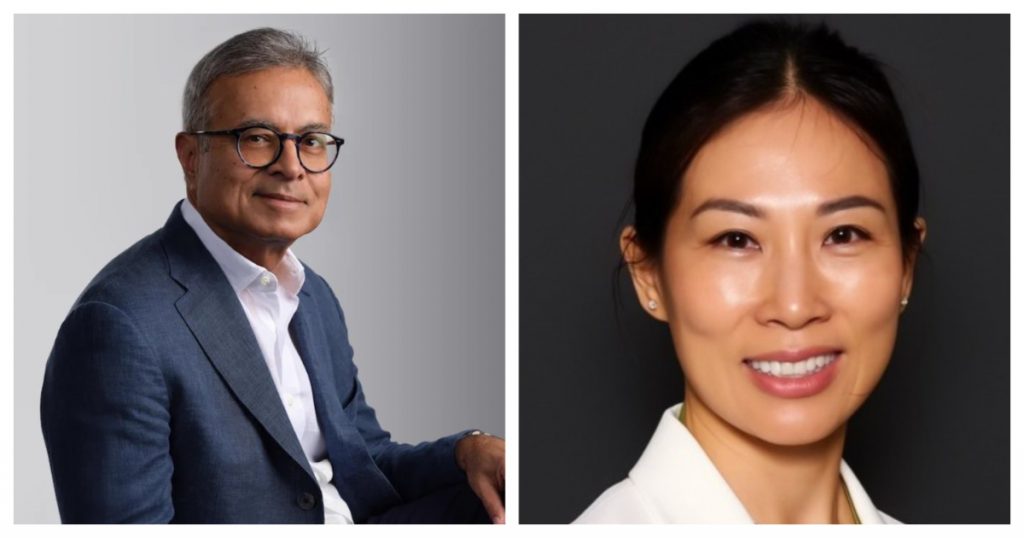
“As U.S. probes of Nvidia go on, many roads lead to Jay Puri, its longtime former sales chief, who oversaw customers (and dealt w/folks incl Alice Huang) and is married to a former Supermicro executive,” The Information’s Amir Efrati wrote on X.
Who Is Jay Puri
Ajay K. “Jay” Puri is one of the most senior and longest-serving executives in NVIDIA’s history. He joined the company in 2005 as senior vice president of worldwide sales after a 22-year career at Sun Microsystems, where he held sales, marketing and general management roles, including heading Sun’s Asia-Pacific group and serving as president of Nihon Sun in Japan. Before Sun, he worked at Hewlett-Packard, Booz Allen Hamilton and Texas Instruments.
In 2009, Puri was promoted to executive vice president of worldwide field operations, a role that covered global sales, business development and partner alliances. That made him the executive responsible for NVIDIA’s relationships with its biggest customers and partners, from hyperscalers to server makers like Supermicro, through the entire AI boom. He reported directly to Jensen Huang and, as NVIDIA’s market value soared, became one of the company’s billionaire executives alongside Huang and Colette Kress.
Puri, 71, told NVIDIA in June that he would retire after 21 years. Former Microsoft sales chief Nick Parker succeeded him on August 24, 2026, and Puri moved into a senior advisory role.
Who Is Cenly Chen
Cenly Chen spent about 18 years at Supermicro after joining in 2008. She first served as corporate vice president and SVP of sales, and later became senior vice president, chief growth officer and managing director. During her time there, Supermicro grew from a mid-sized server maker into one of the largest suppliers of NVIDIA-powered AI infrastructure. Before Supermicro, she held consulting, engineering and project development roles at Ericsson, AT&T and Global Crossing.
Chen left Supermicro in April, roughly a month after the smuggling charges were announced. In May, she was named CEO and a board member of ChronoScale, a Dallas-based, Nasdaq-listed AI compute company formed through a combination of Applied Digital’s cloud business and EKSO Bionics. Chen has not been charged with any wrongdoing.
The Supermicro Smuggling Case
In March 2026, federal prosecutors in Manhattan unsealed an indictment against Supermicro co-founder and board member Yih-Shyan “Wally” Liaw, Taiwan-based sales manager Ruei-Tsang “Steven” Chang, and outside contractor Ting-Wei “Willy” Sun. Prosecutors allege the three helped route around $2.5 billion worth of servers containing advanced NVIDIA chips to China between 2024 and 2025, using a Southeast Asian pass-through company as a front.
According to the indictment, servers assembled in the US were sent to Supermicro’s facilities in Taiwan, then on to the Southeast Asian buyer, where a logistics firm repackaged them into unmarked boxes and shipped them to China. To fool Supermicro’s compliance team, the defendants allegedly staged warehouses full of dummy servers and used hair dryers to peel serial-number stickers off real machines and move them onto fakes. About $510 million worth of servers, including systems with NVIDIA’s B200 and H200 chips, were allegedly diverted in just a three-week window in 2025.
Supermicro was not named as a defendant. CEO Charles Liang said the company had been a victim of the scheme, and Liaw resigned from the board. The firm later identified by Bloomberg as “Company-1” in the indictment, OBON, was also tied by short seller Culper Research to the same network it linked to Megaspeed.
The case has spread beyond the US. In August, prosecutors in Taiwan indicted nine people over Supermicro servers built on NVIDIA B300 chips that ended up with Chinese buyers. Those charged included two former employees of Supermicro’s Taiwan branch, and prosecutors described a distribution manager at NVIDIA’s own Taiwan office as the key figure in approving the release of the GPUs. Neither NVIDIA nor Supermicro was charged.
Why The Marriage Matters Now
The revelation comes at a moment when NVIDIA is under more pressure than at any time in its history. The company’s board opened an independent investigation earlier this month after reports that Jensen Huang had a relationship with Alice Huang, a Megaspeed executive US officials believe was a Chinese intelligence asset. Huang admitted to employees that he had been unfaithful to his wife, and resigned as CEO on November 12.
Megaspeed became NVIDIA’s largest buyer in Southeast Asia, purchasing around $4.8 billion of equipment, and US authorities have been examining whether those chips were diverted to China. Indonesian police reportedly found empty server racks at a Megaspeed subsidiary earlier this year. NVIDIA has said its own review found no evidence of diversion, and neither Megaspeed nor Alice Huang has been charged.
As head of worldwide field operations, Puri oversaw the sales relationships at the centre of both stories: NVIDIA’s dealings with customers like Megaspeed, and its partnership with server makers like Supermicro. His marriage to one of Supermicro’s most senior executives, during the same years that Supermicro employees were allegedly diverting NVIDIA-powered servers to China, raises obvious questions about potential conflicts of interest and what NVIDIA’s leadership knew about the arrangement. There is no suggestion that Puri or Chen were involved in the alleged smuggling.
NVIDIA’s board has since set up a National Security and Export Control Oversight Committee to oversee trade compliance. With US probes still ongoing, the people who managed NVIDIA’s most sensitive customer and partner relationships during the AI boom are likely to face much closer scrutiny.