Nvidia has never had a CEO other than Jensen Huang. He co-founded the company in 1993, still runs it as president and CEO, and has about 60 people reporting directly to him. There is no chief operating officer, and Nvidia has not named a successor. Huang has said he prefers to pass on knowledge continually and hopes his eventual replacement already works at the company.
That gap has become a live problem. The Wall Street Journal reported that the board is preparing to oust him after two reported extramarital affairs, and Bloomberg says the board has been working with an outside firm to identify potential replacements and is weighing a temporary chief. Prediction markets now see an exit as likely. The board has not announced any decision, and nothing has been reported about whom it is considering.
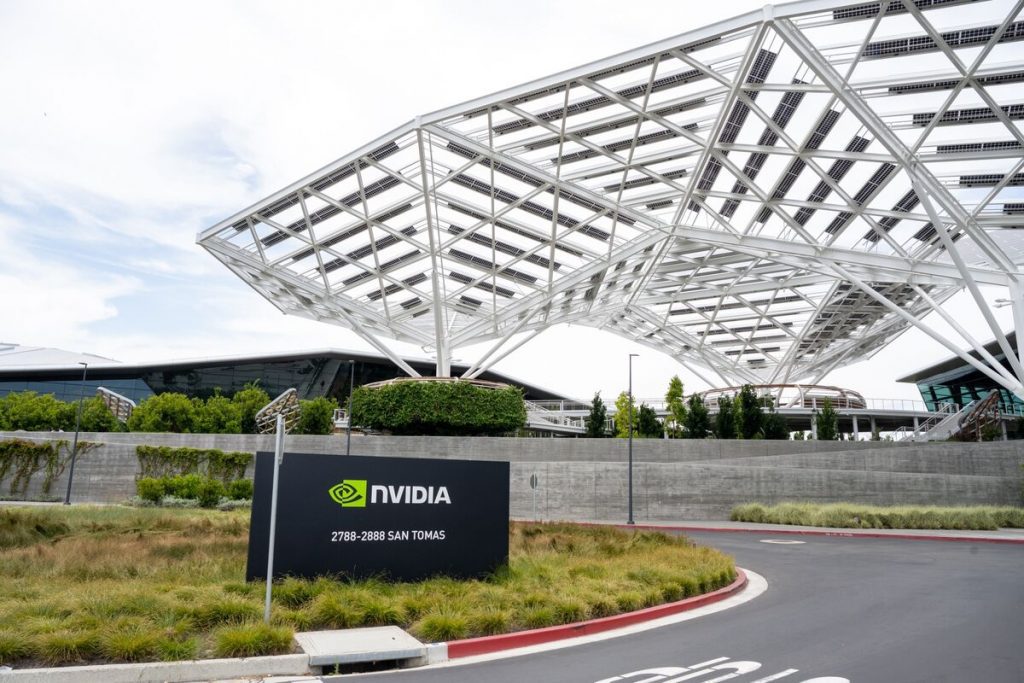
Here are the Nvidia insiders most often discussed by analysts and the press, and the case for and against each. The names come from outside speculation, and the assessments of strengths and weaknesses are our own reading of their public records.
Colette Kress, Executive Vice President And Chief Financial Officer
Kress, 58, is the name that comes up most often. She joined Nvidia in 2013 after finance roles at Microsoft, Cisco and Texas Instruments, and runs financial planning, investor relations and corporate development. She is one of Nvidia’s four executive vice presidents, and the person investors hear from every quarter when the company reports results. Her case rests on knowing the company’s numbers and commitments better than almost anyone, and on credibility with Wall Street at a moment when investor confidence is fragile. Analyst Dan Ives has suggested she could serve as interim CEO. The Information has reported she is not seen as a long-term pick, and Bloomberg has noted that tech giants rarely choose a finance chief as CEO. She would be the steady-hand option rather than the visionary one.
Ian Buck, Vice President And General Manager, Hyperscale And High-Performance Computing
Buck is the inventor of CUDA, the software platform that turned Nvidia’s chips into the default tool for AI and underpins its dominance. He joined Nvidia in 2004 after a Ph.D. in computer science at Stanford, where he led development of Brook, a forerunner of general-purpose GPU computing. Today he leads the company’s data center business, overseeing the hardware and software that Microsoft, Google, Amazon, Meta and OpenAI use to run AI. He has testified before the U.S. Congress and advised the White House on AI. That makes him the closest thing to a technical successor who also runs the data center business at the heart of Nvidia’s growth. The counterargument, voiced by an analyst quoted in Bloomberg’s earlier coverage, is that he and fellow technologist Bryan Catanzaro don’t yet look ready to make the major strategic decisions a CEO must.
Bill Dally, Chief Scientist And Senior Vice President Of Research
Dally has led Nvidia’s research organisation since January 2009, when he joined from Stanford, where he chaired the computer science department. Before that he spent more than a decade at MIT. He is a member of the National Academy of Engineering, holds more than 120 patents and has published over 250 papers. He is one of the most respected computer architects in the industry and a regular face of Nvidia’s technical vision, such as when he sat down with Google’s Jeff Dean at GTC 2026. His case is technical authority: in a company where the CEO has always been the chief technologist, he would command instant respect from engineers. The doubts are that he is 65, has run a research group rather than a commercial business, and is not among the names most often floated by analysts.
Bryan Catanzaro, Vice President Of Applied Deep Learning Research
Catanzaro returned to Nvidia in 2016 to start its Applied Deep Learning Research lab, which began with him as its only member. His research led to cuDNN, the library that underpins deep learning on Nvidia’s GPUs, and he helped lead the team behind DLSS 2.0, the AI upscaling technology in its gaming chips. His team has also built Megatron, Nvidia’s framework for training very large language models, and applies deep learning to everything from graphics to chip design. Before returning to Nvidia he worked at Baidu on speech recognition systems. He is a credible voice on where AI is heading, but he is a researcher rather than a general manager, and his name tends to appear in speculation alongside Buck’s with the same caveat about readiness.
Chris Malachowsky, Co-Founder And Nvidia Fellow
Malachowsky co-founded Nvidia with Huang and Curtis Priem in 1993 and is the only founder still at the company besides Huang. Born in 1959, he was senior vice president of engineering and operations for years, and now holds the title of Nvidia Fellow and senior technology executive. Before Nvidia he worked at Hewlett-Packard and Sun Microsystems. Reports have mentioned him as a possible interim option. His case is legitimacy: a co-founder would reassure employees, who have worked under the same leadership for decades, and could steady the company while a permanent search runs. Against that, his current role is as a Fellow and senior technology executive rather than running a business unit, and at 67 he would be a short-term choice rather than a long-term one.
Debora Shoquist, Executive Vice President, Operations
Shoquist runs the part of Nvidia that has become a strategic asset in its own right: global operations, including supply chain, manufacturing and logistics. She joined in 2007 as senior vice president of operations and has been an executive vice president since 2009, after running operations at JDS Uniphase and holding degrees in electrical engineering and biology. With demand for Nvidia’s chips outstripping supply, the ability to deliver them at scale has been as important as designing them. She also sits on Nvidia’s compliance committee, alongside the CFO and the senior vice president of human resources. She is a plausible operator, but at 71 she is unlikely to be a long-term pick and is not among the names analysts mention most.
Nick Parker, Executive Vice President, Worldwide Field Operations
Parker joined Nvidia on August 24, 2026, succeeding Jay Puri, who retired after 21 years running the global sales operation. Parker, 55, spent 26 years at Microsoft, most recently as executive vice president and chief business officer of its Worldwide Sales & Solutions organisation. He now leads the teams that sell Nvidia’s technology to hyperscalers, enterprises and partners, which is where the revenue is booked. His case is commercial: he knows how the biggest customers buy and how to run a large global organisation. The obvious problem is timing. He has been at Nvidia for under three months, so he is a long shot for a role that demands deep company knowledge during a crisis.
Madison And Spencer Huang, And Nico Caprez
Fortune has noted that Huang’s children who work at Nvidia could be options to succeed him. Madison Huang is a senior director of product marketing and Spencer Huang is a director of product management, and both have reportedly worked on robotics. Huang’s son-in-law, Nico Caprez, is vice president of global AI infrastructure growth. Huang has defended the presence of his children at the company against charges of nepotism, and some observers have speculated about a family succession. But it looks like an unlikely route in practice. Both children are far junior to the executives above, the scandal has already pulled the family into public view, and The Information has questioned whether either is ready. Nvidia has not suggested any family succession plan.
What About Outsiders?
If the board decides that no internal candidate is ready, it could look outside. Names that have been floated include AMD CEO Lisa Su, who is Huang’s cousin, and Arm CEO Rene Haas, who spent seven years at Nvidia early in his career. The Information has reported that headhunters may already be scouting candidates, though that is media analysis rather than anything announced by Nvidia. Stephen Neal, the lead independent director and chairman emeritus of the law firm Cooley, has also been mentioned by experts as a possible interim leader. None of these people is a Nvidia executive, and nothing suggests the board has approached them.
Whoever the board turns to, the next CEO will inherit a company that has built its strategy around one person. As one Bernstein analyst put it, “Jensen Huang is Nvidia, and Nvidia is Jensen Huang.” The board’s independent investigation, led by the law firm Wachtell, Lipton, Rosen & Katz, and the allegations in the New York Times report on Kimberly Powell, which have not been confirmed by Nvidia, Huang or Powell, will shape whether that decision has to be made at all.