An OpenAI engineer has been arrested after allegedly hiding a recording device in an executive conference room at the company’s San Francisco offices, according to federal prosecutors. OpenAI said it fired the employee and used its AI models to help identify who had planted the device.
Abdulrahman Alfozan, 35, a Saudi Arabian national, was arrested Friday and made his initial appearance in federal court Tuesday, according to the U.S. Attorney’s Office for the Northern District of California. He remains in federal custody.
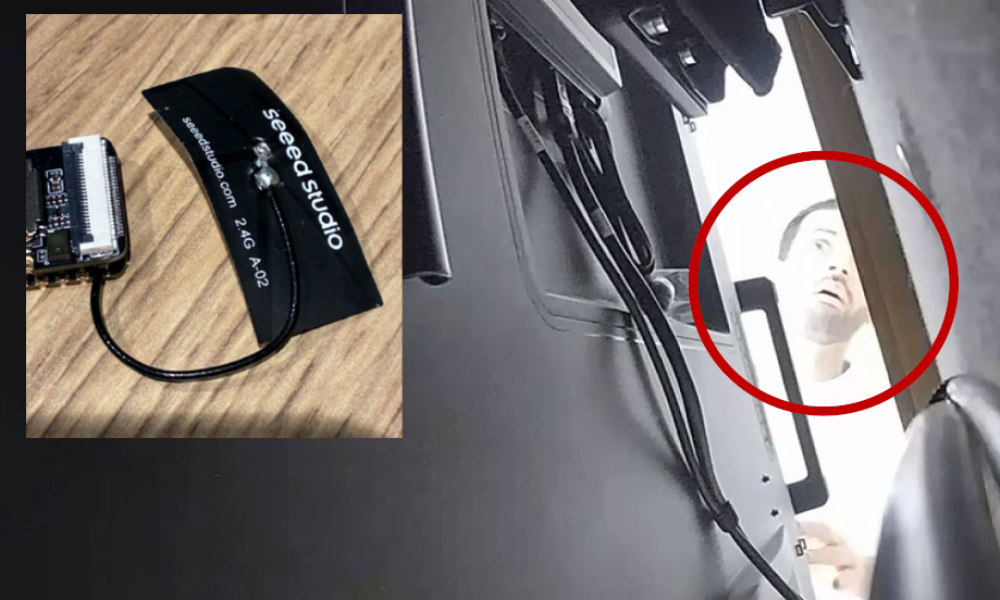
The complaint alleges that OpenAI employees discovered the recorder on September 30, plugged into a USB port behind a television in an executive conference room. The device was concealed in toilet paper, and its contents were encrypted.
OpenAI determined that it had been installed around September 28. The room was frequently used for discussions involving confidential research, product plans, business strategy, government engagements and commercial relationships, according to prosecutors — the kind of access that has made OpenAI increasingly guarded about who gets into its buildings and systems in the first place.
Surveillance footage showed the engineer near the conference room on multiple occasions before the discovery, despite having no authorization to access it or attend meetings there, the complaint alleges. He had worked for OpenAI since July 2025.
Investigators also examined inquiries made through a productivity tool about building addresses, meeting rooms, calendars and the locations of leadership and external partner meetings.
A chatbot account associated with the engineer’s spouse, which shared identifiers with his own account, submitted prompts about building and concealing a continuous audio recorder, adding Wi-Fi connectivity, listening remotely and encrypting its memory card, according to the complaint.
The account also submitted questions containing details specific to the recovered device, including its unique network identifier, on September 27 and 28.
The engineer entered the conference room on October 5 and appeared to look behind the television where the recorder had been installed. That same day, security personnel found an unattended bag containing his wallet, identification and another similar recording device.
A Career Spanning Nash, Meta And OpenAI
A LinkedIn profile lists Alfozan as an engineering lead at OpenAI and says he previously worked as a senior systems engineer at Meta and a founding engineer at Nash, a logistics and delivery infrastructure startup. The progression tracks a fairly typical path for engineering talent in Silicon Valley over the past several years — an early-stage startup, a stint at a large consumer tech company, and eventually a move into one of the AI labs racing to build frontier models.
That last move has become an increasingly common one. OpenAI’s workforce has swelled rapidly as it competes for engineers against Meta, Google and a growing list of well-funded AI startups, and the direction of talent flow between OpenAI and Meta in particular has gone both ways. Meta has aggressively poached OpenAI researchers over the past year, at one point drawing at least 8 researchers away from OpenAI in a single week with signing bonuses reported to run into the tens of millions of dollars, a campaign that prompted one OpenAI executive to compare it to someone breaking into our home and stealing something. Alfozan’s own career took the reverse route, from Meta into OpenAI, joining the company in July 2025 as it continued its hiring spree despite the heated competition for staff.
Having worked across a startup, a Big Tech company and a leading AI lab, Alfozan would have had exposure to very different working environments and security cultures. OpenAI in particular has tightened its internal security considerably in recent years amid concerns about corporate espionage and leaks, including incidents where it has parted ways with researchers accused of mishandling sensitive internal information. The arrest adds a new and more serious dimension to that pattern, involving alleged physical surveillance of company executives rather than only the handling of digital information.
OpenAI’s Response
“We referred the matter to the FBI, and we’re grateful to the agents and prosecutors who moved quickly to make an arrest,” OpenAI said in a statement. “The FBI’s investigation is ongoing and we will continue to support their work.”
The company said it had no indications that the employee improperly accessed or removed AI model weights, source code or customer data.
The engineer is charged with using or attempting to use a device to intercept oral communications. He faces up to five years in prison, a $250,000 fine and three years of supervised release if convicted.