OpenAI has spent the day introducing its new always-on AI agent, “dot”. Type dot.com into a browser, though, and you don’t land anywhere near OpenAI. The domain redirects to Grok Bot, the rival agent product from Elon Musk’s xAI.
The oddity was flagged in a post on X, where the reaction boiled down to disbelief that OpenAI had gone with a name whose most obvious web address points to a competitor. Given how much history Musk and OpenAI CEO Sam Altman share, it’s hard to see the coincidence as anything but delicious for one side and awkward for the other.
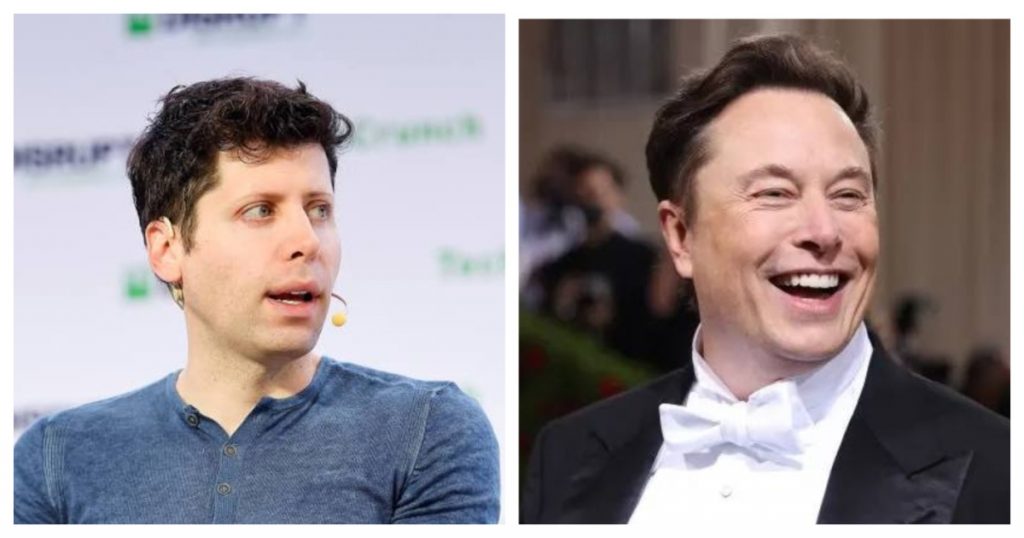
What OpenAI launched
Dots were unveiled at OpenAI’s DevDay event in San Francisco on Tuesday. They are persistent agents that run on GPT-6 Astra, and each one gets its own cloud computer and browser. Unlike a chatbot that waits for the next prompt, a dot keeps working after the user closes the window, and reports back when it needs a decision or has finished something.
Users can give their primary dot a name and customise it, and OpenAI says it can reach more than 4,000 apps through ChatGPT plugins. It can be messaged from ChatGPT, Slack and Teams, and OpenAI says texting is on the way. The company also expects users to eventually run teams of dots that work together, and is planning “specialist” dots with fixed roles and their own credentials for enterprises. It is working with Microsoft to hook those into Agent 365, Microsoft’s agent management platform.
At launch, dots are rolling out to Pro ($200 a month) and Business Premium ($125 a month) subscribers in eligible markets, with the first dot included at no extra charge. Enterprise admins will need to switch them on. Altman described dots at the event as “the real deal version of AI” people have imagined from movies.
Why the name lands awkwardly
Dots are clearly aimed at two competitors that arrived in the last couple of months. Meta launched its Muse personal agent on September 8, and xAI lauched Grok Bot. Grok Bot is xAI’s team of always-on agents, each running on a persistent cloud computer that can sign into a user’s tools and finish multi-step jobs without supervision. It is the same basic pitch OpenAI is now making with dots.
So OpenAI is entering a category where Musk’s company got to market first, with a name that a browser bar currently resolves to Grok Bot. It’s not clear who controls the dot.com domain or whether the redirect is deliberate, and OpenAI has not commented on it. Either way, it’s a small but very visible reminder of how crowded, and how personal, this corner of AI has become.
A feud that has run for a decade
The Musk-Altman relationship is the backdrop that makes the redirect so easy to read as a jab. The two co-founded OpenAI in 2015, and Altman had pitched the idea to Musk as a “Manhattan Project for AI” months before it launched. Musk put in significant early funding and lent his name and reputation to help the lab recruit talent. Even in 2016, the two appeared to have different ideas about what OpenAI was: Altman called it a “company” while Musk corrected him that it was structured as a nonprofit.
Disagreements over governance and funding led Musk to leave in 2018. OpenAI later created a for-profit arm that took money from Microsoft, and Musk turned into one of its loudest critics. He sued in 2024, launched rival xAI, and in February 2025 led a $97.4 billion unsolicited bid to buy OpenAI, which Altman brushed off with a “no thank you.”
The insults have been just as public as the legal filings. Musk has branded Altman “Scam Altman” and a swindler, while Altman has called Musk a bully who likes to pick fights and suggested his grievance is that he no longer controls OpenAI. Yet in private, the tone was once very different: Altman had texted Musk in 2023 that “you’re my hero” while complaining about his public attacks on the company. They have also traded barbs over who is building more compute and over Altman’s lack of equity in OpenAI.
The courtroom chapter, and what came after
The feud reached a federal courtroom in Oakland this spring. After a three-week trial, a jury ruled against Musk in May, finding that he had waited too long to bring his claims. The verdict was unanimous and came after less than two hours of deliberation, and Judge Yvonne Gonzalez Rogers adopted it. OpenAI’s lawyer called the suit a “hypocritical attempt to sabotage a competitor.”
Musk called the outcome a “calendar technicality,” argued that the court never ruled on the merits, and said he would appeal. The fight is therefore not over in the legal sense, and it has clearly moved into product territory as well. Musk has also acknowledged that Grok was partly distilled from OpenAI’s models, and in August OpenAI said it would stop supplying its models to Cursor, now closely tied to xAI, citing distillation concerns.
A rivalry that now runs through agents
Agents are shaping up as the next big front in that competition. OpenAI is betting dots can win back momentum from Muse, which has been a viral hit, and from Grok Bot, whose launch shows Musk’s team is not conceding the workplace-agent market. If nothing else, the dot.com redirect gives everyone watching this rivalry another data point: even the URL is contested.
Whether OpenAI moves to secure the domain, or simply shrugs it off, remains to be seen. For now, anyone typing “dot.com” to find out more about OpenAI’s shiny new agent will end up looking at Musk’s.