Business leaders are now openly speaking up on how while their AI costs are ballooning, they aren’t quite seeing the promised productivity gains.
Venture capitalist Chamath Palihapitiya is the latest to put a number on it, and the number he’s put on it is not a comfortable one. Speaking on the All-In Podcast about his software startup 8090, Palihapitiya recounted a conversation with his own Chief Technology Officer.
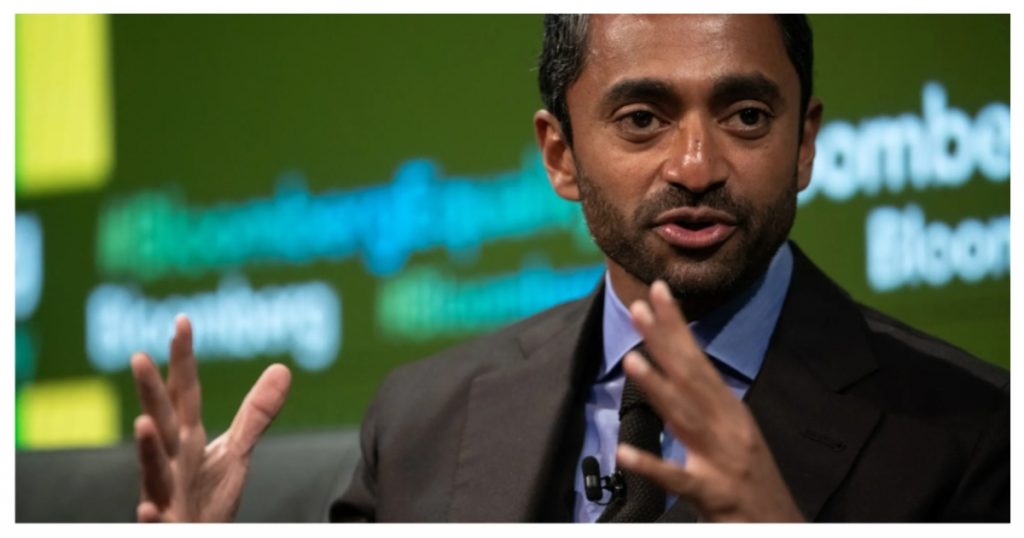
“I sat down with my CTO today, and I said, ‘How are we doing on token spend?'” Palihapitiya said. “And he said the most incredible thing. He said, ‘Right now, our token costs are doubling every forty-five days.'” His reaction, by his own account, was a groan. When he asked what that spend was buying him in return, the answer was blunter still. “Maybe 5% max,” his CTO told him. Costs doubling every month and a half, upside sitting somewhere near flat.
What makes the exchange worth dwelling on is the explanation that followed. Palihapitiya asked his CTO why the ratio was so lopsided, and the answer was that the model has effectively run out of easy gains. “What we’re finding out is that you need to use a lot more tokens to get to this next iteration of improvement because we’ve effectively already asymptoted,” he was told. In other words, the early wins from handing engineers an AI coding assistant have already been banked, and every additional unit of improvement now costs disproportionately more tokens to extract. There’s no clean fix on offer yet either. When Palihapitiya asked what 8090 should do about it, the response was simply that they’d have to figure it out.
It’s the second time in a matter of months that Palihapitiya has sounded the alarm on 8090’s AI bill. He pinned part of the blowout on what he called “Ralph Wiggum loops” — engineers repeatedly firing the same prompt at a model until it stumbles onto a working answer, racking up a ballooning bill with nothing to show for it beyond eventual, expensive trial and error. This latest number suggests that whatever discipline 8090 tried to impose since then hasn’t slowed the curve much.
Palihapitiya isn’t alone in going public with this kind of math, and the examples piling up suggest 8090 isn’t even an outlier. Uber’s CTO Praveen Neppalli Naga told The Information earlier this year that the company had burned through its entire annual budget for tools like Claude Code and Cursor in just four months, as adoption among its roughly 5,000 engineers jumped from 32% to 84% of the team in a single quarter — individual engineers now running up bills of $500 to $2,000 a month each. Meta had its own reckoning when an internal leaderboard nicknamed “Claudeonomics,” which ranked employees by token consumption and handed out titles like “Token Legend” to whoever burned through the most, leaked and was quietly taken offline days later. Similar internal dashboards have reportedly surfaced at Microsoft and Amazon. Even Google’s Sundar Pichai copped to the pattern on stage at I/O, conceding that the industry’s habit of treating token volume as a proxy for productivity — a practice some have taken to calling “tokenmaxxing” — probably has some truth to it, before pitching a cheaper model as the way out of the hangover.
Palihapitiya’s framing goes further than a cost complaint, though. He used the moment on the podcast to make a broader argument about timing in venture and M&A. “I suspect that if you can get out now, you should get out now before all of that starts to seep into the water table,” he said, urging that OpenAI and Anthropic should go public as soon as possible before this sentiment became widespread. His logic is that once this kind of unit economics reckoning becomes common knowledge across the industry, buyers will start pricing AI-heavy companies more conservatively, and the window to cash out at a premium narrows. “I don’t know how many other companies will actually go through this reckoning now,” he said, “but the point is everybody in the next three or four years will for sure go through it.”
That last line is really the crux of it. Whether or not 8090’s specific ratio holds up as typical, the pattern he’s describing — spend compounding faster than any model can reasonably justify, in the absence of anyone yet knowing what a sustainable ceiling even looks like — is one more companies seem set to run into as their own AI usage matures past the pilot stage.