SaaS companies have seen their valuations plummet in recent months, and a prominent investor is indicating that these declines — for some companies — could be irreversible.
Naval Ravikant, the entrepreneur and angel investor known for early bets on Twitter, Uber, and Notion, has made a stark declaration: pure software businesses have lost their investment case. If your only moat is the ability to build software that others can’t, Ravikant argues, that moat is gone — and it’s not coming back.
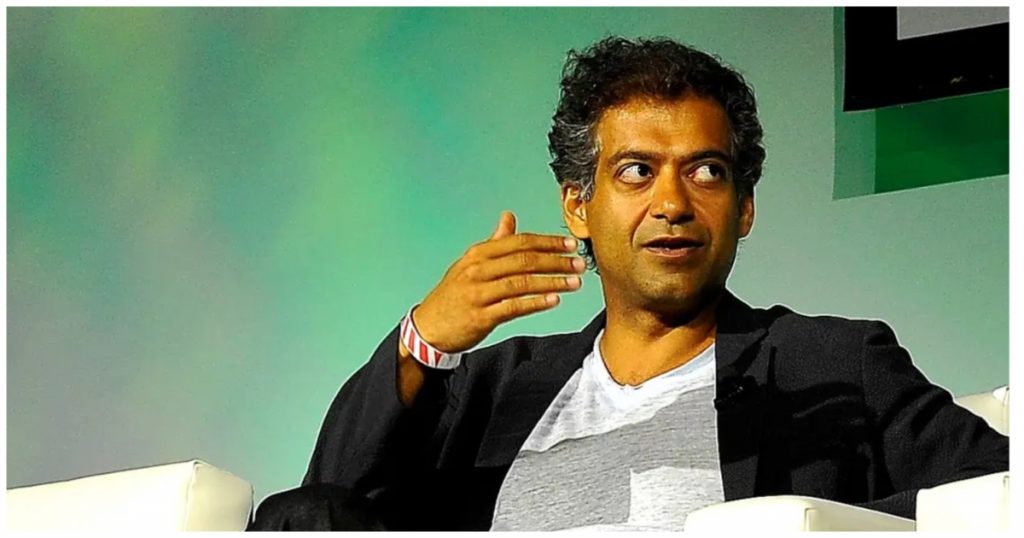
“Pure software is uninvestable,” he said on a new podcast. He laid out two reasons. The first is immediate: “(People) can just hack it together today.” The barrier to building functional software has collapsed so dramatically that the technical complexity that once justified a startup’s existence can now be replicated by a competitor — or a customer — in hours.
The second is structural. “The coding agents are getting better so quickly that within a year or even less, they’ll probably be building scalable software with good architecture.”
In other words, whatever edge a pure software company still holds today, it is on a countdown clock. Ravikant’s view is that the pace of improvement in AI coding tools is not linear — it’s exponential. “I think we’re going to see leaps and bounds improvements. That genie is out of the bottle.”
For venture investors, this changes the calculus entirely. Ravikant was explicit about where capital should go instead: “If you’re a venture investor now, you’re looking for hardware, you’re looking for network effects, you’re looking for AI models.”
He went further, drawing a direct analogy to the software era itself: “I would argue that training AI models is the new building software — for however long that lasts, until auto research and auto training start working.”
The implications of Ravikant’s view are already visible across the industry. Microsoft CEO Satya Nadella has argued that SaaS applications “will collapse” in the AI agent era — because the business logic that made these platforms valuable is migrating to an AI layer that will sit above them and control multiple platforms simultaneously. Salesforce, for its part, announced it would hire no new software engineers in 2025, citing a 30% productivity jump from AI tools. Meanwhile, frontier AI labs are releasing new models faster than ever, compressing the timeline between breakthroughs in a way that makes any software-based moat increasingly difficult to defend.
Ravikant’s framework suggests the next generation of durable businesses will be built on things AI cannot easily replicate or accelerate away: atoms, not bits; locked-in communities, not features; and the frontier models themselves. The companies that survive will need more than clever code — they’ll need something a coding agent cannot simply generate on demand.