Google DeepMind CEO Demis Hassabis has laid out a sweeping vision for how education should be restructured in a world where AGI could arrive within five to ten years, arguing that schools need to flip their priorities entirely — pushing rote learning out of the classroom and bringing in projects, creativity, and human judgement instead.
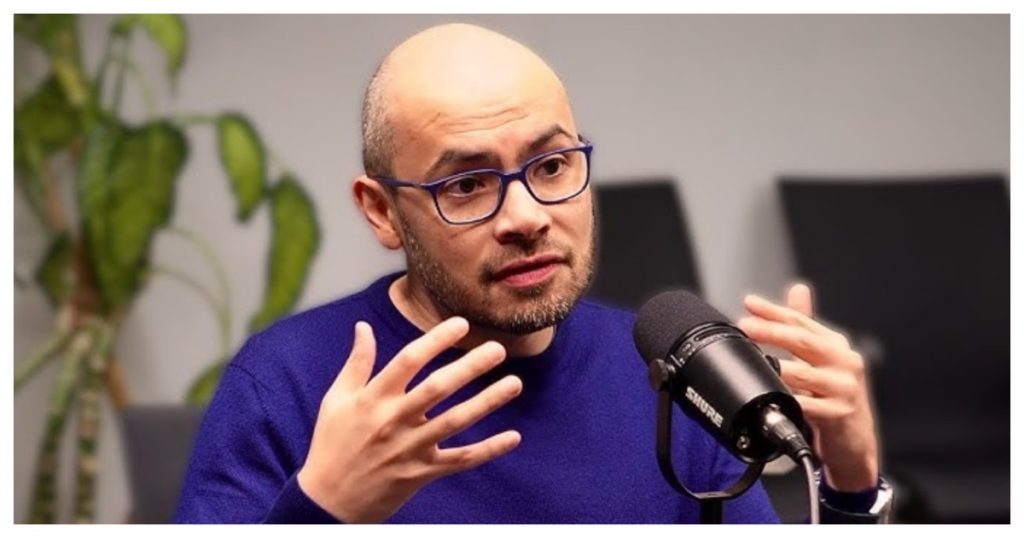
“We need to invert the classroom, in my opinion,” Hassabis said in a recent interview, laying out what he would do “if I was in charge of education.”
Classrooms Should Be About People Skills, Not Memorization
Hassabis’s core argument is that schools today are optimized for a world that’s about to change. “School should be about people skills, projects, entrepreneurialism, creativity, judgment, all the things that you might expect the skills to be important in five, ten years’ time when AGI’s arrived,” he said.
Even setting aside debates over when or whether AGI arrives, Hassabis pointed out that simply extrapolating from today’s AI systems makes the case. “There’ll be things AI can do well, and then there’ll be things that will need human judgment, taste, all of these things,” he said. “But these are not taught in schools today.”
His proposal: move all the human-to-human interaction — organizing groups of students into projects, essentially a souped-up version of a Montessori-style classroom — into school hours. “How do you organize groups of people into projects like a Montessori school, but plus plus (much more)?” he asked, pointing to the kind of one-on-one tutorial system used at Oxbridge as another model worth bringing into mainstream classrooms.
Rote Learning Moves Out, Personalized AI Moves In
The flip side of Hassabis’s model is that rote learning — memorizing formulas, vocabulary, facts — should happen outside the classroom, guided by AI tools tailored to each student’s pace. “Aided by personalized AI that basically tailors the rote learning to the speed and the exact personalized to the exact speed of the student and what they need to do,” he said.
He was blunt about why the current one-size-fits-all model fails. “It’s crazy that we do a once fits all, size fits all in class anyway on rote learning. It doesn’t work because you have to cater to the average. What about the kids that are behind or the kids that are ahead? Good luck on both sides.”
With AI, Hassabis argued, that problem simply goes away. “Here with AI, you can actually personalize it so everyone gets exactly the tailored curriculum that they need.” It’s a sentiment that echoes what other tech leaders have said about AI’s potential to outperform the traditional one-teacher-many-students model — Duolingo CEO Luis von Ahn has made a similar case for why AI could eventually surpass human teachers at delivering individualized instruction, even as he maintains schools themselves won’t disappear.
Let Superstar Teachers Handle the Lecturing
Hassabis also took aim at the redundancy baked into how lecturing currently works, suggesting that one excellent lecture should be enough for everyone rather than having every teacher reinvent the same material. “Why do we expect every schoolteacher, every lecturer to be amazing at lecturing the same course? That’s just completely redundant amount of work,” he said.
He pointed to friends who teach as an example of the inefficiency at play. “When I talk to teacher friends of mine, each of them has to teach GCSE maths and then create their own slide decks. Why are we in that world? It should just be one.”
Under his model, a small number of “world-class” teachers — “almost like superstars” — would handle the core lecturing, freeing up the rest of the teaching workforce to focus on running the project-based, in-person side of school. “I think teachers would love that personally,” he added.
“And then the rote learning, you do at your own speed at home with the help of AI. That’s what I would do,” Hassabis said, summing up the model.
Hassabis’s comments add to a broader, increasingly urgent conversation among AI leaders about how education needs to adapt — not everyone agrees on the shape that adaptation should take. British historian Niall Ferguson, for instance, has argued for the opposite instinct in some respects, proposing that students spend hours a day away from AI and electronic devices entirely to preserve independent thinking. Hassabis, by contrast, sees AI not as a threat to be walled off from the classroom but as the tool that finally makes personalized learning possible at scale, while reserving uniquely human skills for the time students spend together.