There’s no shortage of AI doomerism on the internet, but not all of it might be entirely organic.
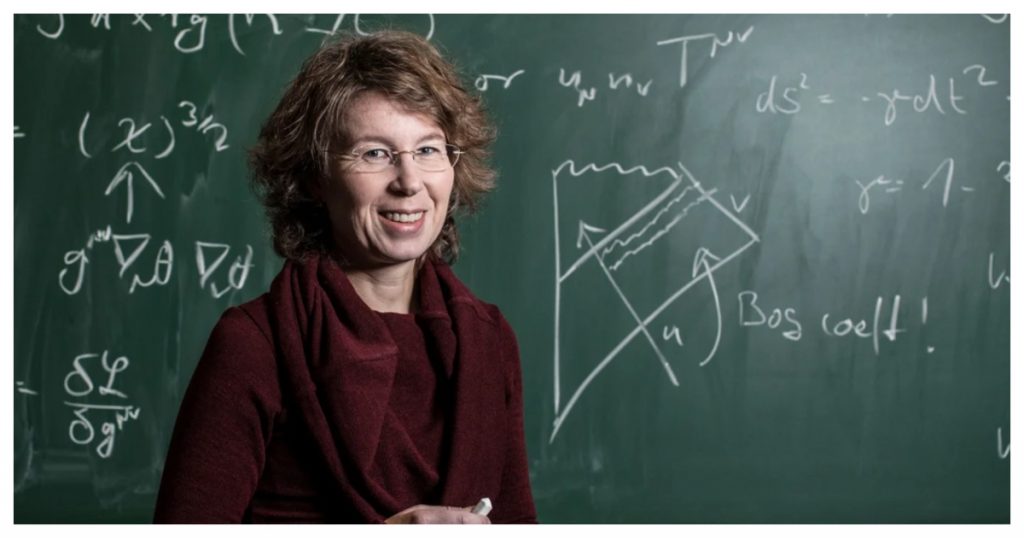
German physicist and popular science YouTuber Sabine Hossenfelder says she was recently approached with a sponsorship offer to make a video warning that AI is an existential threat — down to the exact sentences she was supposed to read and the references she was supposed to cite. She turned it down, but the episode led her to look into how widespread this kind of paid messaging has become on both sides of the AI debate, and she laid out what she found in a video titled “I Was Offered Money to Tell You AI Will Kill Us” that’s since drawn attention across the AI commentary world.
Hossenfelder’s starting point is how YouTube sponsorships normally work. A creator’s expenses are covered by a sponsor in exchange for a mention or a segment, the sponsor gets exposure, viewers get a discount code, and — crucially — the sponsor has no say over the rest of the video’s content. But she points out that sponsors tend to see a bigger payoff when the sponsorship itself is murky or undisclosed, because that makes the message look more like the creator’s independent opinion. That’s technically illegal, she notes, but there’s a gray area: a sponsor doesn’t need editorial control if it simply picks creators who already agree with it.
That’s roughly what happened to her. An organization contacted her wanting to fund a video warning of an AI apocalypse, and it came with a script — specific sentences and citations included. She said no, but pointed to a YouTuber on X who says he’s since fielded three similar pitches from anti-AI sponsors. One came from an outreach effort tied to the Center for AI Safety, the nonprofit behind the 2023 statement — signed by executives from OpenAI, Google DeepMind and elsewhere — that put mitigating AI extinction risk on par with pandemics and nuclear war. Hossenfelder also names Control AI, which has sponsored videos on AI as an existential threat, and the Future of Life Institute’s “Protect What’s Human” campaign, which recruits people to produce paid social content following the campaign’s own directions. She cites a Washington Post report claiming the institute has funded roughly 30 AI-safety content projects.
The pro-AI side of the ledger isn’t clean either, in her telling. Companies like OpenAI, Anthropic, Google and Perplexity routinely pay creators to talk about how AI has changed their workflow — sponsorships she claims are largely disclosed in the standard way. It’s the money moving through nonprofits, rather than the labs themselves, that she flags as harder to track. Her main example is Build American AI, a nonprofit that Taylor Lorenz reported for Wired had offered her $5,000 for a single TikTok video framing China’s AI progress as a threat to American jobs. Lorenz declined, but Hossenfelder says other creators reportedly didn’t, posting sponsored content that disclosed an ad but not always who was actually paying for it. Build American AI has drawn funding from OpenAI president Greg Brockman among its backers — notable given that Brockman has otherwise been a fairly public voice on OpenAI’s own trajectory and internal upheavals over the past couple of years.
Hossenfelder is careful to say she doesn’t think it’s inherently wrong for advocacy groups on either side to pay for reach — she calls it predictable, even smart, on their part. What bothers her is the seepage: political-style lobbying tactics moving into science and tech coverage, aimed at an audience that isn’t used to scrutinizing who funded the message in front of them. It’s a dynamic that shows up across the AI industry more broadly, where the loudest warnings and the loudest optimism often both come from people with a stake in the outcome — whether that’s a lab CEO publishing a lengthy essay on civilizational risk or a company touting the economic upside of its own technology. Her advice to viewers is simple: whichever direction a piece of AI content leans, it’s worth checking who paid for it before taking the message at face value.