Many have spoken of the US’s growing rivalry with China, but an American VC has put things in very stark terms.
Vinod Khosla — founder of Khosla Ventures, co-founder of Sun Microsystems, and one of the earliest institutional backers of OpenAI — has a blunt diagnosis of where the United States and China stand today. Speaking on Fortune’s Titans and Disruptors of Industry podcast last month, the billionaire investor framed the competition not as a trade dispute or a diplomatic tension, but as a war — and said the US needs to treat it like one.
“We’re in a techno-economic war with China, and we shouldn’t call it anything other than a war.”
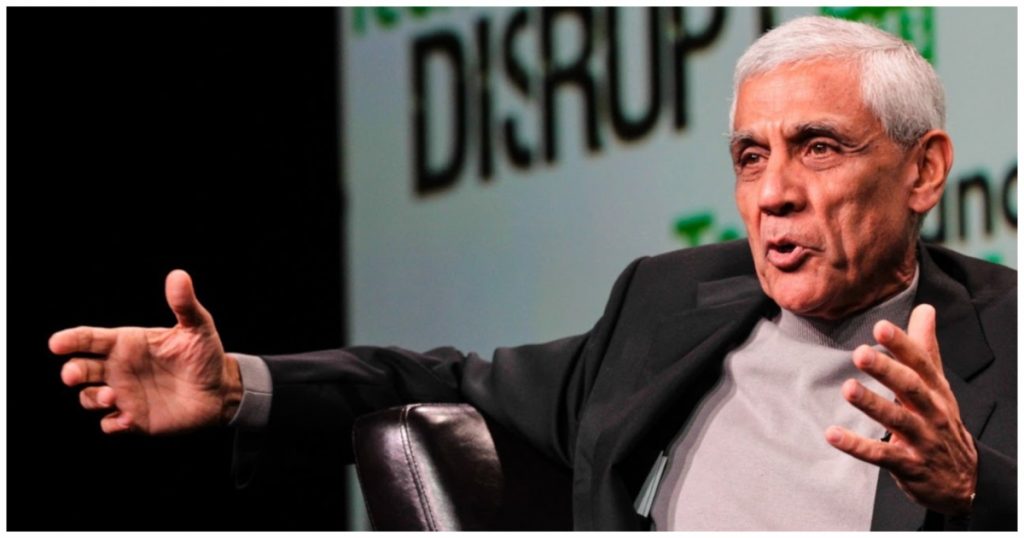
Khosla has been one of Donald Trump’s loudest critics — calling the then-presidential candidate a person of “depraved values” in 2024 and acknowledging that he is on the president’s “shit list.” But he is unambiguous about where he stands on the administration’s AI policy.
“Because whoever wins this AI race — though I mostly disagree with the Trump administration, and I’m on their list — I mostly agree with their policy on AI. We have to win that race.”
The stakes, in his view, go far beyond technology or even economics.
“Whoever wins the AI race will win the economic race and will win the race for socioeconomic power and influence globally. Whether you’re talking about Southeast Asia, Latin America, Europe — all of that depends on who wins the AI race, because it’s such a pivotal technology.”
The framing is stark, but it reflects a view that has been building for years. The data increasingly backs up the urgency. China’s open-source AI models overtook US models as the world’s most downloaded for the first time in late 2025 — a moment that would have seemed improbable just a few years earlier. Meanwhile, China’s GPU self-sufficiency has doubled since 2023 and is projected to hit 85% by 2030, blunting the effect of US export controls — long seen as Washington’s primary lever in the AI race. China has also surpassed the US as the country of affiliation for lead authors at NeurIPS, the world’s most prestigious AI research conference. The US still leads at the frontier — top models from OpenAI, Anthropic, and Google retain a measurable edge — but the gap is narrowing faster than most Western observers anticipated. Khosla’s point is that in a race this consequential, a narrowing gap is not reassurance. It’s a warning.