Thinking Machines appears to have lost yet another co-founder to OpenAI.
Lilian Weng, who helped start Mira Murati’s Thinking Machines Lab last year, is heading back to her old employer to work on research aimed at getting AI systems to help build better AI systems, according to a report from The Information.
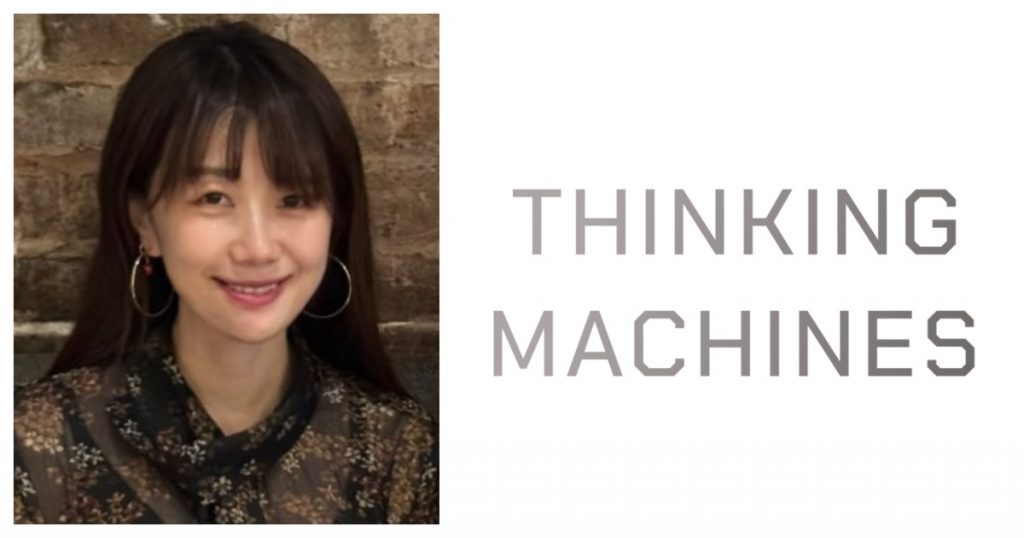
Weng announced her exit from Thinking Machines earlier this week, saying July 29th would be her last day. In her note, she pointed to the toll the job had taken on her health, describing ongoing stress and repeated bouts of illness over the past several months. She said the role of a startup co-founder came with an unpredictable schedule and an open-ended set of responsibilities, and that she was looking for something with clearer boundaries going forward. What that something turned out to be is a return to OpenAI, the company she left in November 2024 after nearly seven years there.
Her new assignment, per the report from Stephanie Palazzolo and Amir Efrati, is recursive self-improvement — essentially, using AI to speed up how OpenAI designs, trains and evaluates its own future models. Weng had actually written about this exact idea on her personal blog, Lil’Log, just weeks before her departure from Thinking Machines. In a July 4th post, she argued that self-improvement doesn’t need to mean a model rewriting its own weights directly. It can instead mean AI handling pieces of the surrounding infrastructure — training pipelines, evaluation tools, deployment software — that go into producing the next model. The scaffolding around a model, sometimes called the harness, becomes the thing worth automating, in her view, since it governs how a system plans, uses tools and judges its own output.
Weng is well suited to that kind of work on paper. At OpenAI, she worked on the Dactyl project that trained a robotic hand to solve a Rubik’s Cube, then moved into safety, eventually building and running the company’s Safety Systems team before being named VP of research and safety. Her writing over the years has covered reinforcement learning, reward hacking, autonomous agents and test-time reasoning, all of which feed fairly directly into the kind of automated research loop OpenAI now wants her to build.
She’s also not the first Thinking Machines co-founder to make this trip back. Barret Zoph, the company’s CTO, left along with researchers Luke Metz and Sam Schoenholz back in January. Weng is the third co-founder to return to OpenAI this year, out of a founding team of six.
That pattern is starting to look less like coincidence and more like a trend worth watching. Thinking Machines raised its $2 billion seed round at a $12 billion valuation almost entirely on the strength of the team Murati had assembled, before the company had shipped a single product. Since then it has put out Tinker, its fine-tuning platform, and more recently Inkling, its first open-weights model, which the company positioned around customization rather than chasing benchmark scores. Losing half a founding team within a year of that pitch is a difficult thing to explain away, regardless of how the individual departures are framed.
None of the reporting so far says what title Weng will hold at OpenAI, who she’ll report to, or when exactly she starts. But the mandate lines up closely with what she’s already been writing and thinking about publicly, which suggests OpenAI built the role around her rather than the other way around.