The top humanoid robot companies are no longer just building impressive lab demos — they are shipping robots to factories, warehouses, and now homes, backed by billions in capital and strategic partnerships with some of the biggest names in manufacturing and tech. Here’s a comprehensive look at the leading players in what has quickly become one of the most competitive industries on earth.
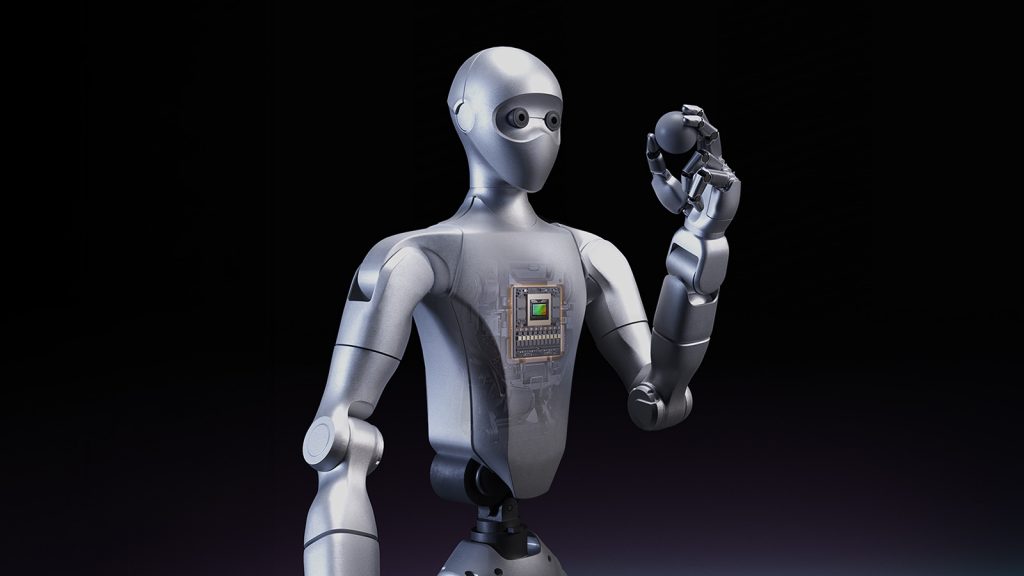
1. Figure AI
Among the top humanoid robot companies, Figure AI is the most heavily funded pure-play in the world. Founded in 2022 by Brett Adcock — a serial entrepreneur who previously built talent marketplace Vettery and electric aircraft startup Archer Aviation — the Sunnyvale-based company has raised nearly $1.9 billion across four rounds, including a $1 billion+ Series C in September 2025 that valued it at $39 billion. Backers include Nvidia, Microsoft, Jeff Bezos, Intel Capital, Salesforce, and Qualcomm Ventures, making its cap table look like a who’s who of the AI infrastructure world. Adcock bet early on vertical integration, and in early 2025 he exited a collaboration with OpenAI specifically because he believed that solving embodied AI at scale required building the AI in-house, not licensing it from a third party.
The company’s flagship robot, the Figure 03, stands 5’8″, weighs 61 kilograms, and runs on Helix — a single neural network that handles both navigation and manipulation simultaneously, with all inference running onboard. Figure’s BotO factory is producing a robot roughly every 90 minutes and targets 100,000 units. Pilot programs are underway with BMW and UPS. In May 2026, Figure ran a 10-hour live competition pitting a human intern against its F.03 robot on a sorting task — the robot lost by just 192 packages, and Adcock declared it would be the last time a human would win.
2. Tesla
Tesla entered the top humanoid robot companies conversation in a serious way with Optimus, first teased at an AI Day in 2021 and now the subject of one of the largest manufacturing pivots in the company’s history. As a division within a publicly traded company, Optimus doesn’t carry a standalone valuation, but Tesla has committed approximately $20 billion in 2026 capex to the program. In Q2 2026, Tesla shut down Model S and Model X production at its Fremont factory — ending a 14-year run — to repurpose the line for a first-generation Optimus facility designed for 1 million robots per year. A second, even larger facility targeting 10 million units annually is under construction at Gigafactory Texas.
The robot itself — now in its third generation — runs on an in-house AI system that draws heavily on Tesla’s work in computer vision and full self-driving. Elon Musk has described an “Optimus Academy” concept where thousands of robots learn through self-play in controlled environments, generating the kind of training data that Tesla’s car fleet cannot provide. Production at Fremont is expected to begin in late July or August 2026, though Musk has been candid about the unpredictability of scaling a product with 10,000 unique parts. The target price for Optimus is under $20,000 per unit — a figure that, if achieved at scale, would undercut nearly every Western competitor.
3. NEURA Robotics
NEURA Robotics is the standout name among the top humanoid robot companies coming out of Europe. Founded in 2019 by David Reger in Metzingen, Germany, the company has assembled a founding team that also includes Mavarick H and Sugeeth Gopinathan. In June 2026, NEURA closed what it calls the largest Series C in full-stack robotics history — up to $1.4 billion, contingent on hitting certain milestones — backed by Tether, Nvidia, Amazon, Qualcomm, Bosch, Schaeffler, the European Investment Bank, and Qatari billionaire Sheikh Hamad bin Jassim. Total funding now sits at roughly $1.48 billion across five rounds. NEURA has booked approximately €1 billion in orders and is aiming to deploy 5 million robots by 2030, a target that looks ambitious but has attracted credible institutional backers. The company’s Neuraverse platform — a shared AI ecosystem that allows robots to continuously learn from each other — is central to the pitch.
NEURA’s flagship humanoid, the 4NE-1, stands about 5’9″, can carry up to 220 pounds, and moves at approximately 3 miles per hour. The company also makes lighter collaborative robot arms and mobile robots for narrower industrial tasks. A miniature version, the 4NE1 Mini, appeared at Computex 2026 in Taipei and was designed to handle both consumer and industrial environments. The main 4NE-1 is priced at around €98,000, with large-scale shipments expected to begin in late 2026. NEURA is also building NEURA Gyms — dedicated AI training sites, including a 2,300-square-meter facility at Munich Airport with the Technical University of Munich — to generate real-world training data for the Neuraverse at scale.
4. Unitree Robotics
Unitree is arguably the most commercially successful of the top humanoid robot companies in the world right now. Founded in 2016 in Hangzhou by Wang Xingxing, who built his first robot dog — the XDog — during his graduate studies and then left DJI to start the company, Unitree has been profitable every year since 2020, which is genuinely unusual in this capital-intensive space. Revenue jumped 335% in 2025 to ¥1.71 billion (around $257 million), with humanoid robots now contributing more than half of total revenue, up from 28% the prior year. In March 2026, the company filed for a $610 million IPO on Shanghai’s STAR Market, seeking to raise ¥4.2 billion. The filing draws a shareholder list that reads like a roll call of Chinese tech — Alibaba, Tencent, ByteDance-affiliated Jinqiu Capital, Ant Group, and HongShan (formerly Sequoia China). Wang retains around 34% of economic interest and 68.78% of voting rights.
The robot lineup spans quadrupeds and humanoids, with the G1 humanoid priced from around $16,000 — far below any Western competitor at comparable capability. Unitree shipped over 5,500 humanoid robots in 2025 and captured more than 32% of the global humanoid market by unit volume. The company’s robots have appeared at the CCTV Spring Festival Gala for two consecutive years, performing kung fu routines in front of an audience of more than 600 million viewers. The UnifoLM AI system runs in-house. G1 units are already sold internationally, and Unitree briefly listed on Walmart’s marketplace through a third-party vendor in 2025 before those listings were pulled — a sign of the growing commercial ambitions that US policymakers are watching closely.
5. AgiBot (Zhiyuan Robotics)
AgiBot is among the top humanoid robot companies that moved fastest from founding to commercial scale. Launched in February 2023 by Peng Zhihui and Deng Taihua — both former Huawei engineers — the Shanghai-based company combines the name AGI (artificial general intelligence) with “bot,” and its Chinese name, Zhiyuan, roughly translates to “intelligent origin.” Peng had built a following in the Chinese DIY tech community before leaving Huawei, with viral projects including an Iron Man-inspired robotic arm and a self-riding bicycle. AgiBot has raised around $83 million across three rounds from investors including LG Electronics, JD Digits, and Huafa Group, and its IPO prospects are being discussed in market circles. The company holds the distinction of becoming the first to ship 1,000 general-purpose humanoid robots in January 2025, and then the first to reach 10,000 units just months later.
AgiBot’s robot portfolio spans three families: Yuanzheng for industrial settings, Lingxi for lighter and household-adjacent applications, and Genie for AI and simulation infrastructure. The A2, A3, and Lingxi X2 models run on the company’s GO-1 AI brain, built in-house. A Pepsi-commissioned humanoid named Fizzbot — a customized A2 introduced alongside David Beckham — became perhaps the most viral moment in the company’s brief history. As a top humanoid robot company with deployments now spanning automotive factories in Germany, a distribution deal in Singapore, and customers across Southeast Asia, the Middle East, Europe, and North America, AgiBot is pushing hard to position itself as a global platform rather than a Chinese domestic player. The proposed American Security Robotics Act, which would restrict federal purchase of Chinese-made robots, is the primary regulatory risk it faces internationally.
6. UBTECH Robotics
UBTECH is the only top humanoid robot company in this field already listed on a major stock exchange. Founded in March 2012 in Shenzhen by Jianjun Zhou, the company went public on the Hong Kong Stock Exchange (HKEX: 9880) in December 2023. With a market cap that has fluctuated around $7 billion in 2026, UBTECH holds more than 2,790 robotics and AI-related patents, more than any other humanoid robot maker globally. It has secured around $112 million in orders for its Walker S2 robot and is targeting 5,000 units per year by the end of 2026. Its industrial deployment track record includes automotive factory work at NIO and BYD, as well as a partnership with Foxconn.
The Walker S2 is UBTECH’s current flagship. It runs on the company’s Co-Agent and BrainNet 2.0 AI architecture and features an industry-first autonomous hot-swap battery system that allows the robot to replace its own battery within 3 minutes without stopping — a meaningful operational advantage for 24/7 factory deployments. The Walker S2 has 47 degrees of freedom, a 15-kilogram payload capacity, and a binocular stereo vision system built in-house using pure RGB cameras rather than depth sensors, which the company says significantly reduces hardware cost and power draw. Walker S2 units were among the robots that struck bronze chime bells at the opening ceremony of the 15th National Games of China in 2025.
7. Apptronik
Apptronik stands out among the top humanoid robot companies for the depth of its engineering lineage. Founded in 2016 as a spinout from the Human Centered Robotics Laboratory at the University of Texas at Austin, the company was co-founded by Jeffrey Cardenas and Nicholas Paine, with robotics professor Luis Sentis as an advisor. Before Apollo, the team built more than 15 robot platforms, including work on NASA’s Valkyrie. That decade of accumulated hardware knowledge is what the company argues sets Apollo apart from robots built in shorter timeframes. In February 2026, Apptronik closed a $520 million Series A extension, bringing the total Series A to over $935 million and the overall capital raised to nearly $1 billion, at a valuation of around $5 billion. Backers include Google, Mercedes-Benz, B Capital, AT&T Ventures, John Deere, and the Qatar Investment Authority.
Apollo — publicly unveiled in August 2023 — stands 1.7 meters tall, weighs 73 kilograms, carries up to 25 kilograms, and runs for about 4 hours on a replaceable battery. It’s deployed in pilot programs at Mercedes-Benz and GXO Logistics, and Apptronik has a formal strategic partnership with Google DeepMind to build what it describes as the next generation of humanoid robots powered by Gemini Robotics. A new version of the robot is expected to debut in 2026. CEO Cardenas has projected $1 billion in orders starting in 2027, when the company expects to be delivering Apollo in high volumes at around $80,000 per unit — roughly the price of a luxury car, and competitive with the cost of a full-time human worker across multiple shifts.
8. Galbot
Galbot is among the top humanoid robot companies taking a different design philosophy from the rest of the field: rather than chasing a fully bipedal humanoid, its flagship G1 pairs a human-scale upper body and highly dexterous arms with a 360-degree omnidirectional wheeled base. Founded in 2023 in Beijing as Galaxy General Robot Co., the company raised 2.5 billion yuan in March 2026 from investors including China’s National Artificial Intelligence Industry Investment Fund, Sinopec, CITIC Investment Holdings, Bank of China Asset Management, and SAIC Group. Total funding from its startup phase reached approximately $800 million, making it one of the most heavily funded robotics companies in China behind UBTECH. Bosch’s Boyuan Capital arm has formed a joint venture with Galbot, and the company has secured orders from CATL, Bosch, Toyota, and SAIC.
The G1 stands 173 centimeters, weighs 85 kilograms, and features 47 degrees of freedom including a 12-DOF dexterous hand — the same hand dexterity count as several bipedal competitors. It’s powered by Galbot’s AstraBrain AI architecture, which the company describes as a brain-cerebellum-neural control system enabling real-time autonomous operation. The G1 entered Chinese national consciousness when it appeared at the 2026 CCTV Spring Festival Gala, performing fully autonomous tasks including rolling walnuts in its palm, picking up glass fragments, and retrieving items from densely packed retail shelves in front of an estimated 679 million viewers. The robot had previously been deployed in live autonomous retail stores across 30 Chinese cities and 24/7 pharmacy operations.
9. Agility Robotics
Agility Robotics has the most grounded commercial track record among the top humanoid robot companies based in the United States. The company was founded in 2015 in Albany, Oregon, as a spinout from Oregon State University’s Dynamic Robotics Lab by professor Jonathan Hurst. Damion Shelton, who co-founded the company with Hurst, described their core insight this way: tasks are designed around human workflows, so robots built to human scale can fit into existing infrastructure without forcing redesigns. Peggy Johnson — former EVP at Microsoft and CEO of Magic Leap — joined as CEO in March 2024, bringing enterprise sales depth to a company whose technology credibility was already established. Total funding exceeds $641 million, with Amazon as a key strategic investor and anchor customer.
Digit, the company’s flagship humanoid, has been deployed in Amazon fulfillment centers and at a Spanx warehouse in Georgia, where it transfers totes from autonomous mobile robots to conveyor belts. Around 100 units are working in active commercial settings — a deployment count that may sound modest but remains ahead of most Western competitors in terms of real-world operational hours. Digit was purpose-built for logistics: its unusual “bird-leg” reverse-knee joint is optimized for the repetitive lifting and carrying movements that define warehouse work. Agility offers Digit on a RaaS (Robotics as a Service) model at approximately $30 per hour, giving potential customers a way to trial the technology without a major capital commitment. The company’s RoboFab manufacturing facility in Salem, Oregon is designed to scale to more than 10,000 units per year.
10. 1X Technologies
1X is the only top humanoid robot company with roots outside the US or China. Founded in Norway in 2014 by Bernt Børnich, the company — originally called Halodi Robotics — spent its first years building Eve, a wheeled industrial semi-humanoid deployed in warehouses. Børnich has argued that the path to scaling AI intelligence doesn’t run through larger language models trained on human-generated text — it runs through fleets of robots doing real-world tasks, generating embodied training data that no internet scrape can replicate. The company has raised $820 million in confirmed funding, with a $10 billion target that remains unverified. In April 2026, 1X opened a vertically integrated NEO factory in Hayward, California — the first of its kind in the US.
NEO, the company’s home robot, is priced at $20,000 for early access and targets delivery in 2026, with a $499/month subscription model to follow. It’s built around NVIDIA’s Jetson Thor processor and 1X’s proprietary Redwood VLA and World Model AI system, with all inference running on-device for safety-critical functions. The company has already secured one substantial non-consumer channel: a deal with Swedish investment firm EQT to deploy up to 10,000 NEO units across EQT’s 300+ portfolio companies between 2026 and 2030, covering manufacturing, warehousing, and logistics applications. The EQT arrangement gives 1X a credible bridge between the home robot story and industrial deployment, smoothing out what would otherwise be a very long wait for consumer revenue to materialize.
11. Sunday
Sunday is the newest name among the top humanoid robot companies and is the most narrowly focused: it is building exclusively for the home. The company was founded in 2023 by Tony Zhao and Cheng Chi, two Stanford-trained roboticists whose academic work contributed to foundational techniques in robot learning including ALOHA, transformer adaptation for robotics, and diffusion policy. In March 2026, the company raised a $165 million Series B led by Coatue at a $1.15 billion valuation, with participation from Bain Capital Ventures, Tiger Global, Fidelity, Benchmark, and Conviction. Total funding is approximately $200 million. The company’s 50-home “Founding Family Beta” is planned for late 2026, with broader deployment to follow.
The robot is named Memo, and its design prioritizes looking approachable rather than intimidating — it rolls on a wheeled base and is clad in soft silicone. Sunday’s key differentiator is its data pipeline. The company has assembled roughly 10 million real-world household task episodes from more than 500 homes using a proprietary wearable called the Skill Capture Glove, which records human hand and arm movements during daily routines. That dataset underpins the ACT-1 model running Memo’s behavior. Current demonstrated capabilities include dishes, espresso preparation, and laundry. The company’s thesis is that the complexity of real home environments — unpredictable layouts, varying objects, shifting contexts — is what makes the home robot problem genuinely hard, and the only way to solve it is proprietary in-home data at scale.
12. Boston Dynamics
Boston Dynamics is the oldest name among the top humanoid robot companies and the one with the deepest heritage in dynamic legged locomotion. The company was founded in 1992 by Marc Raibert as a spinout from MIT’s Leg Laboratory, and has since passed through Google, SoftBank, and Hyundai, which acquired it in 2020. The Hyundai acquisition has turned out to be strategically significant: Atlas, Boston Dynamics’ fully electric humanoid, is going directly into Hyundai’s own factory network rather than being sold into an open market in its first production year. At CES 2026, the company unveiled the production version of Atlas — the entire 2026 production run is already committed to Hyundai’s Robotics Metaplant Application Center and Google DeepMind’s offices. A broader commercial rollout begins in 2027, with a factory targeting 30,000 humanoids per year planned. A Google DeepMind partnership announced at CES will accelerate the embodied AI foundation model work powering Atlas.
Atlas won the “Best Robot” award at CES 2026 from the CNET Group, with judges citing its naturalistic walking gait. Boston Dynamics runs its Atlas AI in-house, supplemented now by Toyota Research and Google DeepMind input. The robot connects to factory management systems via Boston Dynamics’ Orbit software and features a battery quick-swap design that allows 24/7 operation without downtime. Most tasks, the company claims, can be taught in under a day. A planned deployment at Hyundai Motor Group Metaplant America in Savannah, Georgia will focus initially on parts sequencing operations beginning in 2028. For a company that spent decades perfecting locomotion without a clear commercial model, the Hyundai relationship has finally given Atlas an obvious first customer with a very large factory network to fill.