Asked how he was preparing for leadership succession at NVIDIA, Jensen Huang had a quick joke ready. “I want this job until I’m eighty,” he said, before adding: “No, I’m just kidding.”
That was in April 2009, at a Stanford seminar series for aspiring entrepreneurs, when NVIDIA was still a graphics-chip maker. More than 17 years later, on November 12, 2026, Huang resigned as president, CEO and a member of NVIDIA’s board, effective immediately, ending a 33-year run at the company he co-founded. CFO Colette Kress is interim CEO, and Harvey C. Jones has been named the company’s first-ever Chair of the Board. NVIDIA’s announcement gave no reason for the departure.
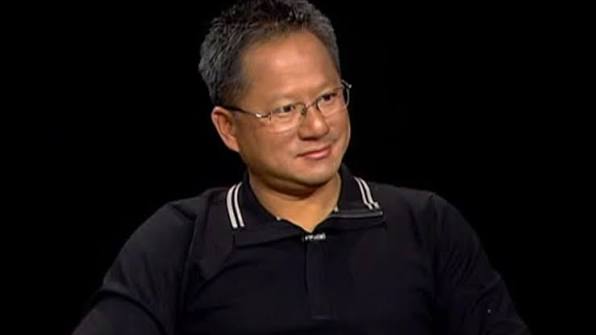
It came days after Huang admitted to employees that he had been unfaithful to his wife, in a relationship with Alice Huang, a Megaspeed executive whom US officials suspect of spying for China. Those allegations against her remain unproven, and China has denied them. A day before the resignation, the Wall Street Journal reported that the board was preparing to oust him after a second reported affair, with a senior executive who reported to him. Those reports rely on anonymous sources.
With NVIDIA now looking for a permanent CEO, his 2009 answer reads very differently.
Why he didn’t want a shortlist
Huang’s answer was really about what a CEO is for. “One of the primary roles of a CEO, in order to grow the company… and make NVIDIA one of the most important technology companies in the world,” he said, is to cultivate new leaders “so that they can have new ideas and grow new businesses,” whether that means running a different geography or a new product line.
He said that was how he spent most of his own time. He was sitting with general managers and other leaders, “helping them think through strategies,” challenges, product roadmaps, transitions, team building and organization creation, and how to build processes “that last the test of time.” These were lessons, he said, that he was “supposed to pass on.”
The most striking part was what he rejected. The standard method, in which a CEO and board pick out a few likely successors in advance in case the chief executive is hit by a bus, was in his words “a toxic, toxic process.” He knew it was widely seen as the way to do succession planning, he said, but he thought it was bad for the environment inside a company “because everybody’s trying to figure out who got selected and who didn’t.”
His alternative was to invest in the whole bench. By developing the next generation of leaders, he argued, the board would have “many choices” if something happened to him, or “I’m not the right CEO anymore.” He added that those choices would include outside candidates. He called this “the company building process” and “the positive way” to approach the problem.
What the philosophy left behind
More than 17 years on, the consequences of that approach are visible. NVIDIA’s board has been working with an outside firm to identify replacements, according to Bloomberg, and the company has said it will consider both internal and external candidates, which is the possibility Huang himself raised in 2009. The man filling the seat for now is a finance executive rather than a product visionary. Kress has been NVIDIA’s CFO for 13 years.
The critique of a closed shortlist also has a flip side that analysts have been raising since the scandal broke. NVIDIA is known for an unusually flat organization built around Huang, and commentators have pointed out that it has no anointed heir. A company with no named successor avoids the politics Huang warned about, but it can also leave the board with no obvious option on the day it needs one.
Huang’s own comments on this have been consistent. Earlier this year, at Y Combinator’s Startup School, he said he never expected his successor to inherit NVIDIA’s structure unchanged. The next CEO would “just have to reshape the company,” he said, in a remark that has taken on new meaning since. He has also described a management style that is unusual by big-company standards, including that he tries not to hold regular meetings with his staff.
An open ending
Whether the eventual successor comes from inside or outside, NVIDIA is now running the test Huang described in 2009. The Financial Times has reported that Huang is weighing a return, with allies lobbying the board on his behalf while its independent investigation continues. The board has made no announcement on that.
Huang’s departure also puts him in a long line of founders who left the companies they built, a list that includes Steve Jobs at Apple and Travis Kalanick at Uber. Few of those founders left behind a company worth trillions of dollars, and few had said so clearly years earlier that they didn’t want to name a crown prince.