As Nvidia’s board reportedly prepares for life without Jensen Huang, a comment he made a few months ago has taken on new meaning. Asked at Y Combinator’s Startup School in July what happens to Nvidia’s unconventional structure when he is no longer running it, Huang said he never expected the next CEO to inherit it unchanged.
Speaking to YC’s Garry Tan, Huang described a lesson he said he picked up long ago, though he has “no idea where I saw this.” The idea is that a founder or CEO is “building a car that you are going to race.” In his telling, “you’re going to build an F1 racer, but you’re going to build it in a way that you can drive. You should adapt the car to you.”
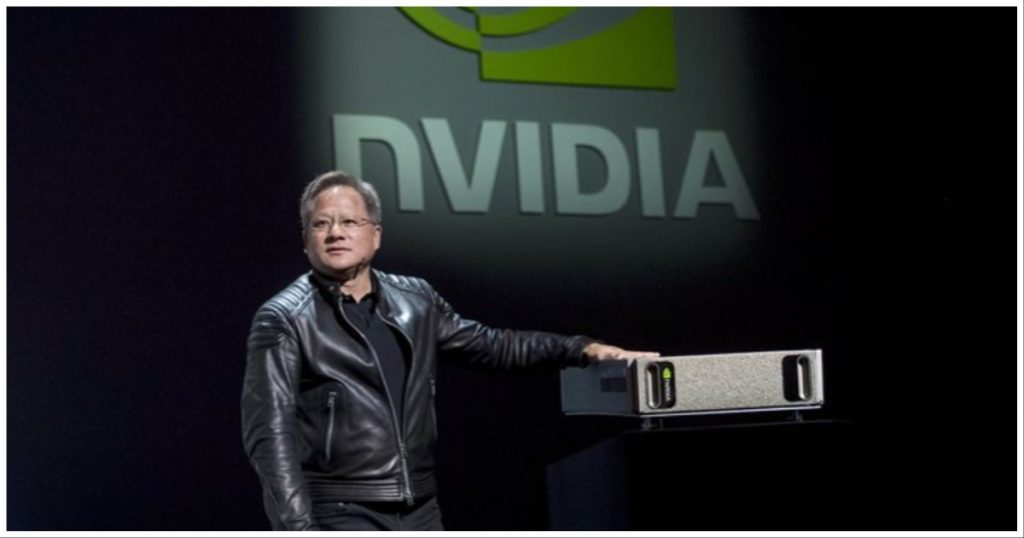
That philosophy, he explained, is why Nvidia doesn’t look like other companies. “Somebody asked me, ‘Jensen, if you don’t use conventional management and organizational techniques, what’s going to happen when you leave the company?'” he recalled. His answer: “Well, when I die on the job someday, I told them, they’ll just have to reshape the company for the next CEO.”
He framed that as wisdom rather than a flippant reply. “The reason that’s wisdom is because we’re the F1 drivers — we’re the racers, and the world is really competitive, and we’ve got to win and achieve our mission,” he said. “So whatever it takes to fit the car to you, whatever it takes to fit the organization to you, that’s what you ought to do. And the next CEO, whatever the personality is, they can figure it out.”
He had made the same point in that conversation in more detail, describing the practice as ongoing: he is constantly tweaking the company and reshaping its business processes so that he can be more effective.
An Answer That Now Looks Different
When Huang spoke, the question of who would follow him was a hypothetical, and his phrasing, “when I die on the job,” imagined a transition that was decades away. Three months on, the situation is very different. The Wall Street Journal has reported that the board is preparing to oust him after two reported extramarital affairs, and Bloomberg says the board has been working with an outside firm to identify replacements and is weighing a temporary chief. Prediction markets now put the odds of an exit well above even. The board has not announced any decision, and Nvidia has said Huang is committed to continuing as CEO.
If a change does come, it would be sudden rather than planned, and whoever steps in would be taking over a company built around one person’s habits. Huang’s own words are a reasonably clear instruction to them: the structure is theirs to rebuild.
A Company Shaped Around Its Driver
To understand what a successor would be reshaping, it helps to look at how unusual Nvidia’s setup is.
Dozens of direct reports. Most CEOs have five to ten people reporting to them. Huang has said he has around 60, and author Tae Kim has noted that most companies prefer a CEO with six or seven reports and a chief operating officer as another layer. Nvidia doesn’t have a COO. Huang has defended the arrangement as a way to keep layers of management from building up between him and the company.
No one-on-ones. Huang has said he doesn’t do one-on-one meetings with his reports, preferring group sessions where everyone hears the same context and he gives feedback in front of the team. The logic, as described by Airbnb’s Brian Chesky, is that people feel they had a voice in a decision they were part of. Huang has also said he tries to avoid regular operational meetings and hates reporting meetings, preferring to jump into problems that are stuck or ideas that need a push.
“Top 5” emails. In place of formal status reports, employees and executives send short emails every week or two listing the five most important things they’re working on or seeing in the market. Kim says Huang samples around a hundred of these a day and replies to many of them, sending hundreds of emails daily. The idea is to get unfiltered information directly, rather than reports sanitised as they climb through middle management.
An org chart built like a computing stack. Huang has said he dislikes the words “division” and “business unit” and designed the company more like a computer, to deliver an output as efficiently as possible and to adapt quickly in a world where technology changes fast. Nvidia, he says, prefers words like “aligned” to words like “control,” and wants minimal bureaucracy.
A demanding culture. Huang has accepted the description of himself as a demanding perfectionist who is not easy to work for, and says his upbringing taught him to value tough, detailed criticism. Kim has also said Huang is unusually deep in technical details for a CEO, trading AI papers with engineers and sometimes knowing more about a product’s specs than the product manager.
What A Successor Would Inherit
Each of these practices works because of who Huang is. A system in which one person samples a hundred emails a day, sits across dozens of direct reports and drops into projects that are stuck depends on his stamina, his technical range and his willingness to be that involved. That is what Huang means by a car built to fit its driver, and it is also why governance experts have called Nvidia’s succession problem unusually hard. Fortune has noted that Nvidia has no chief operating officer and that Huang’s roughly 60 direct reports leave unclear who is next in line, and a Georgetown professor who studies CEO succession told the magazine the board should have had a plan “telegraphed to the market” a year or two earlier.
Huang has also said he hopes his eventual successor already works at Nvidia. If the board looks outside, the reshaping he described would be even larger. A new CEO coming from another company would be unlikely to run a 60-person direct staff or read hundreds of Top 5 emails, and Huang’s comments suggest he would not expect them to. Whether the structure survives, gets split into more conventional layers, or is rebuilt around a new COO would be one of the first big decisions for whoever takes over.
For a company that has rarely looked back since its founding, that may be less of a risk than it sounds. Huang has described Nvidia’s own history as a series of admissions that the original plan was wrong, from the wrong graphics algorithm and three textbooks that rescued the company in its early years to a contract he had to ask SEGA to pay for even though the technology didn’t work. Reshaping things is something the company has done before.