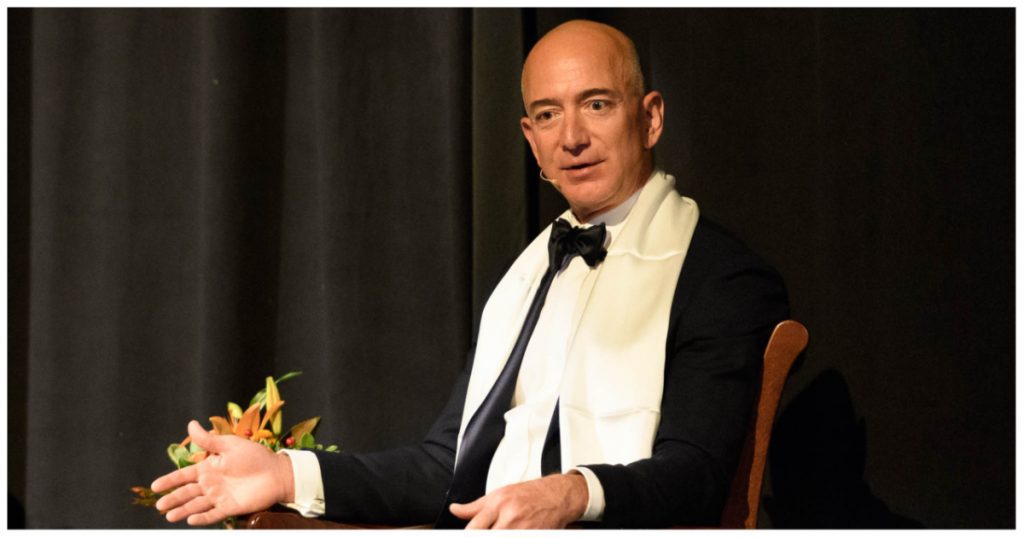
At the VivaTech conference in Paris, Jeff Bezos dropped a snippet of wisdom that can take a while to understand and absorb. Seated alongside Blue Origin CEO Dave Limp — with former NASA astronaut Mike Massimino moderating — Bezos offered a piece of hiring wisdom that sounds like a contradiction until you think about it for more than a second.
“When you’re under 40, never hire your friends. When you’re over 40, only hire your friends.”
It was a classic Bezos formulation: deceptively simple, loaded with decades of lived experience, and the kind of thing that makes more sense the longer you sit with it.
Why Under 40: Friends Are the Wrong Filter
When you’re in your 20s or 30s and building something from scratch, every hire is high stakes. A startup or an early-stage venture has zero margin for sentiment. You need people who are genuinely the best at what they do, and in those years, your friend network is — let’s be honest — mostly people you happened to go to college with, worked alongside in early jobs, or met at the right parties. That’s a pool defined by proximity and shared history, not demonstrated excellence.
Hiring a friend in those years often means hiring someone whose ceiling you think you know, whose comfort around you might dull the professional edge you both need, and whose presence creates awkward dependencies when performance becomes an issue. The feedback loops get muddled. You pull punches in reviews. They read social dynamics instead of business signals. And if it goes wrong — and it often does — you’ve lost both a colleague and a friendship.
Bezos built Amazon with a hiring philosophy that was almost clinical in its standards. His three-question framework from the 1998 shareholder letter — will you admire this person, will they raise the bar, do they have unique skills that make the team better — was ruthlessly about merit. There was no “we go way back” in those criteria. His first job ad for Amazon, posted on Usenet in 1994, demanded people who were “three times as productive as other competent people.” That’s not a friend request — that’s a talent filter.
Why Over 40: Trust Becomes the Scarcest Resource
The second half of the line is where things get interesting.
Once you’ve been in the game long enough, the nature of what you’re trying to accomplish changes. You’re not just scaling a function or shipping a product — you’re navigating complex organizations, long-horizon bets, and decisions where the quality of information flowing to you depends entirely on who’s willing to tell you hard truths. At that level, competence is table stakes. Almost everyone in the room is capable. What becomes rare is genuine trust.
And trust, the kind that lets you be honest without political calculation, is something that takes years to develop. Your friends from your professional life — the people who’ve been in the room with you through bad quarters, hard pivots, and failed launches — they’ve already passed that test. They know you, and more importantly, you know them. You know how they think, where they’re strong, where they need covering, and whether they’ll tell you what you need to hear instead of what you want to hear.
That’s exactly what Bezos did with Dave Limp. Limp joined Amazon in 2010 and spent over 13 years there as one of Bezos’s most trusted senior executives. He ran the Devices and Services division — Alexa, Echo, Kindle, Ring, Kindle, Fire TV — essentially every major hardware bet Amazon made. He was also part of Amazon’s S-Team, the small circle of senior executives that Bezos relied on for the company’s most consequential decisions. According to CNBC, Limp and Bezos worked closely together through some of Amazon’s highest-stakes product launches, including Alexa and Echo, which were personal passion projects of Bezos’s.
When Blue Origin needed a new CEO in late 2023, Bezos didn’t put up a job listing. He called someone he trusted implicitly and spent two months convincing him to take the role. Limp’s initial concern was straightforward — he didn’t know much about rockets. But Bezos knew what he was actually hiring for: judgment, operational credibility, the ability to build culture and move fast in a complex organization. The rockets could be learned. The trust between them had been built over more than a decade.
That’s the “over 40” logic in practice.
The Compounding Value of Long Relationships
There’s another dimension to this that Bezos left implicit. By the time you’re in your 40s and beyond, your high-quality professional relationships have been tested and refined over decades. The people who’ve stayed in your orbit aren’t there by accident. They’ve made it through the professional crucible with you. They’ve been right when you were wrong, and probably vice versa. That history creates a shorthand that’s genuinely hard to replicate with someone new, no matter how talented.
Bezos has spoken at length about the cost of bad information flow inside large organizations. In his morning routine and decision-making philosophy, he’s described the importance of making a small number of high-quality decisions rather than many mediocre ones. When your information environment is contaminated — by people managing up, by political signals, by yes-men — even the best decision-making framework breaks down. People you’ve known for twenty years are structurally less likely to manage you, because the relationship predates the hierarchy.
This is probably the deepest reason why the logic flips after 40. In your early years, competence is the constraint. In your later years, honest information is.
What This Means in Practice
Bezos’s line isn’t a license to run a nepotistic operation. The underlying standard doesn’t change — you still need people who are genuinely excellent. What changes is that your pool of excellent, trusted people has matured alongside you. By your 40s, your friends aren’t just people from school — they’re people who’ve earned professional credibility over decades, and whose abilities you’ve actually observed under pressure.
The early Bezos who was building Amazon from a converted garage needed to maintain a talent bar that had nothing to do with personal history. The Bezos standing on a stage in Paris in 2026, running a space company with ten thousand employees and building an AI venture in Prometheus, is operating from a completely different position — one where the question of trust has become at least as important as the question of skill.
Dave Limp is, in that sense, the living proof of the aphorism. Bezos didn’t hire his friend to do him a favor. He hired him because after 13 years of close collaboration, he had near-perfect information about what Limp would do in any given situation. At the level Blue Origin is operating — building rockets, competing in a market with SpaceX, managing billions in contracts — that kind of certainty has enormous value.
The rule sounds like a paradox. It’s actually just an observation about where the bottleneck shifts as careers mature.