The recent crackdown on food safety violations in Maharashtra has also reached the doorsteps of quick-commerce firms.
The Maharashtra Food and Drug Administration has suspended the food licence of Blink Commerce Pvt Ltd, the entity that runs Blinkit’s warehouse in Malad West, Mumbai, after inspectors found the facility riddled with hygiene violations ranging from expired and tampered products to a large-scale cockroach infestation.
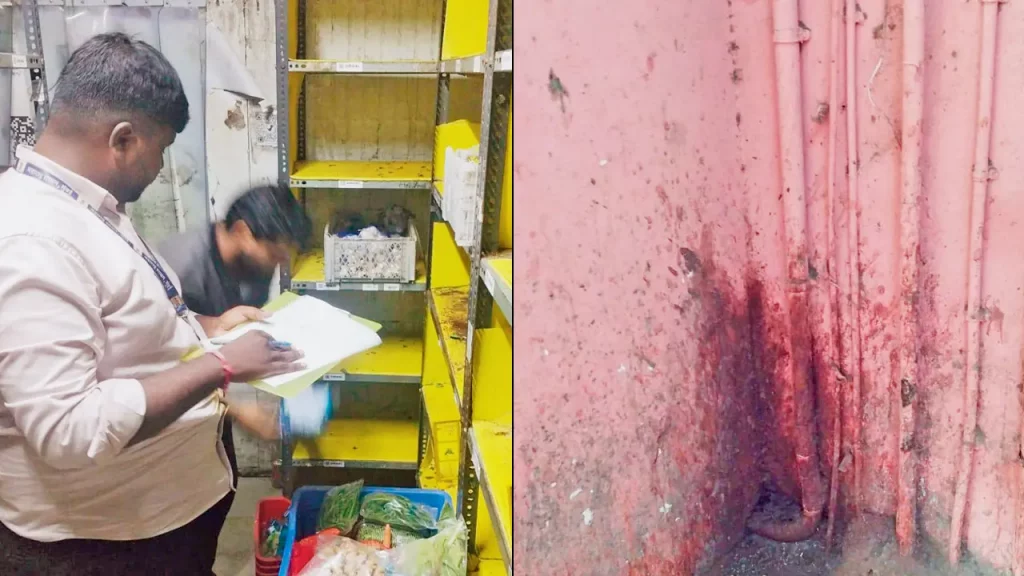
The Times of India reported that the suspension follows an inspection carried out on 7 August at the warehouse located in Sarvodaya Bhuvan on Ramchandra Lane. FDA officials who visited the site described conditions that were severely unhygienic, with food items found stored on rusted racks or simply left on the floor instead of being stacked properly. Cockroaches had made their way into stocks of fresh fruits and vegetables, according to the officials.
The inspection report also flagged the absence of adequate pest and rodent control across the facility’s storage and handling sections. Waste management practices at the warehouse were found wanting as well, and expired and damaged packaged food items were reportedly kept alongside fresh stock inside cold rooms, a practice that runs against basic food safety protocol.
Beyond the storage conditions, the FDA also found gaps on the compliance side. Fitness and health check-up records for the food handlers working at the facility were missing, and workers did not have access to proper protective gear while on duty.
This is not the first time a Blinkit facility has run into trouble with the state’s food safety regulator. In late July, the FDA suspended the licence of another Blinkit warehouse, this one in Pune. And last year, the regulator had also acted against a Blinkit facility in Pune after finding fungal growth on food items, stagnant water pooling near storage areas, and cold storage units that weren’t maintaining the required temperatures. Food items in that case too were found stored directly on the floor.
Blinkit isn’t the only quick-commerce player that has drawn the FDA’s attention this year. The regulator suspended the licence of a Zepto warehouse in Dharavi after finding comparable violations, including food items with visible fungal growth and expired stock mixed in with fresh inventory. The FDA had described those findings as pointing to gross non-compliance with food licence conditions and a clear risk to public health.
The pattern points to a broader issue with how India’s quick-commerce companies run their dark stores and backend warehouses, the very infrastructure that lets them promise groceries and food delivered within minutes. Blinkit has been consolidating and restructuring parts of this backend network over the past few years, including merging several of its fulfilment warehouses with Zomato’s Hyperpure supply chain business. Zomato Hyperpure’s own warehouse in Telangana was raided last year over food items carrying “future” packaging dates, which suggested products may have been relabelled to appear fresher than they actually were.
Regulatory scrutiny of the sector hasn’t been limited to quick-commerce startups either. The Maharashtra FDA has also come under judicial scrutiny recently over how it handled a similar case involving Amazon. Rather than suspending the licence of Amazon’s Bhiwandi facility, the Bombay High Court instead directed the company to hand over its expired and perished goods to the FDA for scientific and safe disposal, according to a Hindustan Times report.
For consumers, the appeal of dark stores has always rested on speed and convenience, with little visibility into what happens behind the app before an order reaches their doorstep. With the FDA now conducting repeated inspections across warehouses run by both Blinkit and Zepto, the gap between the polish of these apps and the state of the facilities supplying them is becoming harder to ignore.