Yet another Indian graduate has taken up a major role at a global tech giant.
Uday Ruddarraju, an alumnus of Hyderabad’s Chaitanya Bharathi Institute of Technology (CBIT), has stepped into the role of Chief Technology Officer, Compute at OpenAI, taking charge of the engineering organisation responsible for the company’s commercial compute strategy.
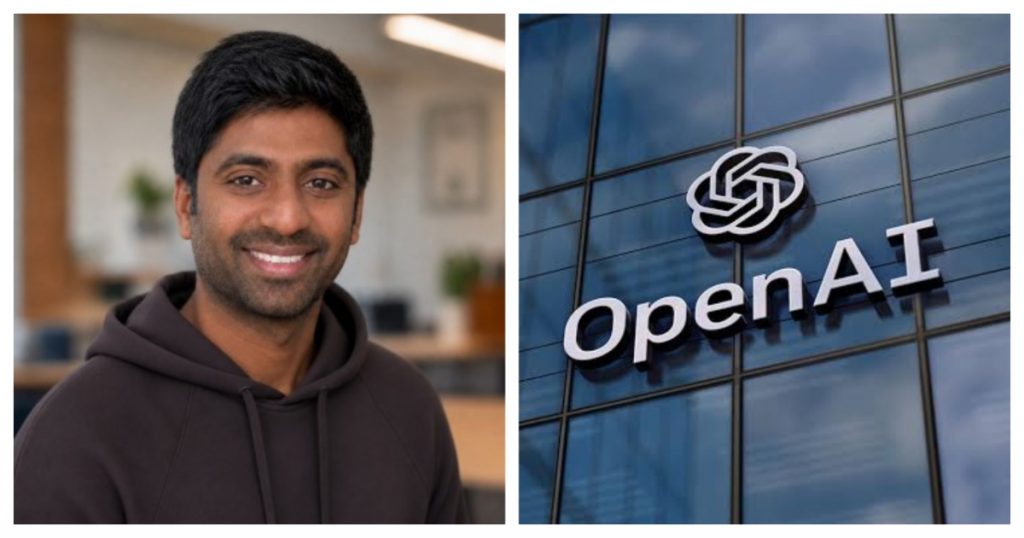
Announcing the move on LinkedIn, Ruddarraju said he is bringing OpenAI’s compute commercial strategy into the engineering organisation he leads, arguing that technical decisions, commercial strategy, supply chain, and delivery need to be built together rather than in silos. “Compute is already the currency of invention and innovation,” he wrote, describing the shift as a preview of what the Compute team is building next.
From A Non-IIT Hyderabad College To OpenAI’s Leadership Table
Ruddarraju’s path to one of the most consequential jobs in AI infrastructure did not run through an IIT or NIT. He completed his Bachelor of Engineering in Computer Science at CBIT in Hyderabad before moving to the United States, where he earned a Master of Science in Computer Science from the University of Minnesota.
His early career included an internship at Amazon and a research assistant stint at the University of Minnesota, before he joined eBay in 2013 as a Software Engineer II on the Cloud Infrastructure team. Over nearly six years there, he rose through Senior Software Engineer, Staff Software Engineer, and eventually Senior Member of Technical Staff on eBay’s Cloud and Platforms team.
From eBay, Uday Ruddarraju moved to Robinhood in 2018, where he spent almost six years, climbing from Staff Software Engineer to Principal Software Engineer before being named Senior Director of Engineering & Head of Infrastructure in 2023. In mid-2024, he left for Elon Musk’s xAI as Head of Infrastructure Engineering across both xAI and X, where he worked on the infrastructure behind the Colossus supercomputer before departing for OpenAI in July 2025 as Head of Compute and Infrastructure.
Building OpenAI’s Compute Organisation
In his LinkedIn post, Ruddarraju laid out the scope of what his engineering organisation now owns: working across chip providers, developing OpenAI’s own chips, and building data centers with partners. He said that understanding how “the entire system comes together” is essential because decisions on chips, systems, and data centers shape the company’s supply chain and its ability to deliver capacity at the pace its roadmap demands.
He pointed to OpenAI’s recent mathematics results as a concrete illustration of what that compute makes possible, noting that an internal frontier model produced new mathematical results using, on average, roughly three hours of ChatGPT Pro-equivalent compute per result. “I see this as a preview of what is possible across science, engineering, and many other fields,” he wrote, tying the infrastructure buildout directly to OpenAI’s stated mission of ensuring AGI benefits all of humanity.
Ruddarraju also flagged OpenAI’s first-party chip programme and its direct compute efforts, including its own builds and work with data center developers, as central to that future. He credited Sam Altman and Greg Brockman’s backing for the scale of the undertaking, calling it “one of the hardest engineering and infrastructure challenges the world takes on.”
The move comes as OpenAI continues to expand its compute footprint globally, including scouting data center capacity in markets like India, where the company opened its first local office in New Delhi this year.
Another Hyderabad Name On The Global Tech Map
Uday Ruddarraju’s rise adds to a growing list of Hyderabad-educated engineers taking on senior roles at global technology firms — both Microsoft CEO Satya Nadella and Adobe CEO Shantanu Narayen studied in Hyderabad. a trend that fits a city whose tech ecosystem has been expanding well beyond its traditional IT services base, as seen with firms like Skyroot setting up shop in Hyderabad. For a CBIT graduate who started out without the pedigree of an IIT or NIT degree, leading the compute organisation at one of the world’s most closely watched AI companies marks a significant milestone.