Kunal Shah has made his first big announcement as the CEO of WhatsApp — and he’s roped in Meta CEO Mark Zuckerberg to do it.
Shah took to X on Tuesday with a screenshot of a WhatsApp video call, Zuckerberg smiling back from a browser tab open on Google Chrome. The image itself was the announcement — WhatsApp calling is now live on the web, meaning users can start and receive voice and video calls straight from web.whatsapp.com without needing the desktop app or their phone nearby. For a platform that has spent over a decade adding features to its mobile and desktop clients before eventually bringing them to the browser, this one arrives with the browser version getting the news practically in step with everything else.
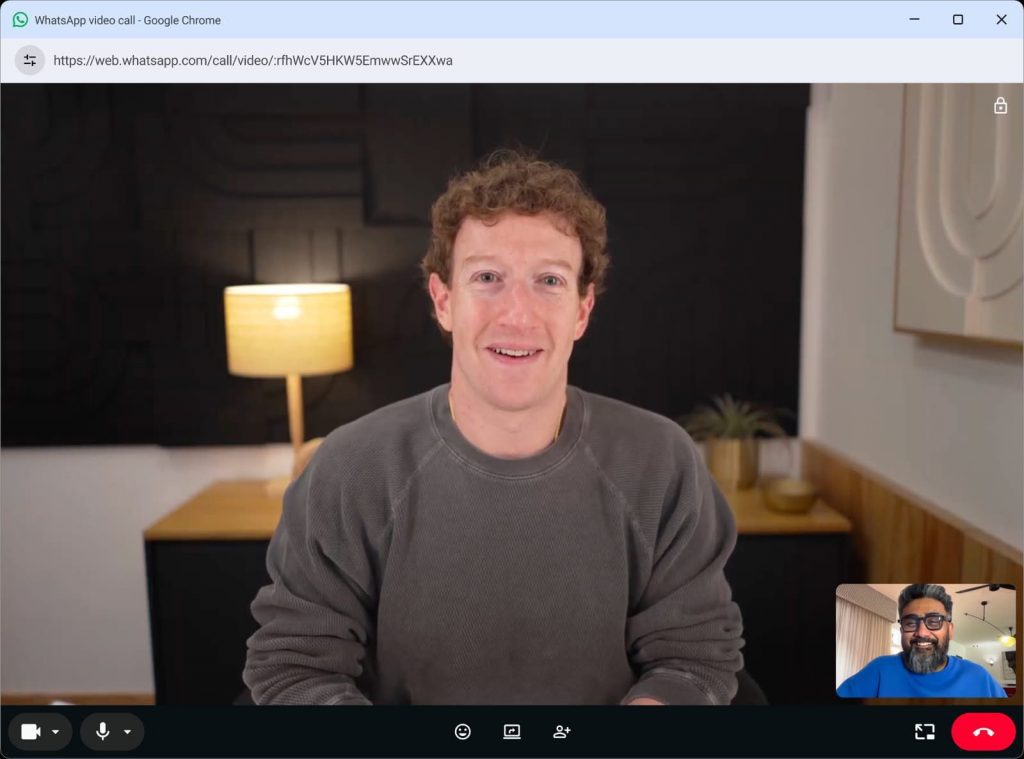
Shah captioned the post referencing the dozens of open Chrome tabs most people already live in, framing the update as something that slots into a workflow users already have rather than asking them to open yet another app. It’s a framing he has leaned on before — Shah has spent years publicly sharing product ideas for WhatsApp long before he ever ran the company, and the instinct to talk about a feature in terms of how people already behave rather than how the product works has carried over.
The browser calling rollout isn’t arriving alone. Shah listed three other updates alongside it. Call Transfer lets a user move an active group call from one device to another without dropping off, useful for anyone who starts a call on their laptop and needs to walk away with their phone. Waiting Room gives hosts the ability to screen and approve participants before letting them into a group call, a feature that group admins juggling large or public calls have wanted for a while. And Background Noise Suppression cleans up audio automatically, aimed at the reality that a lot of WhatsApp calls happen from cafes, offices, or moving cars rather than quiet rooms.
None of these are entirely new ideas in the video calling space — competitors have shipped versions of waiting rooms and noise suppression for years. What’s notable is WhatsApp folding them into a single release rather than trickling them out, and doing so through a picture of its CEO on a call with the head of the company that owns it.
Shah stepped down as CEO of CRED in June to take over as WhatsApp’s global head, a move that came with a $900 million investment from Meta into CRED. Since then he has been fairly active in talking about how he sees the future of tech teams and AI, telling audiences that a small slice of engineers at any startup are pulling dramatically ahead of the rest because of how they’ve adopted AI tools.
With this first product announcement, Shah is signalling how he intends to run WhatsApp’s communications — not through a press release, but a screenshot that reads as ordinary as any call between colleagues, just with over three billion users watching what happens next.