Steve Jobs’ dealmaking was so legendary that even his biggest competitors couldn’t help but admire it.
On April 28, 2003, Apple launched the iTunes Music Store — a legal, pay-per-download service that let users buy individual songs for 99 cents. It was a clean, simple idea, and it worked. Within a week, Apple had sold a million songs. Within the year, it had crossed 70 million. The labels had given Apple terms they hadn’t given anyone else, and Jobs had turned that deal into a product that the music industry’s own services couldn’t touch.
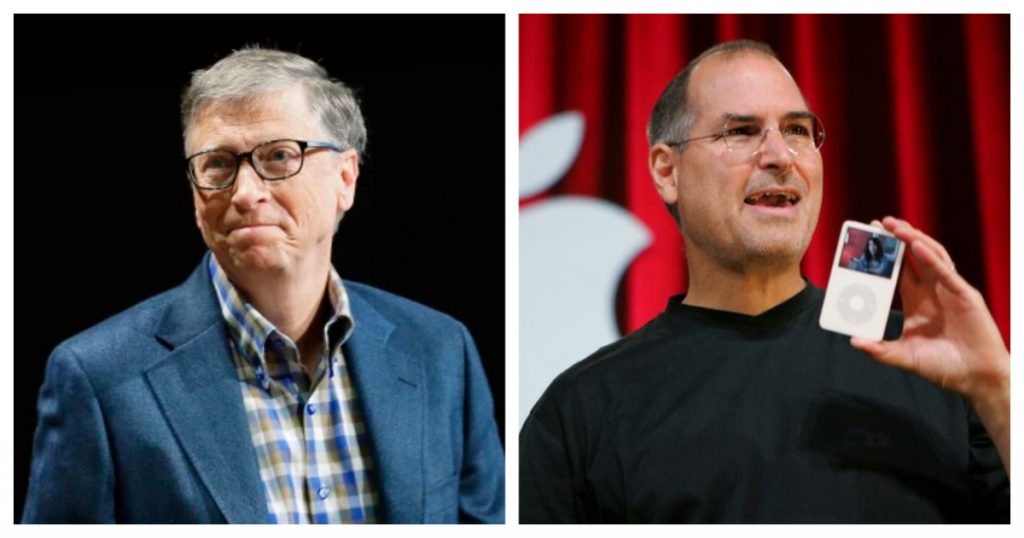
Two days later, on the night of April 30, 2003, Bill Gates sent an email to Microsoft’s senior leadership with the subject line: “Apple’s Jobs again… and time to have a great Windows download service.”
The email — later made public — is a remarkable document. Gates wasn’t dismissive. He wasn’t spinning it internally. He was, by his own admission, puzzled and a little rattled.
“Steve Jobs ability to focus in on a few things that count, get people who get user interface right and market things as revolutionary are amazing things,” Gates wrote.
He then got to what was really bothering him: the licensing deal. “[Steve Jobs] has applied his talents in getting a better licensing deal than anyone else has gotten for music. This is very strange to me. The music companies own operations offer a service that is truly unfriendly to the user and has been reviewed that way consistently. Somehow they decide to give Apple the ability to do something pretty good.”
This was the crux of it. The major labels had their own digital services — Musicnet, Pressplay — and both were widely regarded as terrible. DRM-hobbled, confusing, and stingy with catalog. Yet those same labels had handed Apple a licensing arrangement that let it build something genuinely good. Gates couldn’t figure out how Jobs had pulled that off when everyone else had failed.
He referenced an earlier internal discussion about EMusic: “I remember discussing EMusic and us saying that model was better than subscription because you would know what you are getting. With the subscription who can promise you that the cool new stuff you want (or old stuff) will be there?”
Then came the accountability question — or the lack of one. “I am not saying this strangeness means we messed up,” Gates wrote, “at least if we did so did Real and Pressplay and Musicnet and basically everyone else.”
It’s worth pausing on that line. Gates was essentially noting that Microsoft had failed to secure the same deal, but that this wasn’t unusual — the entire industry had failed. The difference was that Apple had somehow succeeded where everyone else hadn’t.
What Gates was seeing, and articulating clearly, was something that defined Jobs throughout his career: an ability to walk into a room where the terms were fixed and walk out with something nobody else had gotten. The music labels were gatekeepers who had watched the internet eat their business alive, and yet Jobs convinced them to give Apple a deal that no subscription service, no Microsoft-backed platform, no Universal or Sony-owned property had managed to get.
It wasn’t magic. Jobs had spent months in negotiation, flying to New York, meeting with label executives one by one, personally convincing each of them. He made the case that piracy was already happening — Napster had proven that — and that the alternative to a reasonable legal download service wasn’t protection of their catalog, it was more piracy. He also understood that the labels feared subscription models precisely because they didn’t want to cede pricing power. A per-track model let them maintain the illusion of a price floor. Jobs gave them that, and in return got the catalog access and DRM terms that made iTunes actually usable.
Gates understood this was a leadership problem as much as a product problem. “Now that Jobs has done it we need to move fast to get something where the UI and Rights are as good,” he wrote.
The urgency was real. Microsoft’s revenues at the time were roughly five times Apple’s, and the company was in an extraordinarily strong position in software and consumer electronics. But in music downloads specifically, Apple had lapped the field in 48 hours.
Gates concluded with a call to action: “I am not sure whether we should do this through one of these JVs or not. I am not sure what the problems are. However I think we need some plan to prove that even though Jobs has us a bit flat footed again we need to move quick and both match and do stuff better. I’m sure people have a lot of thoughts on this. If the plan is clear no meeting is needed. I want to make sure we are coordinated between Windows DMD, MSN and other groups.”
That word “again” is telling. Gates wasn’t surprised that Jobs had outmaneuvered him — he’d seen it happen before. What he wanted was a plan to close the gap.
Microsoft eventually launched its own music download service, and later the Zune player, but neither made a dent in what Apple had built. The iTunes ecosystem kept growing, binding users to iPods and eventually to the iTunes Store in ways that would lay the groundwork for everything that followed — including the App Store model that would make the iPhone the most profitable consumer product in history.
The 2003 email captures a moment before that future became obvious, when it still looked like Microsoft had time to catch up. Gates’ instinct — move fast, match the UI, sort out the rights — was correct in principle. The execution never quite got there.
Jobs had a way of doing that to his competitors: leaving them with the right diagnosis and not enough runway.