Europe isn’t exactly known for its tech startups, but it has some companies that quietly seem to make quite a large impact.
Bending Spoons is probably the strangest example of that, a Milan-based company that most people outside Italy had never heard of until this summer, and one that now owns a chunk of the internet’s most recognizable software brands. Evernote, WeTransfer, Meetup, Eventbrite, Vimeo, AOL, komoot, StreamYard, Brightcove, and, as of this week, Airtable. All of it run by roughly 620 people out of a single office in Milan.
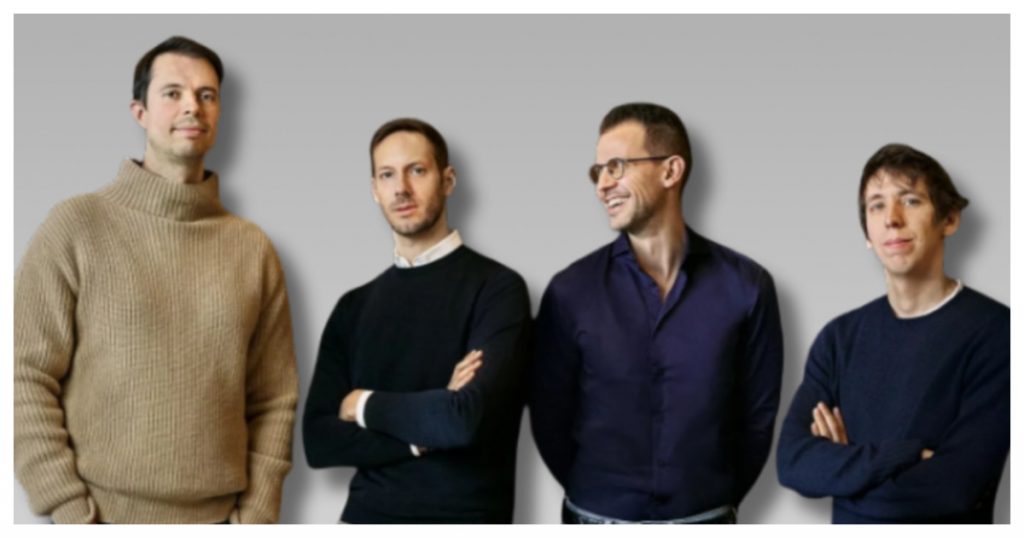
The company just listed on the Nasdaq, bought Airtable for over a billion dollars a month later, and is now openly telling investors it wants to do a thousand more deals like this. The story of how it got here starts, oddly enough, on a beach in Indonesia.
Three Engineers, A Diary App, And A Failed Startup
In August 2010, three Italian engineering graduates, Luca Ferrari, Francesco Patarnello, and Matteo Danieli, were backpacking through Lombok, Indonesia to mark their graduation from the Technical University of Denmark. Exhausted, unable to sleep, they decided that night to start a company together.
The company they built was called Evertale, an app that used AI to help people write their diaries, years before “AI-powered” was a pitch deck cliché. They raised close to $1 million, hired around ten people, and built out the product. It didn’t work. By 2013 the startup was heading toward bankruptcy, and its investors, rather than exercising their liquidation rights, let the founders buy out their shares for a symbolic sum and keep what was left in the bank. That amount was $40,000.
Ferrari has since called the failure “liberating.” While building Evertale, he’d taken a part-time gig at McKinsey to keep the lights on, an arrangement the founders had agreed to beforehand: whoever landed the highest-paying job offer would take it and quietly subsidize the others.
From Building Products To Buying Them
What came out of Evertale’s collapse wasn’t a new product idea. It was a theory about why startups fail. Ferrari and his co-founders had watched talented teams build things nobody wanted, and mediocre teams stumble into products people loved. Their conclusion was that product-market fit had a lot more to do with luck than founders like to admit, and that their own hard-earned operating skill had simply been wasted on the wrong product.
So instead of hunting for product-market fit themselves, they decided to buy companies that already had it, and run them better than the people who built them. With the leftover $40,000 and two former Evertale employees, Luca Querella and Tomasz Greber, they founded Bending Spoons in Copenhagen in June 2013. The name comes from the scene in The Matrix where a child bends a spoon with his mind, a nod to the idea of attempting the seemingly impossible. Employees are still called “Spooners” today. The company relocated to Milan in 2014, a deliberate bet, Ferrari has said, that succeeding from a country not known for tech talent would count for more than doing it from London or Berlin.
The First Deal, And A Decade Of Buying
Bending Spoons’ first acquisition, in 2014, was almost comically small: an iPhone keyboard app bought for around $10,000. It wasn’t glamorous, but it set the template. Buy an app, apply better engineering and monetization, run it profitably. Over the next several years the company built up a portfolio of mobile apps this way, largely under the radar, while quietly getting good at the mechanics of distribution and subscription growth.
The scale of the deals grew steadily. In 2018 it picked up Splice, a video editing app spun out of GoPro, and by 2021, with the acquisition of photo-enhancement app Remini, the company had entered what people close to it describe as its modern era. From there the acquisitions got bigger and far more recognizable: Evernote in 2023, WeTransfer and Meetup, StreamYard and the remainder of Hopin in 2024, and then, through 2025 and into 2026, an extraordinary run that added komoot, Harvest, MileIQ, Vimeo, AOL, Brightcove, and Eventbrite to the portfolio.
There was one year, though, where Bending Spoons didn’t buy a single company. In 2020, with Italy in the grip of the pandemic, the government asked the company to build the country’s official COVID-19 contact-tracing app. Bending Spoons built Immuni and handed it over free of charge, under a perpetual, royalty-free license, and paused its acquisition machine for the year to do it.
The Playbook: Buy, Fix, Keep
By the time Bending Spoons filed to go public in 2026, it had made more than 50 acquisitions and built up a user base north of 500 million monthly actives across its portfolio, run by a core team of roughly 620 people. The way it gets there is fairly consistent across every deal: acquire a well-known brand that has plateaued, strip out layers of management, rebuild the technology stack, and raise prices, then hold the business for its earnings rather than flip it.
The Evernote deal is the clearest illustration of how aggressive that process gets. At acquisition the note-taking app had over 200 million accounts created and technology that had barely been touched in years. Within twelve months, Bending Spoons cut headcount from 341 people to 60, an 82 percent reduction, collapsed four layers of management into two, and rebuilt the backend from a monolith into microservices. StreamYard went through a similar squeeze, from 154 employees to 44. Teams acquired through the AOL, Eventbrite, and Vimeo deals, roughly 1,830 people combined, are expected to shrink to a few hundred by the end of 2026.
What makes this possible at that speed is a heavy, explicit bet on AI inside the engineering organization itself. According to the company’s own IPO disclosures, the share of code changes authored or co-authored by AI systems rose from under 10 percent in the first quarter of 2025 to more than 90 percent by the first quarter of 2026, with roughly 70 percent of that code written by AI with no human co-author at all. Revenue per Spooner climbed from $1.12 million in 2023 to $2.57 million in 2025. Ferrari has described the resulting entity as something between private equity and a technology company, a description that also happens to fit how AI has been quietly reshaping what a lean software organization is capable of, well beyond Bending Spoons.
The hiring bar underneath all this is brutal by design. In 2025 alone the company received roughly 800,000 job applications and made just 286 hires, an acceptance rate below 0.04 percent.
Going Public, Then Going Shopping Again
Bending Spoons priced its IPO at $29 a share on July 1, 2026, raising $1.68 billion in one of the largest listings by a European company in years. Shares closed their first day at $40.50, up nearly 40 percent, valuing the company at roughly $25.7 billion. The offering turned all four co-founders into billionaires on paper, and it made the company, by revenue, one of the fastest-growing public software businesses around: revenue had compounded at roughly 84 percent annually since 2023, hitting $1.31 billion in 2025 and $601 million in the first quarter of 2026 alone, more than double the same period a year earlier. Net income flipped from a $112 million loss to a $27.5 million profit over that same stretch.
None of that came for free. As of the IPO, Bending Spoons was carrying $4.4 billion in total debt against $741 million in cash, leverage of roughly 4x net debt to adjusted earnings, and management has been explicit that the fresh IPO proceeds are earmarked for more acquisitions, not paying that debt down.
That intent didn’t take long to show up. On August 4, 2026, exactly a month after ringing the Nasdaq bell, Bending Spoons announced its first acquisition as a public company: Airtable, the no-code database and spreadsheet platform, for $1.285 billion in an all-cash deal. It’s a sharp comedown from Airtable’s peak private valuation of $11 billion in 2021, and it lands Bending Spoons a business generating roughly $480 million in annual recurring revenue, growing north of 20 percent year over year. The company has reportedly already identified around 1,000 further acquisition targets.
Why This Matters Beyond Italy
Bending Spoons is a strange kind of tech giant. It builds almost nothing from scratch, employs a headcount smaller than most mid-sized SaaS companies, and runs itself more like a private equity fund than a Silicon Valley rollup, yet it now sits behind the software that hundreds of millions of people use every day to store their notes, send large files, buy event tickets, and increasingly, manage their spreadsheets. Its bet is that AI has changed the arithmetic of running acquired software businesses so dramatically that the old rules about headcount and integration timelines no longer apply.
Whether that bet holds at Airtable’s scale, and at the scale of the thousand deals still reportedly on the table, will say a lot about where the software industry is headed. For now, the Spooners have a phrase for how they think about all of it, borrowed from the very movie their company is named after: there is no spoon.