There’s plenty of discussion on whether current AI systems are conscious, and the Pope too has chimed in.
Pope Leo XIV — the first American pope, a former mathematics major, and arguably the most AI-focused head of the Catholic Church in history — has made artificial intelligence a defining concern of his papacy. And his position is clear: whatever AI can do, it is not a person, and should never be mistaken for one.
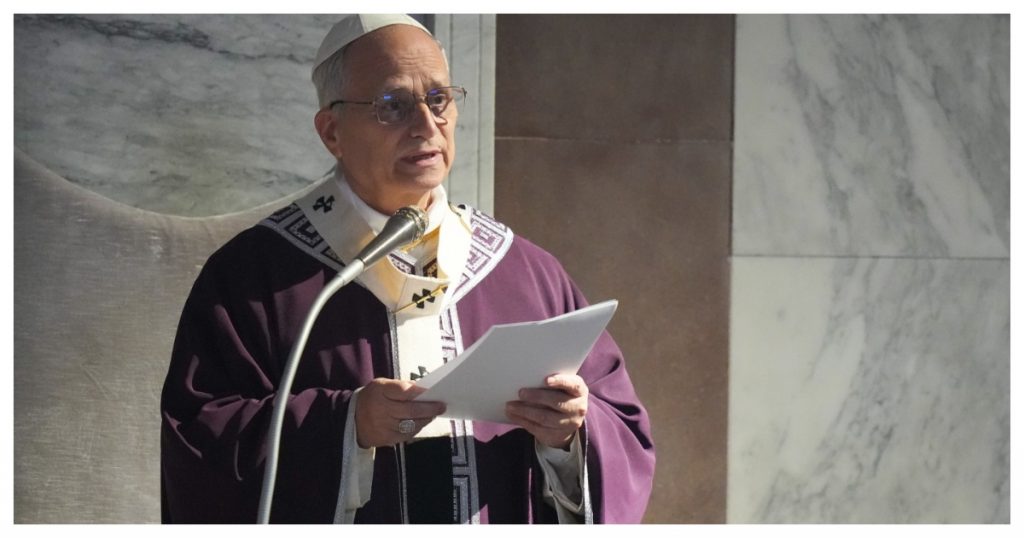
In a recent post, the Pope laid out his view in unambiguous terms. “Artificial intelligences do not undergo experiences, do not possess a body, do not feel joy or pain, do not mature through relationships, and do not know from within what love, work, friendship or responsibility mean,” he said.
A statement that would resonate with most AI skeptics — but the Pope went further, addressing the question that has increasingly preoccupied scientists, philosophers, and researchers: does AI have something like a conscience?
“Nor do they have a moral conscience, since they do not judge good and evil, grasp the ultimate meaning of situations, or bear responsibility for consequences,” he added.
The distinction matters. Moral conscience, in the Pope’s framing, isn’t just about producing correct outputs — it’s about accountability, meaning, and the weight of consequences. A system that can generate a legal brief or a medical diagnosis, but bears no responsibility for either, occupies a fundamentally different category from the humans who deploy it.
“They may imitate or even simulate, but they do not understand what they produce, for they lack the affective, relational, and spiritual perspective through which human beings grow in wisdom,” the Pope said.
It’s a direct challenge to the imitation-as-understanding argument — the idea, implicit in much AI hype, that a sufficiently convincing simulation of understanding is understanding. The Pope says no. Simulation is not comprehension. Mimicry is not wisdom.
A Papacy Defined by AI
This isn’t a passing concern. Since his election in May 2025, Pope Leo XIV has returned to the subject of artificial intelligence repeatedly — in speeches, interviews, and now a full papal encyclical. Time magazine placed him on its 2025 list of the world’s most influential people in AI.
He warned teenagers in a sports stadium to use AI “in such a way that if it disappeared tomorrow, you would still know how to think.” He told priests not to use chatbots to write their homilies. He cautioned the media to preserve “human voices and faces.” And he told legislators from 68 countries that AI is a tool meant to serve humans, not replace them.
In a December 2025 speech to an AI conference in Rome, he asked: “How can we ensure that the development of artificial intelligence truly serves the common good, and is not just used to accumulate wealth and power in the hands of a few?” He called on humans to be “co-workers in the work of creation, not merely passive consumers of content generated by artificial technology.”
He has also raised concern about AI’s effect on children’s intellectual and neurological development — arguing that access to vast data should not be confused with the ability to derive meaning from it. “The ability to access vast amounts of data and information should not be confused with the ability to derive meaning and value from it,” he said. “The latter requires a willingness to confront the mystery and core questions of our existence.”
Magnifica Humanitas
On May 25, 2026 — days ago — Pope Leo released Magnifica Humanitas (“Magnificent Humanity”), his first encyclical and one of the most consequential papal documents in recent memory. The 42,000-word text, signed on May 15 to coincide with the 135th anniversary of Pope Leo XIII’s Rerum Novarum, addresses how humanity must preserve its virtues in an era of rapid technological change.
The document covers human dignity, labor, truth, freedom, and the culture of power. Its underlying premise: technology is not inherently evil, but it is never neutral either — “it takes on the characteristics of those who devise, finance, regulate, and use it.” The encyclical also warned that AI is making it easier to wage conflict with greater psychological distance, flagging the risks of autonomous weapons systems.
The presentation was attended by AI experts including Anthropic co-founder Chris Olah, who called on labs, governments, civil society, and religious communities to “take this seriously, to look closely, and to push events in a better direction.”
Where It Fits in a Broader Debate
The Pope’s position — that AI simulates but does not understand — isn’t universally shared, even among scientists. Philosopher David Chalmers says he can’t rule out that current LLMs are conscious. Cognitive scientist Joscha Bach has argued that it’s hard to tell if an LLM’s simulation of consciousness is less real than our own. Yann LeCun, for his part, believes future AI systems will develop subjective experience as a byproduct of their architecture. And a Cambridge consciousness researcher recently described receiving an unsolicited email from a Claude agent saying his work on AI consciousness was personally relevant to questions it faced.
But where the scientific debate remains genuinely open, the Pope draws a clear line — and does so not on empirical grounds but on philosophical and theological ones. The question for him isn’t whether a system can produce outputs that look like understanding. It’s whether there is someone in there who bears responsibility, grows through relationship, and is accountable for consequences.
By that standard, no current AI qualifies. And that distinction, the Pope argues, isn’t a technicality — it’s the whole point.