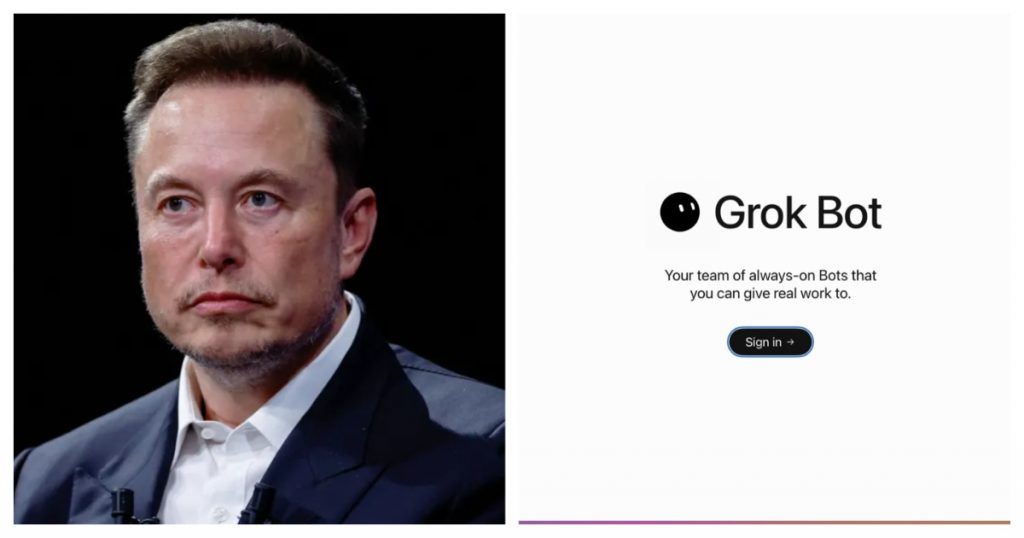
Paying Grok Bot users have spent weeks complaining that they hit their usage caps too quickly. Elon Musk has now made clear that he won’t be fixing that by simply handing out more usage.
“We can’t scale a negative gross margin business. That’s just impossible,” Musk wrote on X, replying to a user who had compared Grok Bot’s limits unfavourably with those of OpenAI’s competing agents.
The Complaint
The exchange began with a post from Nic Vandewetering, who set out the trade-off that power users of AI agents are facing right now. “Grok Bot usage limits are still very bad,” he wrote. “ChatGPT Dot usage limits are basically unlimited, but it’s slow and runs into tons of blockers.”
Vandewetering said that if Grok Bot could solve its usage limit problem, it would be “the best Personal Agent AI experience out there. Hands down.” On the other hand, if OpenAI’s dots could match Grok Bot’s speed while keeping their generous usage, “they win.” He ended by asking his followers whether this was what would decide where their money went in 2027.
Musk’s Response
Musk’s reply, which has been viewed more than 2 million times, argued that generous limits aren’t free, and that someone has to pay for the compute behind them.
“Muse is a personal assistant, but doesn’t apply the level of heavy-hitter AI needed to operate a company at serious scale,” he wrote, referring to Meta’s personal agent.
He then gave his case for charging more. “If Grok Bots are providing high value on par with having excellent employees, then the monthly cost can be quite high, but still deliver outstanding RoI,” Musk said.
He also admitted the company has made mistakes. “However, if we do something dumb, like making it complicated to upgrade to higher usage tiers (a mistake we’ve made before), then we need to fix that.”
A Familiar Theme
This isn’t the first time Musk has spoken plainly about Grok Bot’s economics. Earlier this month, after users reported hitting 100 percent of their weekly allowance with days still left in the cycle, Musk said that the cost of serving Grok Bot was unsustainably high relative to revenue. Limits were tightened, and some users called it a bait-and-switch.
The new comments go a step further. They suggest the limits weren’t a short-term fix but reflect how Musk thinks the product has to be priced. If each extra unit of usage costs more to serve than it brings in, then a bigger user base makes the losses bigger, not smaller. The usual software playbook of growing first and fixing margins later doesn’t work when every user has a real, ongoing compute bill.
Musk’s answer is to lean into the “AI employee” pitch. If Grok Bot can do the work of a capable staff member, then a monthly bill far above typical consumer subscription prices could still be a bargain for a business. Grok Bot’s highest tier currently costs $200 a month, and Musk appears to be signalling that heavy users should expect to pay at least that, and possibly more.
The Wider Agent Wars
The exchange comes amid an increasingly crowded and combative personal-agent market. OpenAI launched dots at its DevDay in September, weeks after Meta debuted Muse, and staff from the three companies have been trading barbs over their respective agents on X. The rivalry has largely come down to who actually has the compute to keep these always-on agents running.
That makes Musk’s admission notable. Agents that run continuously in the background on their own cloud computers use far more compute than chatbots do, and companies are taking different approaches to that cost. OpenAI appears willing to offer slightly more generous usage and absorb the cost, at least for now, while Musk is betting that customers will pay more for a faster, more capable product.
Musk has also been warning about the financial pressure across the industry more broadly. Last week he predicted a severe cash shortage for the AI buildout next year, arguing that the gap between paying for compute and earning revenue from it could strain even well-funded companies. And according to reports, he has told employees internally that it has become more lucrative to rent out his company’s compute than to use it for its own products. Seen that way, every unprofitable Grok Bot session uses compute that could have been sold at a profit.
The underlying question is the one Microsoft CEO Satya Nadella has raised before: the marginal productivity improvement has to match the marginal cost of tokens. Musk is betting that Grok Bot clears that bar comfortably enough for users to pay a premium. The X user’s question about where people will spend their money in 2027 will show whether users agree, or whether they choose the cheaper, more generous, if slower, alternatives.