DeepSeek isn’t just pioneering open-sourcing its models — it’s also taking the lead in open-sourcing its related harnesses.
DeepSeek has open-sourced DeepInfer, the inference framework it uses internally to serve its models at scale, making public the production stack behind one of the industry’s most closely watched AI labs.
The company announced the release in a series of posts, describing DeepInfer as the system powering DeepSeek-V4.1-Flash in production, built for high throughput and low latency. DeepSeek said it is sharing the stack to help the broader community bring down compute costs, cut energy use, and make large-scale AI deployment more affordable — a goal that lines up with the lab’s long-standing reputation for pushing capable models out at a fraction of what rivals charge.
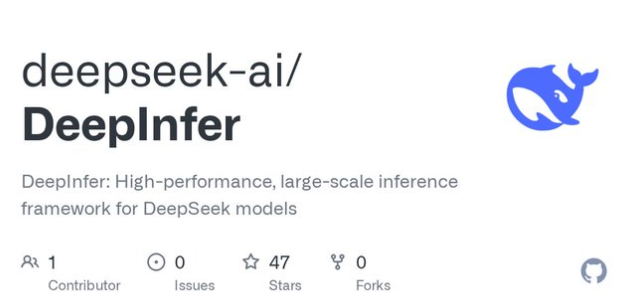
What’s Inside DeepInfer
The open-sourced framework includes several components DeepSeek has been running internally, including high-performance kernels paired with an optimized inference engine, support for distributed inference and speculative decoding, and SWA Bounded Replay along with structured output support.
DeepSeek says inference code for its upcoming models, along with ongoing optimization work, will continue to be published to the same repository going forward, suggesting DeepInfer is meant to be a living project rather than a one-time code dump.
The release is particularly notable given how compute-constrained Chinese AI labs have had to get creative with efficiency gains rather than simply throwing more chips at the problem. Industry analysts have pointed out that even as frontier labs pour resources into pre-training, a growing share of the compute battle is now being fought at the post-training and inference stage — exactly the layer DeepInfer is aimed at.
DeepSeek-Recipe Also Released
Alongside DeepInfer, DeepSeek has open-sourced deepseek-recipe, described as the production component responsible for token encoding and decoding. The company says it is aligned with the processing logic behind the official DeepSeek API, which should let community deployments replicate the same behavior developers get when calling DeepSeek’s hosted endpoints directly.
Together, the two releases cover both ends of the inference pipeline — how tokens are prepared and interpreted, and how the model itself is run efficiently at scale.
Why It Matters
DeepSeek has built its reputation on undercutting Western AI labs on price while open-sourcing model weights that rival closed alternatives. Opening up the inference stack itself is a step further: it hands developers and smaller labs the actual engineering playbook DeepSeek uses to keep its own serving costs down, rather than just the models that run on top of it.
The company framed the release as part of a broader commitment to open infrastructure — “open models, open kernels, open inference” — spanning everything from private deployments to public cloud environments. The code for both projects is available on GitHub, and DeepSeek has invited the community to explore it, contribute, and build on it directly.