The human impact of runaway progress is leading to some poignant stories.
Hugo Duminil-Copin, who won the Fields Medal in 2022 for his work on phase transitions in statistical physics, says the last few weeks have taken a real emotional toll on him, to the point where he broke down crying badly enough one night that it woke his daughter.
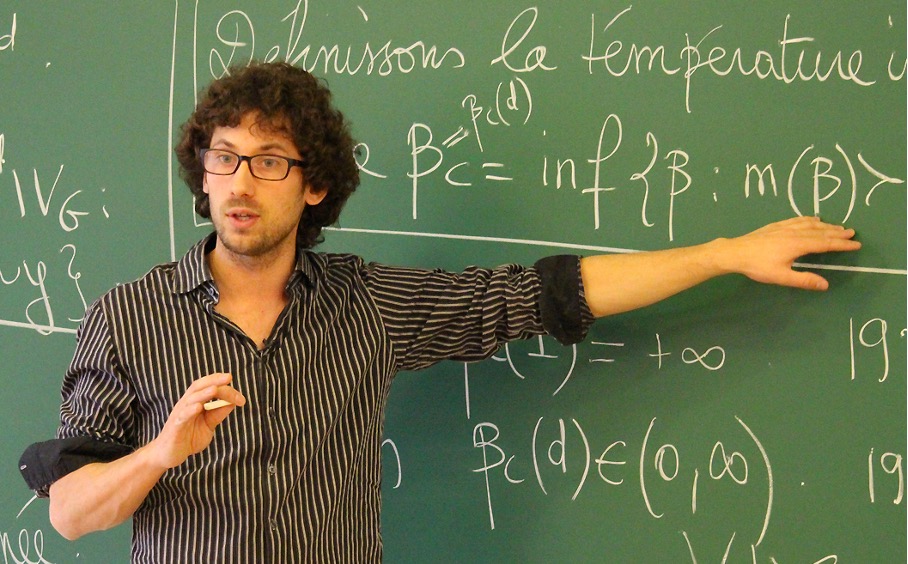
Speaking during a video call hosted by the French Mathematical Society on October 8, Duminil-Copin described OpenAI’s latest math dump as having wiped out years of his own research agenda in one go. He said that nearly every open problem he had flagged in his lectures, papers and grant applications had suddenly been resolved, and that it felt like getting hit by a truck.
What OpenAI actually released
The release he’s reacting to landed on October 6, when OpenAI pushed more than 700 manuscripts, organized into over 370 “result families,” to a public GitHub repository, covering progress on hundreds of long-standing open math problems. The work came out of an unreleased internal model that was reportedly pointed at roughly 4,000 problems, with the company saying the average result consumed about three hours of compute at the level of ChatGPT Pro. Only a portion of the manuscripts had been formally verified in the Lean proof assistant at the time of release, and OpenAI pulled a few of them within a day after an error was found.
This is the same model OpenAI says resolved the Navier-Stokes existence and smoothness problem, one of the seven Millennium Prize Problems that carries a $1 million reward from the Clay Mathematics Institute, announced back in September. OpenAI described the system behind that result as notably more capable than GPT-6 Astra, and the October release appears to be the same model being turned loose on a much larger batch of problems at once.
“They annihilated my area of research”
During the call, Duminil-Copin said OpenAI had wiped out his field of study, and showed a slide, generated with AI, of a rabbit being run over by a convoy of trucks to make his point. He went further in the Q&A that followed, describing what had happened to his corner of mathematics as a dismantling of the work his community does.
Sixteen of the questions he personally cared about were among those the company says it addressed.
This isn’t the first jolt for Duminil-Copin this year. In April, he got an early look at how capable these systems had become. And on September 8, OpenAI had already rattled the math world once by claiming to have cracked Navier-Stokes, a problem that had resisted proof for decades.
A pattern mathematicians have been flagging for months
Duminil-Copin’s reaction fits into a broader standoff that’s been building between OpenAI and the math community since late summer. Mathematicians have accused the company of using unresolved problems as a marketing tool for its models, of moving faster than anyone can realistically referee the work, and in at least one case, of producing results that resembled unpublished research from other mathematicians without credit. The pushback got loud enough that OpenAI set up an outside advisory group of mathematicians to weigh in on how it evaluates and announces this kind of work going forward.
Since the OpenAI release, Terence Tao has hinted that OpenAI wasn’t behaving responsibly when it released their proofs, and said that it would make the field less fertile. An Association of Human Mathematicians has gone further, saying that mathematicians never asked for these proofs, and has called OpenAI’d drop a “demonstration of power”.
Whether the new batch of proofs holds up to scrutiny is still an open question — mathematicians are only beginning to work through the hundreds of manuscripts OpenAI put online. But for a researcher like Duminil-Copin, the damage to morale appears to have already landed before the verification even begins. He said in the call that he’s most worried about what this means for young people deciding whether a career in math is still worth pursuing, now that a model can plow through in hours what used to take a career to chip away at.