Fields Medalist Terence Tao has said that OpenAI selectively used only a few upbeat snippets from a much longer, hour-long conversation he had with the company for one of its recent advertisements, leaving out the fuller, more balanced picture of risk and opportunity he says he tried to convey.
In a lengthy blog comment reflecting on his relationship with the AI industry, Tao — Director of Special Projects at UCLA’s Institute for Pure and Applied Mathematics (IPAM) — explained the circumstances that led to his appearance in the ad. Earlier this year, IPAM faced what he described as a serious funding shortfall after NSF and NIH funding was unexpectedly suspended (and later restored by a court order). To help stabilize the institute’s finances, Tao reached out to several companies for sponsorship, and OpenAI agreed to back an IPAM workshop held in March, which he says was scientifically productive and brought together academics and industry figures.
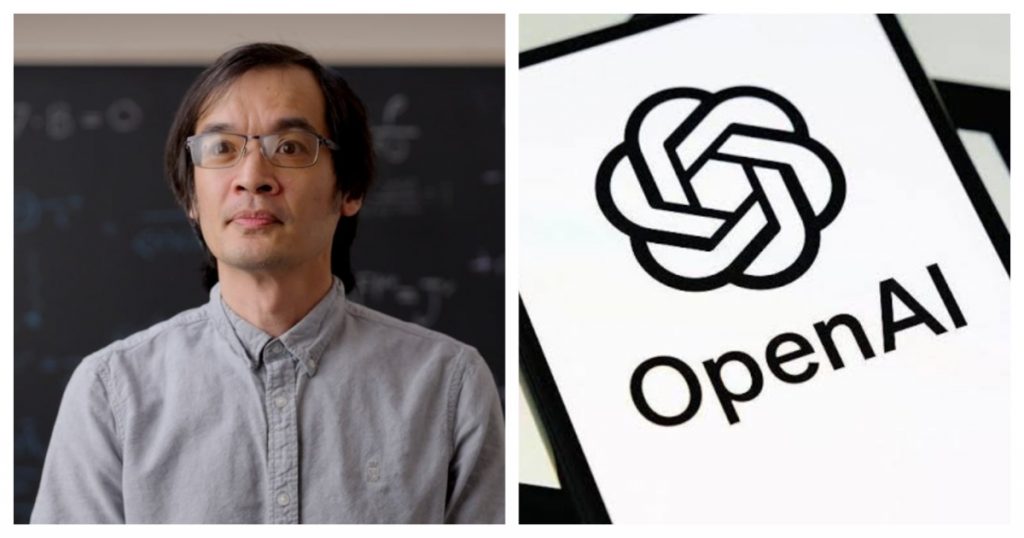
It was during that event that OpenAI asked to interview him about his views on the future of AI and mathematics. Tao agreed, and the conversation ran for close to an hour. Based on his experience with similar interviews elsewhere, he assumed OpenAI would eventually publish the conversation in full. Instead, the company pulled out a handful of lines for the advertisement — the one where Tao is introduced as IPAM’s Director of Special Projects and describes AI as letting him “try crazier things,” using it to offload computations neither he nor a collaborator wants to do by hand, and to search the literature more effectively, before concluding that AI is now “ready for primetime” for his work.
This is what OpenAI’s ad showed Tao saying:
“ I’m Terence Tao. I’m Director of Special Projects here at IPAM, the Institute for Pure and Applied Mathematics. AI has really been, um, improving very rapidly. It allows me to experiment. I will try crazier things. We can vibe on the blackboard, and then if there’s a computation that neither of us wants to do, we can just get our AI tool to finish that. I can search literature much more accurately and effectively than I could before, so I’m doing way more AI-assisted mathematics and, and collaborative projects. And now I think it’s ready for primetime.”
Tao says that, in hindsight, he wishes he had pushed back harder on OpenAI’s decision to use only excerpts rather than releasing the full interview. At the time, though, he decided that even a partial release would help raise awareness of AI’s potential in mathematics — part of what he calls the “best of both worlds,” where AI is incorporated responsibly into mathematical practice rather than used to chase short-term wins at the expense of the field’s long-term health.
Not simply “pro-AI”
Tao is careful to distance himself from being cast as either a booster or a critic. He describes his position as having evolved considerably since 2023, when he became convinced that large language models and formal proof assistants could be transformative enough for mathematics that the field’s traditional practices would eventually need to adapt. That conviction, he writes, is what pushed him to engage with companies like OpenAI and Google DeepMind, to experiment publicly with new AI-assisted workflows, and to warn against careless use of AI outputs without proper verification — a concern he says was central in 2023–2025 but has since been overtaken by other risks.
He notes he has never been paid by any AI company, though he has received complimentary premium subscriptions to frontier models from several of them, which he uses in his day-to-day work — a disclosure that echoes his own published “living summary” of his views on AI, maintained with AI assistance and periodically updated.
A souring relationship with the industry
Tao’s post frames the OpenAI ad episode as one data point in a broader shift he’s been tracking. He writes that many of the industry figures who once shared his vision of responsible, “best of both worlds” AI adoption have since left or been sidelined, as major labs increasingly prioritize building powerful, autonomous AI systems over the field’s own values.
He points to the ongoing dispute over credit for progress on the Navier–Stokes global regularity problem as the clearest recent example of this widening gap between AI labs’ objectives and mathematics’ own. That episode escalated into a public spat, with OpenAI later issuing a statement denying its researchers or AI agents had seen mathematicians Tristan Buckmaster and Levent Alpöge’s unpublished work before releasing its own result.
Despite the frustration, Tao says he doesn’t regret his earlier efforts to engage with the AI industry and push for responsible adoption of these tools in mathematics. But he argues the more urgent task now is for the mathematical community to unite around its core values and push back against uses of AI that serve short-term, nominal goals rather than the field’s long-term interests.