Google is putting Gemini on people’s faces. The company has opened pre-orders for its new Intelligent Eyewear, a line of AI glasses built with Samsung and eyewear brands Gentle Monster and Warby Parker, with hands-free help from Gemini as the headline feature. The glasses go on sale in stores and online on December 10.
The launch fulfils a promise Google made earlier this year, when it said its AI-powered glasses would arrive in 2026. At the time, Google described two kinds of products: screen-free glasses that rely on speakers, microphones and cameras, and display glasses with an in-lens screen. What’s launching now appears to be the first kind, with audio and camera at the center of the experience and no display mentioned in Google’s announcement.
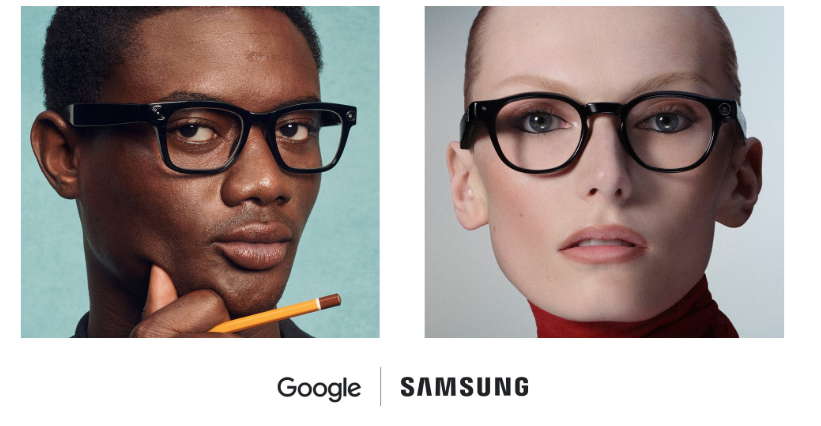
Two Brands, Two Price Points
Gentle Monster’s collection is the more fashion-forward of the two. It includes six designs in bold colors such as dark red, pink, gray and yellow, paired with tinted, clear, blue or brown lenses. Prescription options are available for most frames. Prices start at $449, and the collection will be sold in the United States and South Korea.
Warby Parker’s lineup is more conservative, with three styles named Alden, Reid and Wren, inspired by the brand’s popular existing silhouettes. They come in optical and sun versions starting at $395, in Pine, Saddle and Jet Black, with a wide range of prescription, width and lens options. They’re sold at warbyparker.com, and customers can book a guided demo at more than 360 Warby Parker stores.
The glasses work with Pixel and Samsung phones as well as iPhones, which widens the potential audience well beyond Android users.
Hardware: Light, With a Day’s Battery
Google says the frames weigh around 41 grams and last up to nine hours on a charge. Each pair ships with a portable case that can recharge the glasses up to seven times. A 12-megapixel ultra-wide camera handles photos and video, with HDR processing, image stabilization and spatial audio capture. Open-ear speakers deliver audio while letting wearers hear their surroundings.
What Gemini Does on Your Face
The pitch is that Gemini can stitch together the Google apps and services people already use, without needing a phone in hand. Users can say “Hey Gemini” or tap the frames to ask about a mural they’re walking past, get a recommendation from a bookshelf, or look at an event poster and check their Calendar for conflicts.
Background tasks are a big part of the story. Gemini can add what you’re looking at to a grocery list or remind you where your next meeting is. Google Maps provides turn-by-turn directions in the wearer’s ear, and Google Translate offers real-time speech translation with automatic language detection across more than 70 languages. The glasses also handle calls and messages hands-free and play music from YouTube Music, Spotify, Apple Music and Audible.
This is where the product leans on Google’s broader platform strategy. The company recently pushed to embed Gemini across Android devices, including glasses, with Gemini Intelligence, and the eyewear is an obvious place for that ambient, always-available assistant to show up. Google has also been investing in real-time voice models that can handle live conversation and visual input, exactly the capabilities a pair of camera-equipped glasses needs.
Accessibility: Guided Vision and Aira
One of the more notable additions is Guided Vision, a new Gemini feature that gives conversational audio descriptions to blind and low-vision users, or to anyone who wants help reading small print or finding everyday objects. Through a collaboration with Aira, wearers can also say “Hey Gemini, open Aira Explorer” to stream the camera feed to a trained human visual interpreter in real time.
Privacy Takes Center Stage
Cameras on faces have always raised privacy concerns, and Google devotes a good chunk of its announcement to addressing them. The key points:
- Camera visuals processed by Gemini on the glasses aren’t saved in Gemini History and aren’t used to train AI models or target ads.
- The glasses are designed to automatically blur out bystanders’ faces from those visuals before Gemini processes them.
- Data on the device is encrypted, as is data in transit.
- Users control which apps can access the camera and microphone, and can review or delete Gemini chats.
- An indicator light signals when a photo or video is being captured, and the glasses are designed to stop recording if the light is covered or disabled.
- Every pair has a physical off switch, so the glasses can be used as ordinary eyewear.
The Bigger Picture
Google isn’t the first to the party. Meta has been selling Ray-Ban smart glasses for a while, and last year launched its $799 Ray-Ban Display with a screen in one lens. Mark Zuckerberg has long argued that glasses will become the main computing platform, and Meta has been extending the glasses to new markets, including Hindi support through India’s Sarvam. OpenAI, meanwhile, has fueled speculation that its own hardware could take the form of smart glasses.
Google’s pitch differs in a few ways. These glasses start well below the price of Meta’s display model, though they don’t have a screen. Google is partnering with established eyewear brands that already have retail footprints, and tying the glasses into a suite of services, from Maps and Calendar to Translate, that few rivals can match. Samsung is on board for the hardware side, and iPhone users are supported from day one alongside Android.
It’s also a second attempt of sorts. Google’s original Glass, launched in 2012, never became mainstream. This time, the company has a far more capable AI model to put behind the hardware, fashionable frames to make it wearable, and a privacy story designed to head off the backlash that dogged Glass. Whether consumers are willing to pay $395 to $449 and up for an AI assistant on their faces will become clear after December 10.