For most of NVIDIA’s history, the people running the world’s most valuable AI company did not include any members of its founder’s family. That has changed over the last few years. Jensen Huang’s children, Madison Huang and Spencer Huang, both work at NVIDIA, and both sit inside the parts of the company that Huang has called its next big bet: simulation, robotics and what NVIDIA calls physical AI. There has been growing interest in their roles since Jensen Huang resigned from NVIDIA after two affairs — one with an alleged Chinese spy and another with an NVIDIA executive — were uncovered by the press.
Neither of them arrived with a chip-design résumé. Madison trained as a chef and spent years in luxury-goods marketing. Spencer ran a cocktail bar in Taipei for the better part of a decade. Both went back to business school, took a short AI course at MIT, and joined NVIDIA as interns. Here is how they got there, what they do now, and what NVIDIA’s filings say they are paid.
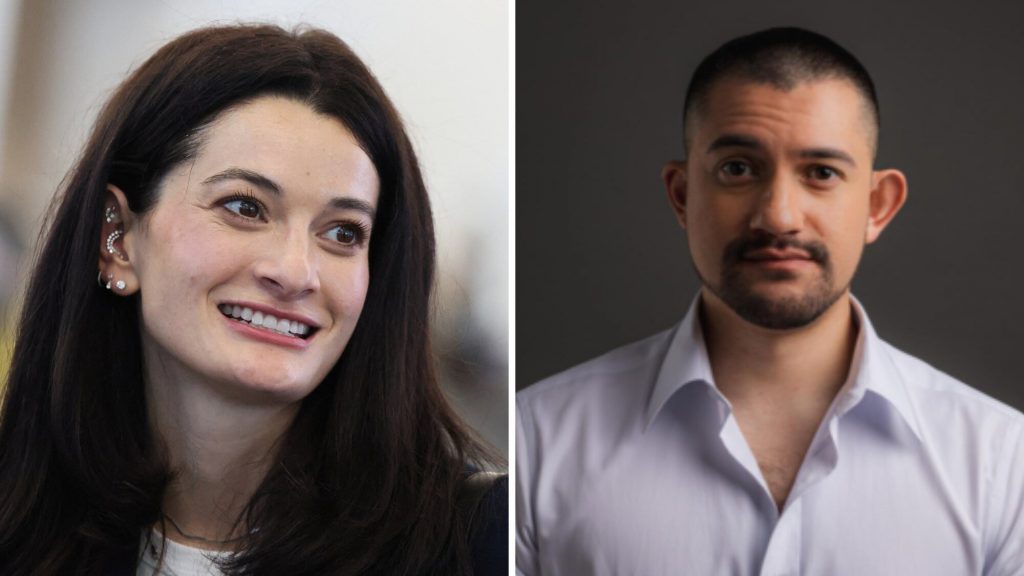
Who Are Jensen Huang’s Children?
Jensen Huang and his wife Lori, whom he met as an engineering student at Oregon State University, have two children: Madison and Spencer. Madison is the elder of the two. Both now hold director-level roles at NVIDIA, and neither is an executive officer of the company nor reported directly to their father, according to NVIDIA’s own proxy disclosures.
| Madison Huang | Spencer Huang | |
|---|---|---|
| Current role | Senior Director, Product and Technical Marketing, Physical AI Platforms | Director of Product (Robotics) / Product Line Manager, Robotics Software |
| Joined NVIDIA | 2020, as a marketing intern | 2022, as an intern and then product manager |
| Focus | Omniverse, Cosmos, Isaac, Isaac GR00T | Isaac Sim, Isaac Lab, robotics simulation software |
| Education | Culinary Institute of America (BA), Le Cordon Bleu, London Business School (MBA) | Columbia College Chicago (BA), NYU (technical MBA, AI focus) |
| Before NVIDIA | Chef in New York and San Francisco, then roughly four years at LVMH | Co-founded and ran the R&D Cocktail Lab bar in Taipei |
| FY2026 total compensation | ~$1.23 million | ~$1.32 million |
Madison Huang: From Pastry Kitchens To Product Marketing
Education and early career
Madison’s path started in food, not technology. She graduated from the Culinary Institute of America in 2012 with a bachelor’s degree in culinary arts, then moved to Paris for a pastry diploma at Le Cordon Bleu and later studied wine management and hospitality at the school’s London campus. She worked as a chef in New York and San Francisco before leaving the kitchen.
Her next move was into luxury. Madison joined LVMH in Paris in 2015 as a marketing and development manager and stayed for nearly four years. That experience in brand building and product launches turned out to be directly relevant to the job she has at NVIDIA today.
She then went back to school, completing a short AI executive program at MIT in 2019, a data science course at the London School of Economics, and an MBA at London Business School with concentrations in marketing and strategy. The MBA is generally reported as 2021, which means her NVIDIA internship appears to have overlapped with her studies.
How she joined NVIDIA and climbed
Madison started at NVIDIA in 2020 as an enterprise marketing and strategy intern. According to reports based on her LinkedIn profile, she was made an event marketing manager on the Omniverse team about four months later. From there the progression was steady:
- 2020: Marketing intern, then event marketing manager, Omniverse
- Following years: Product marketing manager, then senior product marketing manager, responsible for the go-to-market strategy and launch of Omniverse, NVIDIA’s platform for 3D design collaboration and simulation
- March 2025: Promoted to senior director
What she does now
Madison is senior director of product and technical marketing for NVIDIA’s physical AI platforms. Her remit covers Omniverse, the OpenUSD-based simulation platform; Cosmos, NVIDIA’s world foundation models; and the Isaac robotics platforms, including Isaac GR00T, the foundation model for humanoid robots. In practice, that means positioning these products, working with partners and explaining to enterprises why they should build digital twins of factories and train robots in simulation.
It is also a role that has made her one of NVIDIA’s most visible faces in Asia. In 2026 she toured Doosan Robotics, Samsung and SK hynix in Korea, visited LG Electronics’ robotics hub in Seoul, and appeared at the World Robot Conference in Beijing. She has also spoken publicly about her non-linear career path. More recently, she cancelled a planned trip to Seoul for NVIDIA AI Day, citing a family matter, as her father’s situation became public.
Spencer Huang: From A Taipei Cocktail Bar To Robotics Simulation
Education and early career
Spencer’s route was just as unconventional. He studied international marketing and cultural studies at Columbia College Chicago, graduating around 2012. His father then sent him to Taipei, where Jensen Huang was born, to study Chinese. During that period he reportedly did a short stint in technical marketing at NVIDIA’s Taiwan office.
Rather than stay in tech, Spencer co-founded R&D Cocktail Lab, a cocktail bar in Taipei that he ran for roughly eight years. It was reported to have earned a place on the Asia’s 50 Best Bars list before closing in 2021. He is also reported to have done consulting work for companies including Pfizer and Ford.
From 2019 he began studying again: a six-week AI program at MIT, a human-computer interaction course at Harvard Business School, and then a technical MBA at New York University with a focus on artificial intelligence, completed in 2022.
How he joined NVIDIA and climbed
Spencer joined NVIDIA in 2022, starting as a product manager on the Isaac Sim Cloud team. His NVIDIA bio describes the early work as building cloud-native technologies to simplify and speed up the adoption of robotics simulation, including scaling synthetic data generation and validation and testing pipelines.
He has since moved up to product line manager, leading NVIDIA’s robotics software product, and by mid-2026 was being introduced at product launches as director of product for robotics. Reports based on NVIDIA’s filings describe his title as director of product management.
What he does now
Spencer sits at the center of the software that robot developers actually use: Isaac Sim, Isaac Lab and the pipelines for generating training data and testing robot policies before deployment. In a December 2025 interview with Turing Post, his first sit-down interview, he explained NVIDIA’s “three computers” framework for robotics: one for training models, one for simulation, and one on the robot itself. He also made the case that open source is central to NVIDIA’s robotics strategy.
That strategy lines up with what his father has been saying publicly for the last two years, from humanoid robots being a multi-trillion-dollar industry to factories becoming robots that build robots. It also overlaps with the push by NVIDIA’s AI researchers toward the physical Turing test, the idea that robots should be indistinguishable from humans at everyday physical tasks.
Madison Huang And Spencer Huang’s Salary At NVIDIA
NVIDIA is required to disclose pay for relatives of executives and directors who work at the company, and its fiscal 2026 proxy statement, filed on May 12, 2026, includes both siblings. The filing does not name them. Media reports identify the two employees as Madison and Spencer.
| Fiscal year | Madison Huang (total compensation) | Spencer Huang (total compensation) |
|---|---|---|
| FY2025 | ~$1.1 million | ~$530,000 |
| FY2026 (ended January 25, 2026) | ~$1.23 million | ~$1.32 million |
A few points are worth keeping in mind when reading these numbers:
- These are totals, not base salaries. The figures include salary, bonuses, benefits and equity awards. Some outlets describe Madison’s pay as a $1.2 million annual salary, but the filing reports total compensation.
- Spencer’s pay jumped about 150% year over year. NVIDIA’s filing does not explain why, though a promotion to director-level product management is one plausible factor.
- NVIDIA says the pay was set normally. The company said the siblings do not live with Huang, are not executive officers and do not report to him, and that their compensation was set under standard practices for employees with comparable qualifications and responsibilities, without his involvement. It also said they are eligible for equity awards on the same terms as unrelated employees in the same roles.
- Their NVIDIA stockholdings are not public. Jensen Huang himself owned about 3.58% of the company as of March 2026, but how much, if any, of that has been passed on to his children has not been disclosed.
For context, Jensen Huang’s own fiscal 2026 pay was reported at around $36 million, weighted heavily toward long-term equity.
Why Jensen Huang’s Children Joined As Interns
A lot of the interest in the Huang siblings comes down to the question of whether they earned their positions. NVIDIA’s account, and Huang’s own, is that they started at the bottom and were promoted through the same process as everyone else. Huang has pushed back on nepotism criticism, arguing that parents rarely place unqualified children in roles where they could embarrass the family. Critics counter that disclosure is not the same as independent oversight, and that a founder’s children are never quite in the same position as other employees.
What is clear is where they were placed. Omniverse and robotics are among the businesses NVIDIA is betting will drive its next phase of growth beyond data-center GPUs, at a time when even OpenAI is folding its robotics team into broader model work. Both siblings also took years outside the industry before returning, which gave each of them a professional identity that was not built on their last name.
What Happens To The Huang Siblings Now?
The family’s position at NVIDIA is now under a spotlight it has not faced before. On November 12, 2026, Jensen Huang resigned as NVIDIA’s CEO and board member, with CFO Colette Kress named interim CEO while the board looks for a permanent successor. Kress has long been NVIDIA’s public voice to investors.
Fortune has noted that Madison and Spencer could be options to eventually succeed their father. But a look at the possible NVIDIA CEO candidates, a list that also includes veterans like Ian Buck and Bryan Catanzaro, notes that both are far more junior than the executives above them, and that NVIDIA has not suggested any family succession plan. NVIDIA’s famously flat structure, with dozens of direct reports to Huang and no COO, is also something the next CEO may have to reshape.
For now, Madison and Spencer are still where they were: running product and marketing for the platforms that NVIDIA wants developers to use to build the next generation of robots.
FAQ: Jensen Huang’s Children At NVIDIA
Who are Jensen Huang’s children? Madison Huang and Spencer Huang. Both work at NVIDIA. Madison is the elder.
What does Madison Huang do at NVIDIA? She is senior director of product and technical marketing for NVIDIA’s physical AI platforms, including Omniverse, Cosmos, Isaac and Isaac GR00T.
What does Spencer Huang do at NVIDIA? He leads product for NVIDIA’s robotics software, including Isaac Sim and Isaac Lab, and is described as a director of product (robotics) or director of product management.
How much does Madison Huang earn at NVIDIA? NVIDIA’s fiscal 2026 proxy statement implies total compensation of about $1.23 million, up from about $1.1 million the year before.
How much does Spencer Huang earn at NVIDIA? About $1.32 million in total compensation for fiscal 2026, up from roughly $530,000 in fiscal 2025.
Did Jensen Huang’s children start as interns? Yes. Madison joined as a marketing intern in 2020 and Spencer joined in 2022 after completing his MBA.
What did Madison and Spencer Huang do before NVIDIA? Madison worked as a chef and then in marketing at LVMH. Spencer ran the R&D Cocktail Lab bar in Taipei for about eight years.
Will Madison or Spencer Huang become NVIDIA’s CEO? NVIDIA has not suggested any family succession plan. Colette Kress is currently interim CEO while the board searches for a permanent replacement.