The AI boom is reordering companies and sectors across the world.
The latest casualty of that reordering is Samsung Electronics, which has just lost a title it has held for a quarter of a century. On Monday, SK Hynix briefly overtook Samsung to become South Korea’s most valuable listed company, a position Samsung has occupied since November 2000.
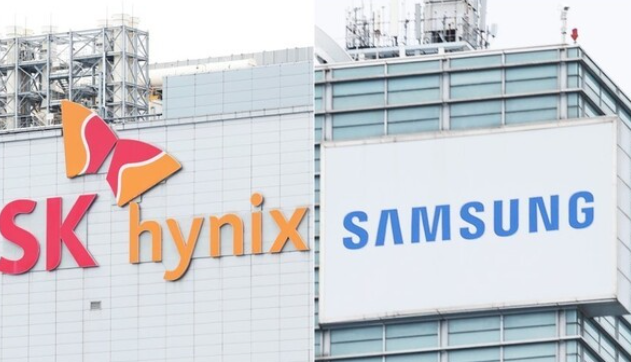
The numbers tell a story of how close this race has become. SK Hynix shares jumped 5.7%, pushing its market capitalization to about 2,082.5 trillion won, or roughly $1.35 trillion. Samsung, meanwhile, inched up just 0.4% to 2,081.3 trillion won. The gap between the two companies was a sliver, a little over a trillion won in a contest involving two of the most valuable companies on the planet. Samsung has pointed out that this comparison excludes its preferred shares, which would put its total value closer to 2,252 trillion won, but on common stock, the company Korea has long treated as untouchable has been caught.
What makes this moment remarkable is where SK Hynix was standing not too long ago. In 2002, the company, then called Hynix Semiconductor, was on the verge of being sold off to Micron after years of debt accumulated during an aggressive expansion drive. The deal collapsed, and Hynix spent the better part of a decade under creditor control. Its shares fell to 135 won in 2003, earning it the nickname “Dongjeon-ju,” or penny stock, among Korean investors. For most of the two decades since, the company’s fortunes tracked the memory industry’s usual boom-and-bust rhythm, and 2023 brought one of the worst busts yet, with SK Hynix posting an annual operating loss of 7.73 trillion won.
The turnaround has everything to do with high-bandwidth memory, the specialized chips that sit inside AI accelerators and feed data to processors built by companies like Nvidia. SK Hynix crossed the $1 trillion valuation mark alongside Micron only a few weeks ago, and the rally since then has not let up. Shares are up more than 340% this year alone, a climb driven almost entirely by the company’s grip on HBM. By 2025, SK Hynix controlled 61% of the global HBM market, dwarfing Samsung’s 17% share and Micron’s 21%, according to Reuters. The company has reportedly locked up close to 70% of Nvidia’s HBM4 orders for the upcoming Vera Rubin AI platform, and customers like Google have also leaned on it as demand for AI computing keeps climbing.
Kim Sunwoo, a senior analyst at Meritz Securities, framed the shift in straightforward terms: the arrival of customized AI memory changed the basic economics of the industry and let SK Hynix establish itself as the leader. That’s a meaningful departure from how memory chips used to work. For decades, DRAM was a commodity, and it genuinely did not matter to a buyer whether the chip inside their device came from Hynix, Samsung, or Micron, since they were functionally interchangeable. HBM broke that logic. SK Group Chairman Chey Tae-won, who faced internal resistance when SK acquired Hynix years ago, wrote about this distinction in a book published in January, explaining that his goal had been to turn the company into something other than a commodity producer, a supplier whose products customers can’t simply swap out without breaking their AI systems.
Samsung is not standing still. The company has been pushing to get its own HBM4 qualified with Nvidia, and industry reports suggest it’s closing in on a larger share of next-generation orders as that qualification process plays out. Samsung also remains the larger DRAM producer overall, and Bank of America estimates put its monthly wafer output at around 691,000 compared to SK Hynix’s 589,000 this year. But the trajectory favors SK Hynix here too. Analysts expect the company to expand DRAM output by about 38% between 2025 and 2028, against roughly 17.5% growth for Samsung, which would shrink the production gap from 23% today to under 10% within a couple of years. For a company that has long relied on sheer manufacturing scale to keep rivals at bay, that’s a genuinely uncomfortable trend.
There’s also a structural piece to this story that has little to do with chips themselves. SK Hynix has been weighing a US listing through American depositary receipts, a move that would make it easier for international funds to hold the stock without dealing with the mechanics of trading in Seoul. The company hasn’t set a date, but the timing of the speculation lines up neatly with the stock’s run. A US listing tends to widen the investor base and improve liquidity, and that combination often supports higher valuations on its own, independent of anything happening on the factory floor.
The broader context here is a memory market that AI has fundamentally rewired. Hyperscalers are projected to spend around $715 billion on AI infrastructure this year, and a meaningful chunk of that is going toward chips that didn’t have nearly the same strategic weight five years ago. That demand has been intense enough to squeeze supply for everyone else, with DRAM and NAND prices climbing so sharply that smartphone makers have had to abandon entire budget segments. SK Hynix’s ascent and Samsung’s discomfort are really two sides of the same shift: AI has decided that some chips matter more than others, and the company that bet earliest and hardest on that particular kind of chip is now sitting where Samsung used to sit alone.
Whether SK Hynix holds this position is a separate question from whether it deserved to get there. Samsung still has scale, a broader product portfolio spanning logic chips and consumer electronics, and a real shot at narrowing the HBM gap as its own certifications with Nvidia move forward. But for one trading day in June, the company that nearly got sold for parts in 2002 looked Samsung in the eye and didn’t blink.