AI could end up impacting parts of the internet that don’t have much to do with AI.
As AI agents begin to browse, compare and buy on behalf of users, the big question for the internet’s biggest ad businesses is whose model gets hollowed out first. According to Ben Thompson, the analyst behind Stratechery, it won’t be Meta’s. In a recent interview, Thompson argued that Meta’s advertising business is largely insulated from the rise of AI agents, while Google and Amazon, whose ads sit between a person and what they’re trying to find, are far more exposed.
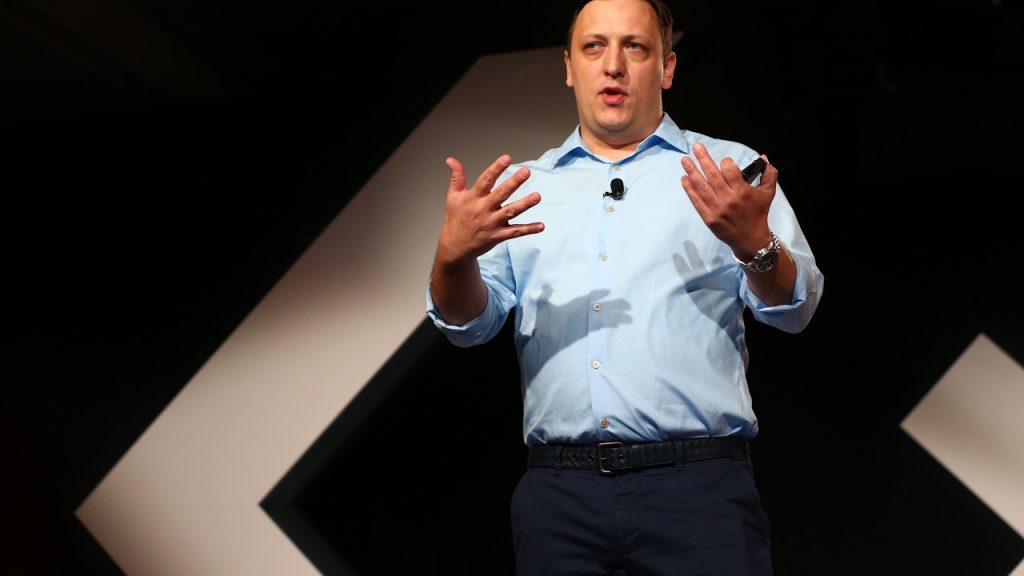
Meta’s ads aren’t threatened, Thompson said, because people are still going to watch Instagram and Reels. “That’s the beautiful thing,” he said. Google, on the other hand, faces something quite different: “This is completely disintermediating search.”
Thompson admitted that he had previously misjudged Google’s prospects. “The big mistake that I made with Google is the reason Google survived chatbots and basically made search into a chatbot is because chatbots still need humans,” he said. “Humans are still in the loop. As long as humans are looking at something, Google can figure out how to show you ads and make money from it. And they’ve accomplished that.”
The real danger, in his view, is a world where the human drops out of the loop entirely. “This is the actual threat because the whole idea is there’s no human. It is a computer operating a computer on your behalf,” Thompson said. “There’s no human in there. This is why Amazon’s freaked out. This is why Google’s freaked out.” Amazon’s recent decision to block Meta’s Muse agent from shopping on its site is one sign of that anxiety: if an agent does the browsing and skips the sponsored placements, the ad machine loses its fuel.
Thompson’s argument rests on a distinction he has long drawn between two kinds of advertising. “I like Meta ads because they show me stuff I didn’t know about, and they’re often entertaining. It’s like another piece of content. I think they’re great,” he said. “I hate Google ads and I hate Amazon ads. All they are is a tax.” He added that Google or Amazon could easily show him exactly what he’s looking for, but “they lard it up with ads because they benefit from diminishing the user experience.”
Thompson, who has been bullish on the role of ads in AI in the past, was careful not to be too harsh on search advertising. “Search advertising is a scam,” he said, before correcting himself. “It’s not a scam. It’s totally legitimate. It’s a great business model, and I’m grateful to have access to Google for free for many, many years. But all things considered, Google would give me what I’m looking for. I don’t need the ads in the way.”
That, he suggested, is why the shift to agents may be good news for Meta. “From this perspective, as the only person in America who loves Meta ads, it’s delicious,” Thompson said. “Those are the crappy ads that are getting wiped out by this, and Meta’s ads will be fine.”
The agents’ accountability problem
But isn’t not as though agents would have it easy to disrupt existing platforms. Thompsonwarned that shopping agents like Meta’s Muse or Instinct inherit responsibility and accountability for every failed order in a way Google never did, something he expects to be extremely difficult to manage. Pushing back on the idea that agents will simply displace the likes of Amazon, he said he thinks it is backwards. “I think the risk to the agents is, ‘Oh, I can find these products elsewhere,'” he said.
The trouble starts when something goes wrong. “Where’s my product? Where’s the tracking number? Where can I find it? Why didn’t it get delivered?” Thompson said, describing the questions customers will ask. “Customers are going to say, ‘You know what? I’m just going to buy it all on Amazon.'”
In his telling, that is the core challenge of being an aggregator. “You’re not actually down in the weeds. You’re not actually in the physical world. You are assuming a lot of responsibility and dependence,” he said.
Google, he noted, avoided this trap. “Which, by the way, is the other brilliant part of Google. Google sends you to another website. You weren’t buying from Google. Google helped you find the website and took a toll with an ad, but the customer’s expectation was, ‘I’m dealing with this other website and this other company.'” When something goes wrong or a return needs processing, Thompson said, calling Google doesn’t even occur to him. “I’m going to go to the website and complain about it.”
Becoming the front door has real power, he acknowledged: “It is tremendously powerful to assume being the front door, no one needs to visit a website anymore.” But, he added, “you have also assumed responsibility and accountability in the minds of your customers. That is going to be extremely difficult.”
Thompson’s framing also has an interesting implication for Alphabet itself. While Google Search is the part of the company most exposed to agents, Google also owns YouTube, whose ads look a lot more like Meta’s: they appear alongside content people choose to watch, and often serve as discovery rather than as a toll on finding something. If Thompson’s logic holds, those ads should be among the least affected by agents, since a person is still sitting there watching. YouTube’s ad business brought in nearly $10 billion in the first quarter of 2026, per Alphabet’s earnings, so it is a meaningful cushion for the company if search advertising does come under pressure.