Apart from the general public, even OpenAI’s executives seem to be confused between all the AI agents that are proliferating in the last few weeks.
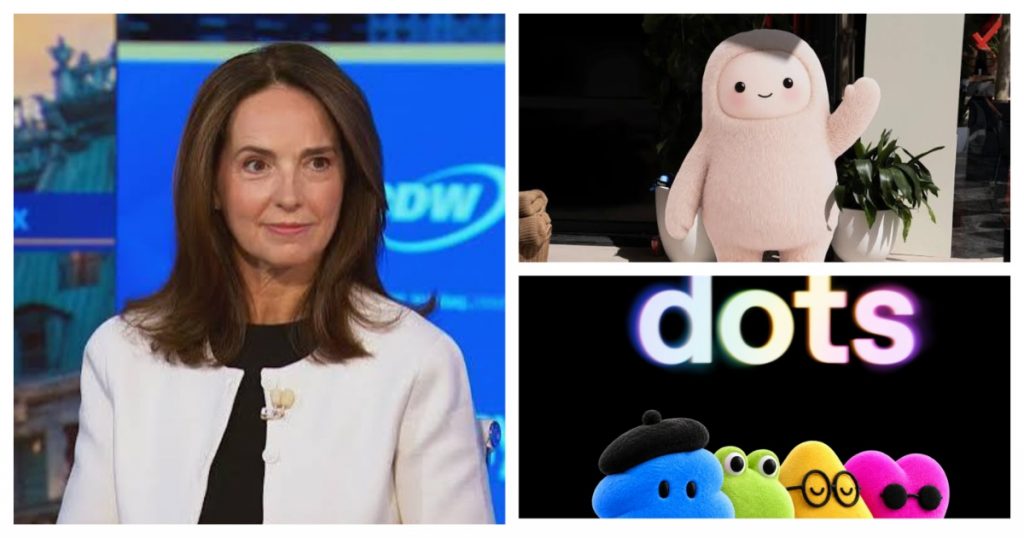
OpenAI CFO Sarah Friar had an awkward slip of the tongue during a CNBC interview, referring to OpenAI’s new Dots agents as “Muse”, the name of the rival product from Meta, before quickly catching herself.
Friar was talking up OpenAI’s latest launches, starting with GPT-6.1 Sol. “We just announced Sol 6.1, best intelligence, lowest price, a fifth of the price of Astra,” she said. OpenAI says the model nearly matches its flagship GPT-6 Astra on agentic coding, computer use and professional work, at a fifth of the cost.
She then moved on to the role of memory in ChatGPT. “In fact, it also leans into areas like memory, right? Chat really has started to know you. It knows the types of conversations you’ve had, how you like to show up in the world.”
That’s when the mix-up happened. “Muse is going to benefit. Sorry, not Muse. Dots is going to benefit from that as well,” Friar said. “And then I think it will benefit just from the scale of our distribution channel, right?”
Alexandr Wang Pounces
The clip didn’t take long to circulate, and Meta’s Alexandr Wang, who leads the company’s AI efforts and has been the public face of Muse, shared it on X with a reply of his own: “it’s ok sarah muse is thinking about you too”.
Why The Slip Stands Out
Friar’s error is a small one, but it lands at a sensitive moment. OpenAI only unveiled Dots at its DevDay event yesterday, pitching them as always-on agents that can be reached by text, phone call, email or voice, and that can delegate heavier work to Astra. Muse, meanwhile, launched last week as Meta’s first consumer-facing agentic app, and has been on a roll since, with commerce tie-ups with Shopify, PayPal, Instacart and Expedia, and a high-profile spat with Amazon, which blocked the agent from shopping on its site.
The comparison between the two products has been hard to avoid. Dots have a friendly, cute look that closely resembles the aesthetic of Meta’s Muse, and both let users name their agent and give it a personality. The launch itself wasn’t entirely smooth either: OpenAI ran into glitches during its DevDay demo when Dot failed to respond, and dot.com turned out to redirect to a rival Grok bot.
Friar’s point about memory is also central to how both companies are pitching their agents. Dots are designed to learn a user’s preferences and working habits over time, while Muse leans on Meta’s understanding of users’ tastes. In that sense, mixing up the two names on live TV may be the most honest illustration yet of how closely the two products are being positioned against each other.