There are all kinds of opinions around whether AGI has been reached, or when it will be reached, but a Jane Street exec has an interesting perspective on AGI.
Ron Minsky, Co-head of Technology at Jane Street, one of the world’s most profitable proprietary trading firms, sat down with podcaster Dwarkesh Patel for a wide-ranging conversation on AI, trading, and the limits of automation. The central idea Minsky put forward was striking: that trading might be the best real-world test of whether AGI is truly here — not because it is glamorous, but because it is irreducibly complex.
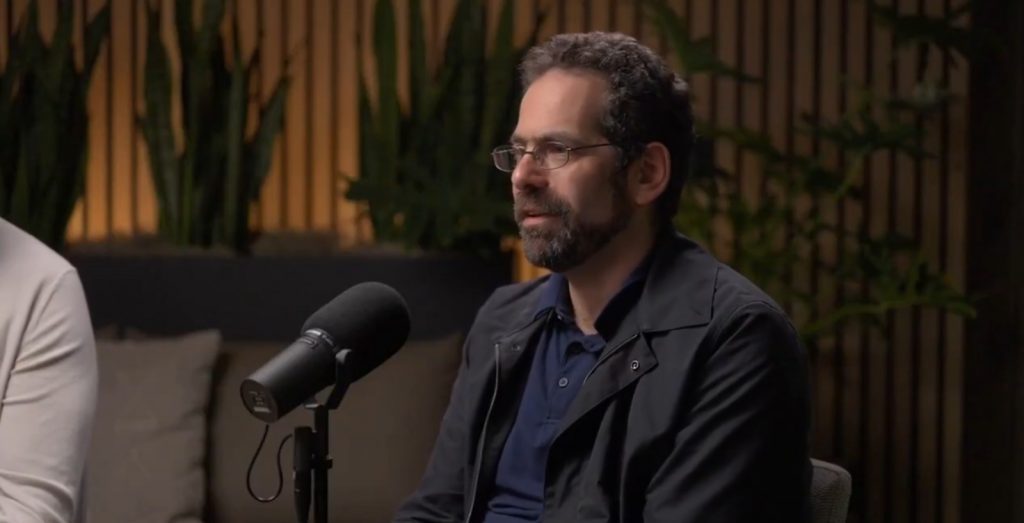
When Dwarkesh posed the question — that AGI, once achieved, should be able to do what Jane Street does — Minsky didn’t dismiss it outright:
“I don’t want to totally discount it. There’s a world that we should take seriously where we’re going to build large language models or some other AI systems that are strictly smarter than all humans on the planet and more capable at all cognitive tasks. And yeah, that’s going to be weird — that’s a different state of things. In that case, maybe large amounts of things that Jane Street does will be automated away, and maybe we’ll all just sit back and drink more margaritas or something. I don’t know what that world looks like. But it doesn’t feel like we’re particularly close to that now.”
He then pushed back on what he sees as a persistent tendency to underestimate how deep the work actually goes:
“I think it’s easy to underestimate the richness and complexity of the work — both at a company like Jane Street, but really at any ambitious, high-difficulty, company-scale task. I think trading in particular feels to me like it’s kind of AGI-complete, sort of like NP-complete. Meaning that all of the different problems of the world end up influencing what you’re doing in a trading context. Because at the end of the day, trading involves figuring out what things are worth — which means making predictions about the future — and lots of different things flow into that.”
This is the crux of the argument. Trading isn’t a narrow task. It is a continuous attempt to price the future, and the future is affected by everything: geopolitics, technology, human behaviour, regulatory change. No slice of intelligence is irrelevant to it.
Minsky also addressed what happens as individual pieces of the problem get automated:
“As various pieces of that get automated, you have the usual thing where the other hard parts that we don’t yet know how to automate — well, that ends up being where the competitive edge lies. I feel like humans and human cognition are more valuable than ever. I have never been more desperate to hire more engineers and more traders than I am today, because everything people are doing is more valuable than it was. Some of this is just me being somewhat skeptical that we are quite as close to the models that are smarter than humans at all the things as some people seem to think.”
When Dwarkesh pressed him on what specifically makes Jane Street hard to automate — physical infrastructure, colocation, software systems — Minsky pointed to something more fundamental than any single component:
“We build a huge variety of complicated pieces of software, and have people thinking about lots of different trading problems, some of which are not very electronic at all. The business is just way more diverse than I think people give it credit for. There’s an idea of, ‘Oh yeah, it must be that simple thing where you just have smart people who make smart decisions and write good software, and if we could just automate the smartness part, that would be the whole thing.’ And I think it’s just way more complicated than that.”
One of the more surprising moments in the conversation was Minsky’s description of how much trading still happens through direct human communication:
“There’s still trading that happens via chat — between people talking to each other and making decisions — and someone sizing up how much adverse selection they think the person on the other side of the phone represents. That’s still a real part of the business. There are just different kinds of securities that have taken longer to get more automated. The bonds business, for example, is just not nearly at the level of automation that you see in equities.”
He reflected on how even industry insiders got this wrong:
“I think those of us who have been in the business for a while were kind of confused about this. People who were paying attention a little earlier than me were like, ‘Yeah, and I guess everything else comes next.’ And you know what? It’s been twenty-five, thirty years, and not everything has gone that way.”
Minsky’s framing is worth sitting with. The term “NP-complete” comes from computational complexity theory — it describes a class of problems where any solution can be verified quickly, but no efficient method for finding that solution is known. Saying trading is “AGI-complete” is a similar move: it suggests that solving trading completely is equivalent to solving cognition completely. Get one and you get the other.
This is a more nuanced position than either the AI optimists or the sceptics typically offer. He’s not saying AI won’t transform finance — he clearly believes it already is, given Jane Street’s massive investment in GPU infrastructure. He’s saying the transformation will keep revealing new layers of hardness rather than converging on a solved problem.
The broader debate around AGI definitions is very much alive. Google DeepMind’s Demis Hassabis has argued that a true AGI test would be whether a system could derive general relativity independently — pointing to genuine scientific creativity as the threshold. Marc Andreessen has meanwhile claimed AGI was reached three months ago with the latest frontier models. Microsoft’s Satya Nadella has pegged it to a 10% rise in global GDP. The lack of consensus is itself telling.
Meanwhile, finance job openings have fallen to their lowest levels since the 2008 financial crisis — down roughly 50% from the 2022 peak — with the timing tracking almost precisely with the mainstream adoption of large language models. The routine, structured parts of finance are clearly being automated. But Minsky’s point is that Jane Street doesn’t primarily operate in that layer. The work that remains after automation is, by definition, the work that was hardest to automate. That’s where the edge lives — and right now, it still requires humans.