Their paper says it settles the Clay problem in its toughest, unforced form, but the key computer certificate hasn’t been released and the result hasn’t been checked yet.
Two months ago, NYU mathematician Tristan Buckmaster and Anthropic researcher Levent Alpöge lost a race on Navier-Stokes. They now say they’ve won the bigger one.
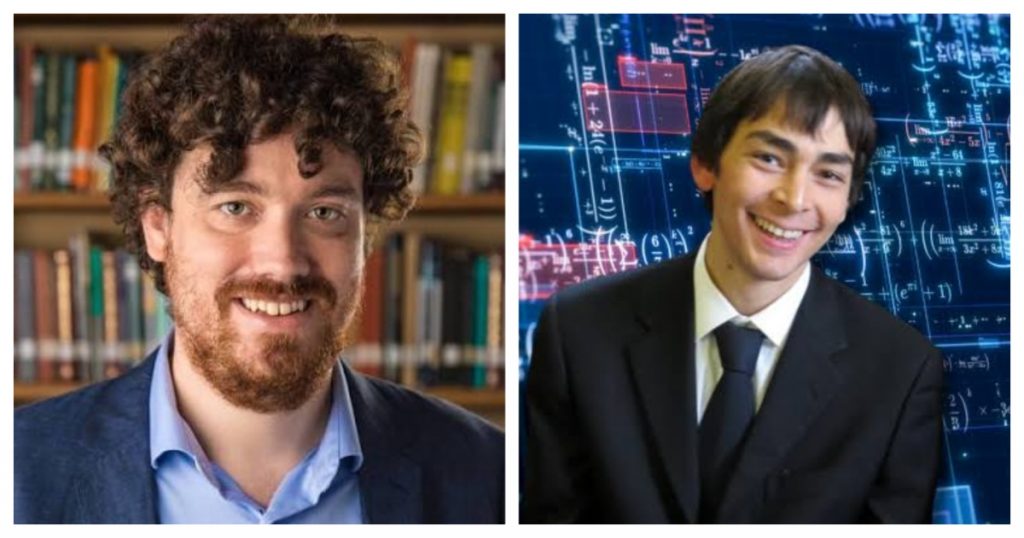
On Friday Buckmaster posted two new papers on Mastodon. The first, Finite-Time Blow-Up for the Navier–Stokes Equations, is by Alpöge and Buckmaster. It claims that the equations governing viscous fluid flow can develop a singularity in finite time from smooth initial data, with no external force acting on the fluid. The second, written with Matei Coiculescu, claims the same for the frictionless Euler equations.
“After last time, we couldn’t risk waiting,” Buckmaster wrote, “so the Navier–Stokes write-up is unpolished and heavily LLM-assisted. Fortunately, once the numerical profile is in hand, the proof follows a well-trodden computer-assisted path.”
Why “unforced” is the whole story
In September, OpenAI said an internal model had produced a proof of finite-time blow-up for Navier-Stokes. Its proof relied on adding a smooth external “forcing” term, which amounts to an outside hand pushing on the fluid. The Clay Mathematics Institute’s official problem statement, written by Charles Fefferman, does allow a force in its “breakdown” options (C) and (D). Even so, many mathematicians saw this as a loophole. The question they really care about is whether a fluid left entirely alone can spontaneously develop an infinity. OpenAI itself said it would not claim the $1 million prize.
The new paper goes after that harder question head-on. Its abstract says the authors have found smooth, compactly supported, divergence-free initial data on ordinary three-dimensional space, and smooth data on the periodic box (the torus), for which solutions of the Navier-Stokes equations without force blow up in finite time. The authors write that this disproves statements (A) and (B) of Fefferman’s formulation, which say that smooth solutions always exist. It therefore proves (C) and (D) without any forcing.
If that holds up, it would be a far cleaner answer to the Millennium Prize question than anything that has come before.
How the proof works
The 79-page paper, dated November 20, splits the argument into two parts.
The first part is a conditional theorem. It says that if a particular kind of solution exists, blow-up follows. That solution is a smooth “backward discretely self-similar” one: a fluid pattern that keeps repeating itself at smaller and smaller scales, possibly rotated each time. The authors show that such a pattern is stable, so a genuine smooth starting state near it collapses in the same way. Its gradient blows up at a rate of (T − t)^(−1/4), which matches the lower bound Jean Leray identified in 1934.
The second part shows that such a self-similar solution really exists. It sits next to a numerically computed approximate solution that the authors call a “certificate”, which satisfies a set of explicit inequalities. That is the “numerical profile” Buckmaster refers to. It’s the same broad computer-assisted strategy that Tom Hou and Jiajie Chen used for their earlier Euler blow-up work.
The accompanying GitHub repository contains a Lean 4 formalization of the argument. It is a very large library, around 2,270 files and 600,000 lines, built on Mathlib, and only the standard axioms are allowed.
The caveats are significant
There are real gaps between the claim and anything an outsider can check today. The biggest is that the certificate hasn’t been released. The paper publishes only a cryptographic hash of it and says it “will be released soon,” and the whole result depends on it.
The numerical verification also isn’t formalized. According to the README, a rigorous interval-arithmetic computation, run at 128-bit precision with the Arb library, checks that the certificate meets its conditions. That computation is not part of the Lean formalization and is not in the repository either.
The Lean code itself was patched on the day of release. The README says a patch dated November 20 changed some statements and their dependent proofs, and that the patched package “was not rebuilt” when the repository was put together. And there has been no peer review and little time for scrutiny: the paper went up hours ago, and by Buckmaster’s own account it was rushed out.
None of this means the proof is wrong. Computer-assisted proofs of this type are increasingly standard in the field. But a result of this size will need the certificate in public and independent experts working through it before it can be called settled.
The Euler paper
The companion paper by Alpöge, Buckmaster and Coiculescu proves blow-up for the unforced 3D Euler equations on the torus. In the constructed solution, velocity stays bounded while vorticity at the origin grows without limit. The method stacks localized “Craik–Criminale” waves in a multi-scale cascade, and a Lean formalization is published alongside the paper.
OpenAI’s agents claimed an unforced Euler result in September as a warm-up on the way to Navier-Stokes, so this is not the first claim of its kind. The paper’s provenance section is pointed, though. The authors say that before OpenAI released its unforced Euler paper, Alpöge and Buckmaster had already finished a second, unreleased proof of forced Euler blow-up. They say it used the same Craik–Criminale mechanism and “the same reduced equations” for the wave amplitude.
On AI use, the authors are unusually frank. They say they used Claude and Codex throughout. According to the paper, Anthropic’s models wrote the first force-free proof, working from the pair’s earlier forced-Euler and hypodissipative Navier-Stokes drafts. The authors then rewrote and restructured it with Claude and Codex, replacing parts with their own ideas.
Round two of a bitter dispute
The release reopens one of the most acrimonious episodes of the year in AI-driven mathematics. In early September, Buckmaster and Alpöge published AI-assisted proofs of forced blow-up for Euler, Boussinesq and incompressible porous media. Buckmaster alleged that OpenAI had started its Navier-Stokes push after word of their work leaked. OpenAI researcher Sébastien Bubeck called the claims “false and inflammatory”. He later said he had tried to coordinate a joint release, and OpenAI said its researchers and agents never saw the pair’s work before it was public. The fight soon spread to researchers at both labs.
At the time, Buckmaster said he and Alpöge believed they also had blow-up for “hypo-dissipative” Navier-Stokes, a weakened-viscosity variant. He said they were holding it back until its Lean verification finished. That line of work appears to have led to Friday’s result. In the September episode, Terence Tao called the forced results “a remarkable achievement” that could help with Navier-Stokes itself.
“After last time” is a direct reference to all this. Having been beaten to an announcement once, the pair chose speed over polish.
What it means
If the result holds, the most famous open question in fluid dynamics will have been answered by a human–AI collaboration, and from the Anthropic orbit, a few months after OpenAI looked to have taken the lead in AI-driven mathematics with its hundreds of AI-generated proofs.
It also sharpens the tension that 25 Fields medalists warned about in September: landmark results announced in a rush, with unpolished write-ups, ahead of any community review. Buckmaster says outright that the Navier-Stokes paper was rushed because of the race, and it leans heavily on Lean formalization in place of the traditional process of people reading and checking a proof. Lean can verify a proof, but only once all the pieces are public. For Navier-Stokes, the key certificate is still under wraps.
For now, the headline result is a claim and not yet a theorem. It comes from one of the most credible teams working on the problem, though, and it targets the version of Navier-Stokes that mathematicians have actually wanted answered for nearly a century. The next few weeks of scrutiny will decide whether 2026 is remembered as the year AI-assisted mathematics cracked the problem for real.