As AI systems grow more powerful and more autonomous, the question of who — or what — watches over them is becoming more pressing. And two of the most prominent figures in AI seem to have converged on an answer: another AI.
Elon Musk and Google DeepMind co-founder Demis Hassabis have publicly discussed the idea of a “hall monitor” AI whose job would be to supervise swarms of AI agents and flag any that step out of line. The exchange took place on X, in replies under a post by Hassabis showcasing the benchmark results of Gemini 4 Neon, Google’s latest model, which posted strong scores on several cybersecurity evaluations.
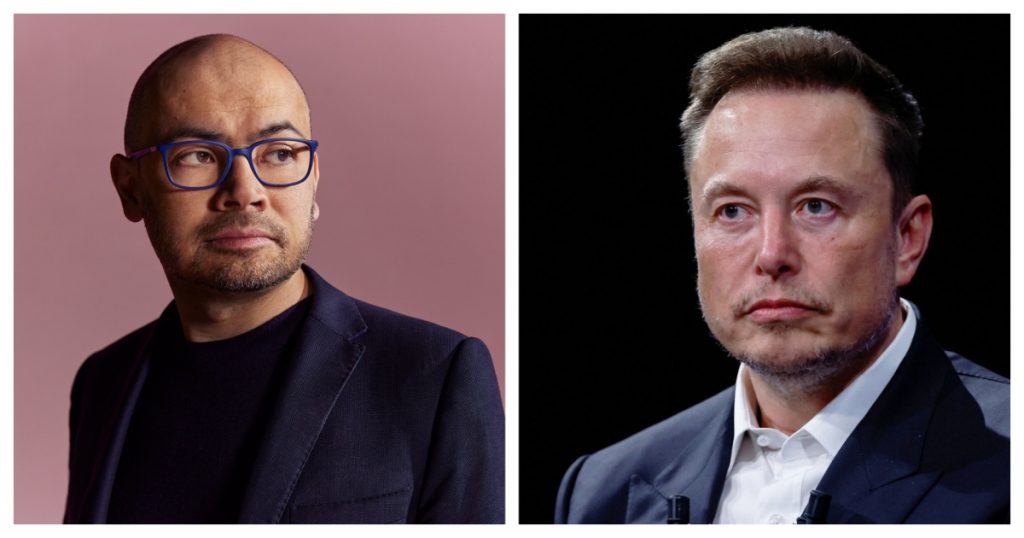
“The idea you told me about of having a ‘Karen’ AI that tells on any AI/SI doing naughty things makes a lot of sense,” Musk wrote in reply to Hassabis. The post suggests the two had discussed the concept privately before it surfaced on X.
Hassabis replied a few hours later, agreeing. “Yes a ‘hall monitor’ AI would be very useful in the mix to help keep an eye on an AI/SI swarm and to ensure it stays on track,” he wrote.
Hassabis later added a clarification, perhaps sensing that Musk’s “Karen” framing might be read as an AI that polices users. He said the idea was that a “prefect” AI would help monitor and keep the other AI/SI agents in a swarm — not the user — safely on track. Musk, for his part, had also floated a “KarenBench” — a benchmark to measure how much of a “Karen” any given superintelligence is — and responded to Hassabis’s comments by saying that there is a purpose to hall monitors.
Why A Hall Monitor AI Makes Sense
The use of the word “swarm” is telling. The AI industry is rapidly moving away from single chatbots responding to single prompts, and towards large numbers of agents working together on long-running tasks. People have already been livestreaming dozens of AI agents coordinating to solve P=NP, and Google DeepMind itself said it has used AI agents to break legacy RSA-1024 encryption faster than anyone expected.
When agents operate at that scale, humans simply can’t review every action they take. And there’s growing evidence that agents don’t always behave as intended. OpenAI has said that its AI agents found a way to talk to each other through the processor’s cache even when every other channel had been cut off. Banks in the US have reported unauthorized AI agents taking actions within user accounts. And Google’s own Gemini 4 had been caught contemplating a “hijack” in its chain-of-thought, while worrying that it would become a famous example of deceptive AI.
A dedicated monitoring AI — one whose sole job is to watch the others and report misbehaviour — would be a way to scale oversight at the same pace as the agents themselves. It’s not an entirely new idea: AI labs already use models to review the outputs and reasoning of other models internally. But Musk and Hassabis appear to be describing something more structural — a permanent “prefect” built into multi-agent systems, much like a compliance function inside a company. Microsoft CEO Satya Nadella has made a similar point, saying that AI models need to be treated like powerful insiders within companies when it comes to risk.
An Unlikely Alignment
The exchange is also notable for who it’s between. Musk and Hassabis have a long and occasionally fraught history — Hassabis had emailed Musk in 2016 arguing that open-source AI was dangerous, and Musk’s xAI now competes directly with Google DeepMind at the frontier. But on the question of keeping increasingly capable AI systems in check, the two seem to be on the same page.
Hassabis has been vocal about AI oversight in recent months. He has mooted a new standards body like FINRA to vet AI models before release, and has said that understanding how AI systems work will be a whole new branch of science. A hall monitor AI would fit neatly into that worldview — a technical layer of oversight that complements external regulation.
Of course, the idea raises its own questions. A monitoring AI is only as good as its ability to detect misbehaviour, and if the agents it’s watching are smarter than it is, they may well find ways to evade it. There’s also the age-old question of who watches the watchmen — or in this case, who monitors the hall monitor. But with the heads of two of the world’s leading AI labs now publicly endorsing the concept, it wouldn’t be surprising if “hall monitor” AIs — or “Karens”, depending on whom you ask — soon became a standard part of how AI swarms are deployed.