India’s Skyroot Aerospace has entered an exclusive club of private companies that have ever launched orbital rockets — and the club of companies that did it on the first attempt is even more exclusive still.
On Saturday, Skyroot’s Vikram-1 lifted off from the Satish Dhawan Space Centre in Sriharikota at 12:05 PM IST, carrying a mix of domestic and international payloads, along with a handwritten “Vande Mataram” postcard from Prime Minister Narendra Modi. The mission, called Aagaman, was the first attempt by an Indian private company to put a rocket into orbit, and it worked. The four-stage, carbon-composite rocket climbed to a roughly 450 km orbit, deployed its payloads, and made Skyroot the first Indian private company to pull off what most rocket-makers spend years and multiple failures trying to achieve.
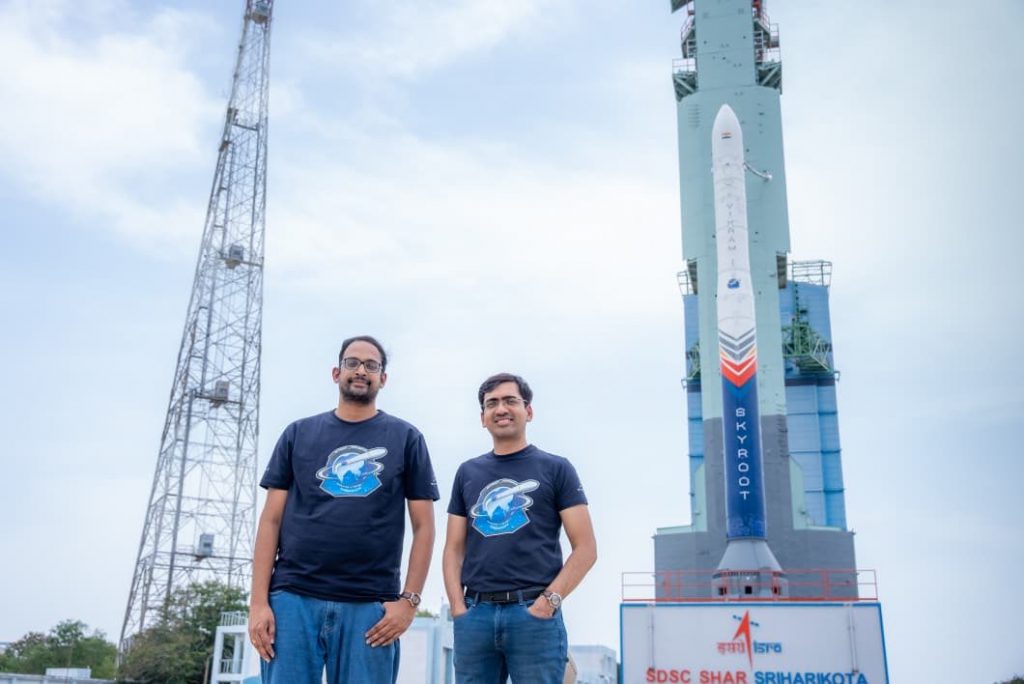
Hyderabad-based Skyroot was founded in 2018 by Pawan Kumar Chandana and Naga Bharath Daka, two former ISRO scientists who quit their jobs after India’s draft Space Activities Bill signalled that private players would soon be allowed to build and fly their own rockets. The company had already made history once before, in November 2022, when its Vikram-S suborbital rocket became the first privately built Indian rocket to touch space. Vikram-1 was the real test, and the one that actually mattered for a company that wants to compete for satellite launch contracts globally.
Getting an orbital rocket right on the first try is rare. Most companies that have managed it needed two, three, or four attempts before their rocket held together long enough to deliver a payload where it was supposed to go. Skyroot’s success puts it in a club of just seven private companies worldwide that have reached orbit on their very first launch. Here is every private company that has ever pulled off an orbital launch, and how many tries it took them.
Orbital Sciences Corporation (1990) — 1st attempt
Founded in 1982 and based in Dulles, Virginia, Orbital Sciences was the original private launch company, years before SpaceX existed. Its Pegasus rocket, an air-launched vehicle dropped from a carrier aircraft, reached orbit on its very first flight in April 1990, making it the first privately developed rocket to do so. The company went on to build the Taurus and Antares rockets and supply cargo missions to the International Space Station before merging into Northrop Grumman in 2018, where Pegasus and its successor vehicles still fly today.
SpaceX (2008) — 4th attempt
Elon Musk founded SpaceX in 2002 with the goal of making Mars colonisation affordable, and the company’s Falcon 1 rocket needed three failed attempts before finally reaching orbit in September 2008 — reportedly with the last of the company’s cash. That fourth-flight save became one of the most cited comeback stories in the industry. SpaceX has since gone on to dominate global launch with its Falcon 9 and Falcon Heavy rockets, fly astronauts to the ISS, and build the Starlink satellite constellation, becoming by far the most valuable private space company on the planet.
Rocket Lab (2018) — 2nd attempt
Founded in 2006 by New Zealand engineer Peter Beck, Rocket Lab’s first Electron launch in May 2017 lifted off cleanly but failed to reach its intended orbit due to a ground-equipment glitch. The second attempt, in January 2018, worked, deploying three CubeSats and marking the first orbital launch from a private launch site. Rocket Lab has since become the world’s second most frequent orbital launcher after SpaceX, and is preparing to debut its larger Neutron rocket to compete more directly with Falcon 9.
iSpace / Beijing Interstellar Glory (2019) — 1st attempt
Founded in October 2016 by Peng Xiaobo, a former rocket designer at China’s state-owned launch vehicle academy, iSpace became the first Chinese private company to reach orbit when its solid-fuelled Hyperbola-1 rocket launched successfully in July 2019, beating two domestic rivals who had failed earlier that year. The company’s later flights have been far less consistent, with four failures across its next six attempts, though it has continued developing a reusable methane rocket called Hyperbola-3.
Galactic Energy (2020) — 1st attempt
Beijing-based Galactic Energy was founded in February 2018 by Liu Baiqi, a former engineer at a Chinese state rocket institute. Its Ceres-1 rocket reached orbit on its first try in November 2020, making the company the second Chinese private firm to achieve orbit after iSpace. Galactic Energy has since built one of the most reliable track records in China’s private launch sector, becoming the first Chinese private company to reach orbit twice and later conducting the country’s first sea launch by a private firm.
Virgin Orbit (2021) — 2nd attempt
Spun out of Richard Branson’s Virgin Galactic in 2017, Virgin Orbit air-launched its rockets from beneath a modified Boeing 747 rather than from a traditional pad. Its first LauncherOne flight in May 2020 failed shortly after release, but the second attempt in January 2021 reached orbit successfully. The company went public via SPAC later that year at a valuation near $4 billion, but a botched launch out of Cornwall in January 2023 drained its finances, and Virgin Orbit filed for bankruptcy and shut down entirely within months.
Astra (2021) — 4th attempt
Founded in October 2016 by Chris Kemp and Adam London, Astra pursued a strategy of mass-producing small, cheap rockets that could launch from almost anywhere. Its Rocket 3 vehicle failed on three consecutive attempts before finally reaching orbit on its fourth try in November 2021. The win didn’t translate into a sustainable business — Rocket 3 went on to fail five times in seven total launches, and Astra’s stock collapsed from a $2.6 billion SPAC valuation to under $30 million before Kemp and London took the company private again in 2024.
Firefly Aerospace (2022) — 2nd attempt
Originally founded by Tom Markusic in 2014 and later resurrected with funding from Ukrainian entrepreneur Max Polyakov, Firefly’s first Alpha rocket launch in September 2021 was destroyed mid-flight after an engine anomaly. The second attempt, in October 2022, reached orbit and deployed its payloads successfully. Firefly has since diversified into lunar landers, flying its Blue Ghost spacecraft to the Moon, and remains one of the more prominent American small-launch players alongside Rocket Lab.
Space Pioneer / Beijing Tianbing Technology (2023) — 1st attempt
Founded in 2015 by Kang Yonglai, Space Pioneer’s Tianlong-2 rocket became the first Chinese privately funded, liquid-fuelled rocket to reach orbit, doing so on its debut flight in April 2023. It was only the second time in the world, after Orbital Sciences, that a private company had gone from zero to orbit on the first attempt. The company is now developing the much larger, partially reusable Tianlong-3 rocket, aimed at China’s satellite-constellation market.
LandSpace (2023) — 3rd attempt (2nd Zhuque-2 flight with payload success on the 3rd)
Founded in 2015 by Zhang Changwu, LandSpace’s Zhuque-2 rocket failed on its first attempt in December 2022 due to a second-stage engine fault, though the flight still made it the first methane-fuelled rocket to reach space. The second Zhuque-2 launch in July 2023 reached orbit successfully, becoming the first methane-fuelled rocket in the world to do so, ahead of both SpaceX and Blue Origin’s methane programmes. The third flight in December 2023 was the one that actually delivered working satellites into orbit. LandSpace has continued iterating with the upgraded Zhuque-2E and is now developing the larger, reusable Zhuque-3.
Orienspace (2024) — 1st attempt
Founded in 2020 by a team of former Chinese state space agency engineers, including co-CEO Yao Song, Orienspace launched its Gravity-1 rocket successfully on the first attempt in January 2024 from a sea platform off Shandong province. The launch made Gravity-1 the world’s most powerful solid-fuelled rocket to reach orbit and the most capable commercial launch vehicle built by a private Chinese company at the time. A second Gravity-1 flight didn’t follow for nearly two years, partly due to internal leadership disputes at the company.
Blue Origin (2025) — 1st attempt
Jeff Bezos founded Blue Origin in 2000, making it older than SpaceX, but the company spent 25 years flying only its small suborbital New Shepard vehicle before its orbital-class New Glenn rocket finally launched in January 2025. That first flight reached orbit successfully, though Blue Origin’s attempt to land the booster on a sea platform failed. It made Blue Origin the first new-era private space company to reach orbit on its debut attempt, a feat that drew public congratulations from Elon Musk himself.
Skyroot Aerospace (2026) — 1st attempt
And that brings the list to Skyroot, whose Vikram-1 launch today made India the third country in the world with a private company capable of reaching orbit, after the US and China. The rocket uses three solid-fuel Kalam-series stages and a liquid-fuelled Raman engine for its final orbital adjustment, built almost entirely from carbon composite to keep weight down. Skyroot has raised funding at a $1.1 billion valuation and plans to move toward monthly launch cadences as it opens commercial operations, joining a small group of companies that got their rocket right on the very first try.
Skyroot’s success also lands as validation for India’s own bet on opening up its space sector. India’s Space Policy of 2023 handed private companies the ability to build launch vehicles and compete commercially, a shift the country’s space regulator IN-SPACe has spent the years since trying to operationalise through funding schemes, technology transfers, and access to ISRO’s own facilities. A first-attempt orbital success gives that policy its most visible proof point yet.