Travis Kalanick was forced out of his own company by VCs, and he seems to have an appropriately dim view of the profession as a whole.
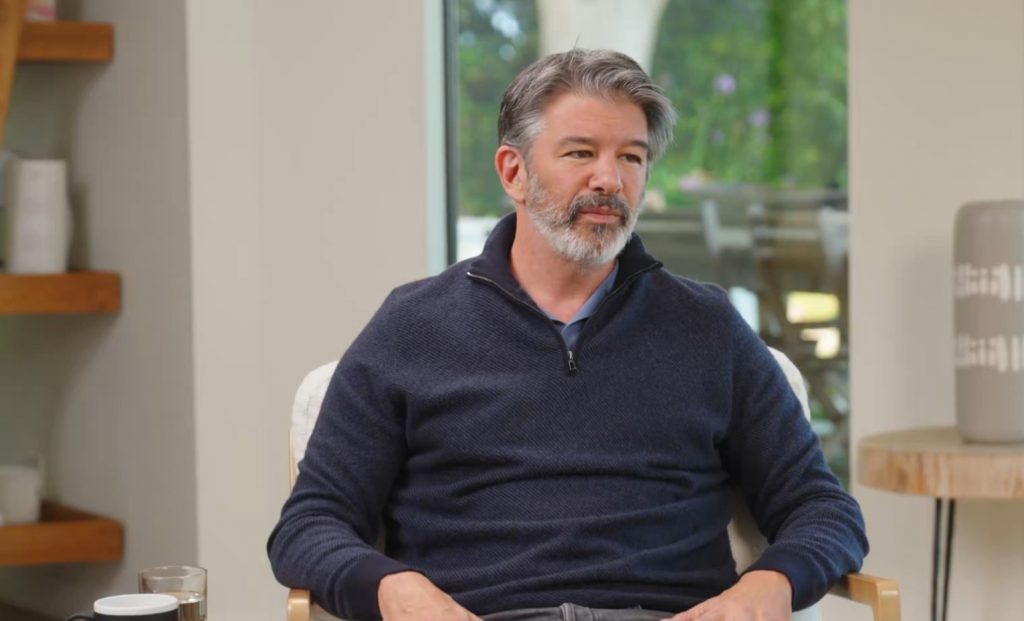
In a recent interview, the Uber co-founder was asked what he tells younger founders about picking investors, and his answer wasn’t the usual talk about smart money or value-add. According to Kalanick, the real bar to clear is much lower than that. Find a VC who does no harm, he said, and you’re already ahead of most founders. Find one who’s actually helpful, and you’ve hit the jackpot.
Kalanick put a number on it too. Only about 10 percent of VCs manage to stay out of the way and not actively hurt the companies they back, he estimated. Of that group, maybe 1 percent cross over into genuinely useful.
The Chess Grandmaster And The Enthusiast
Kalanick’s explanation for why this bar is so hard to clear rests on an analogy he’s clearly thought about a lot. A founder running a company, he argued, is like a grandmaster playing chess professionally, putting in 60 to 80 hours a week, thinking several moves ahead, seeing patterns nobody else in the room can see. The VC, by contrast, is a chess enthusiast who wanders by once a quarter, glances at the board, and starts offering opinions.
“The VC is a chess enthusiast, and they check in on the chess match once every three months, and they’re like trying to make a mark on the world,” Kalanick said. “They have an opinion. They’re trying to make a mark. Hey, why don’t you do this or that?”
His advice on what founders should do with that kind of input was blunt. Don’t go to Jordan and tell him how to dunk, he said, and definitely don’t tell him how to dribble.
What makes the dynamic frustrating, in Kalanick’s telling, isn’t that VCs are dumb or careless. It’s that the gap in time and immersion between a board member and an operator is so wide that even well-intentioned advice tends to land wrong. “If you’re not in the thing all in, all the way, every day, twelve to sixteen hours a day, on this game, it ain’t a thing,” he said. “But that’s a hard thing for most people to take who aren’t running shit.”
Why VCs Struggle To Just Leave Founders Alone
Asked why investors find it so hard to hold back, Kalanick pointed to the incentive structure of the job itself. VCs occupy a glamorised seat at the table, he said, one that comes with real power and a natural pull toward wanting to be seen shaping outcomes.
He then reached for a second metaphor, this one from the Serengeti. A limping antelope gets taken down by a lion even when the lion isn’t hungry, Kalanick said, because that’s simply what a lion does. It doesn’t always know why. “If you are on the Serengeti and limping, you will be eaten. It’s just the nature of it,” he said.
The comparison lands because of Kalanick’s own history at Uber. He was pushed out as CEO in 2017 after a board revolt led by Benchmark, one of Uber’s earliest and largest backers, following a string of scandals involving workplace culture and a since-dismissed lawsuit that dragged on for months over control of Uber’s board. Kalanick eventually stepped down from that board entirely in December 2019 to focus on his next venture, CloudKitchens, which he later built into a multi-billion dollar business while keeping the company almost entirely out of public view during its early years.
That experience colours everything about how he frames this conversation now. When Kalanick talks about VCs circling the moment a company shows weakness, he isn’t speaking hypothetically.
He’s Not The Only One Saying It
Vinod Khosla, the Sun Microsystems co-founder who now runs Khosla Ventures, made an even harsher claim a couple of years ago when he said that 90 percent of startup investors add no value to the companies they back, and that 70 percent actively make things worse. His reasoning tracked closely with Kalanick’s chess analogy — Khosla argued that most people sitting on boards simply haven’t earned the right to advise a founder, because they’ve never built anything themselves. “Just because you got an MBA and joined a venture firm doesn’t mean you’re qualified to advise an entrepreneur,” he said, pointing out that the real qualifier is whether someone has personally gone through how hard, uncertain, and traumatic building a company actually is.
What makes Khosla’s comments notable is that he’s saying this as an active investor, not a founder nursing an old grudge, which suggests the sentiment runs deeper in the industry than boardroom small talk usually lets on. Between Kalanick’s antelope on the Serengeti and Khosla’s 70 percent doing active damage, the picture that emerges is one where the loudest critics of venture capital increasingly sit inside the tent rather than outside it.