Travis Kalanick built Uber into one of the most consequential companies of all time, and he did it by fundamentally reversing what the fundraising process is like.
In a recent interview with a16z, Kalanick walked through the mechanics of how he ran Uber’s funding rounds, and it sounds less like a startup pitching investors and more like an auction house working a room. “And so I have this whole fundraising process that I would do just to perfection, and that means I’d run an auction,” he said. He described meeting with the a16z partners, along with several other firms, and treating the entire exercise as what he called “a winner-takes-all auction, meaning there’s one major lead. They’re gonna set the price, and then everybody else will fall in.”
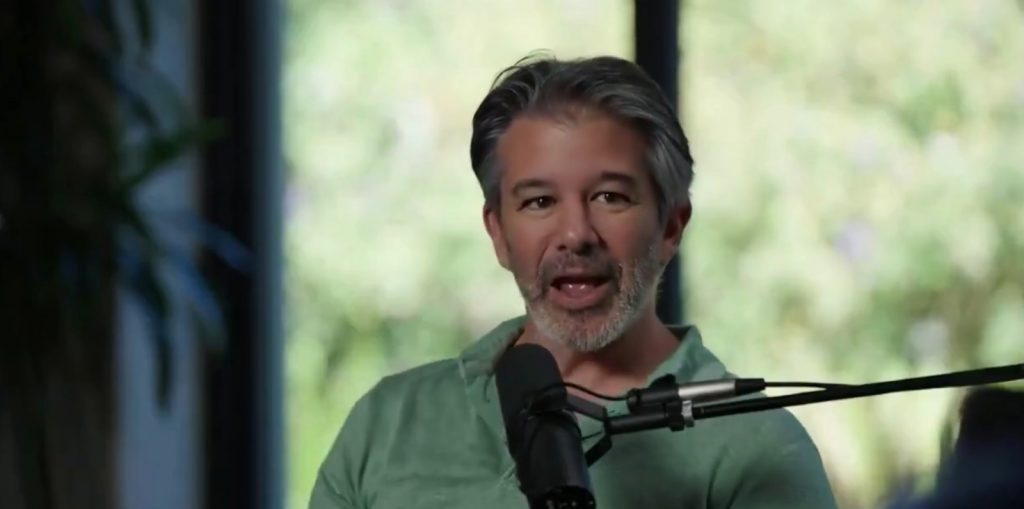
The way Kalanick tells it, the process would begin with a single investor. He’d walk them through Uber’s story, and the reaction was usually immediate. “They’re like: ‘You know, we’re interested.’ He’s leaning forward,” Kalanick recalled. That’s when the investor would ask the obvious question, the one every founder dreads answering directly. “They’re like: ‘So how much are you raising? What’s the price?'” And rather than naming a figure, Kalanick had a specific answer prepared, one he’d repeat, almost word for word, to every investor who asked it.
“This is gonna be one of the hottest deals in Silicon Valley this year. We don’t know where the price is gonna be, where it’s gonna go to, but it’s at least blank,” he said he’d tell them. Kalanick has a name for this move. “I call this the uncapped anchor, meaning I’m never in a place where I’m negotiating with somebody where I’m here, and they’re here, and we meet in the middle. I’m always saying it’s at least this, and it can go up. But I start low — so it’ll only go up.”
The effect on the room, according to Kalanick, was instant. “So that everybody’s pumped,” he said. “Leaning forward. He’s like: ‘Okay.’ You could see body language. You can read. It’s good.” Then he’d move to the next meeting, and the pattern would repeat almost identically. “You go to the next. The next guy literally comes to your office an hour later. Same thing happens. He’s fired up. I’m showing all the analytics. It’s great.” The investor would ask the same question about price, and Kalanick would give him a number that had already moved. “I’m like It’s if the last one was at least 2X our previous round, it just became 3X. I’ll say, ‘We don’t know. It’s gonna be one of the top deals in Silicon Valley this year, but it will be at least 3X our last round.’ And he’s like, ‘Okay.'”
From there, the loop tightened. Kalanick would circle back to the investor he’d spoken to first, and let the new number do the talking for him. “You then go call the guy before and you’re like, ‘Hey, just, hey, look, dude, this went from 2X to 3X. You know? We’ll see where it goes. I don’t know.'” That was enough. “They start getting nervous,” he said. He’d keep working the room this way, investor after investor, each one anchored a little higher than the last, until he reached the top of the market and closed it out the way an auctioneer would. “Anyways, you get all the way to the top, and then you go, ‘Going once, going twice.'”
What’s notable about Kalanick’s account is how procedural he makes it sound. There’s no mention of leverage he got lucky into, or a hot market that did the work for him. He designed a sequence, tested it meeting after meeting, and ran it the same way each time — same phrasing, same body language reads, same follow-up call to the investor left behind. Silicon Valley fundraising is typically described as founders competing for a scarce pool of capital, pitching, waiting, hoping a term sheet arrives before the runway does. Kalanick describes something closer to the reverse, where he treated a room full of some of the best-funded firms in the world as bidders in a single auction, and never once let the price be set by anyone but him.
The “uncapped anchor” is really just a negotiating discipline, but the discipline is the whole point. Most founders, when asked what they’re raising at, either name a number or hedge with a range, both of which give the investor something to negotiate down from. Kalanick refused to give either. By naming only a floor, and one that kept moving up meeting to meeting, he made every investor’s fear of missing out do the negotiating for him. It’s worth remembering this was happening while Uber was still a comparatively young company, years before it became the most valuable startup in the world, and long before Kalanick would eventually be pushed out of the company he built. The auction tactic wasn’t a symptom of Uber already being an obviously great bet. It’s what made it look like one.