Google appears to be getting ready to release another model in the Gemini 4 family. Pricing entries for a model called “Gemini 4 Neon” have shown up in Google Cloud’s SKU listing for the Gemini API, with text input priced at $3 per million tokens and text output at $15 per million tokens. Google hasn’t announced the model, and there’s no word yet on when it might launch.
The listing includes the standard SKU entries for “Generate content input token count gemini 4 neon text” at $3.00 per million tokens and “Generate content output token count gemini 4 neon text” at $15.00 per million tokens, both for the global region. The SKUs sit alongside a full set of pricing tiers, which suggests the model is fairly far along in preparation.
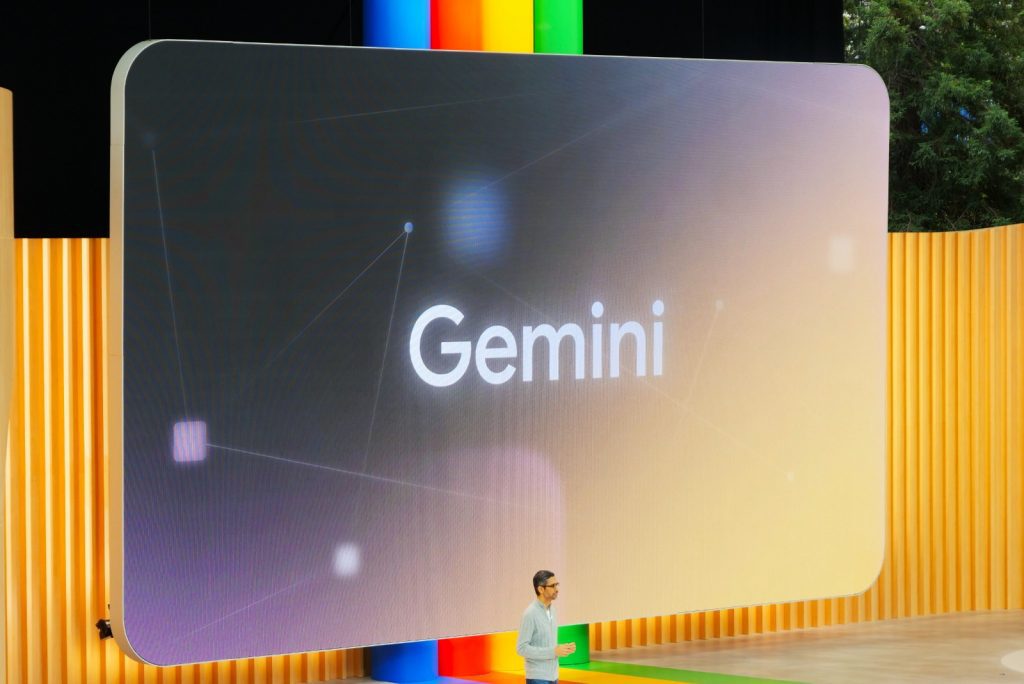
The timing is hard to ignore. Around the same time the SKUs surfaced, Google DeepMind’s Logan Kilpatrick, who leads product for Google AI Studio and the Gemini API, posted a single word on X: “Gemini”. The post has pulled in over 740,000 views. The post doesn’t say what’s coming, and Google hasn’t linked it to Neon.
The full price list
Neon’s SKU listing shows the following tiers:
| Tier | Input (per 1M tokens) | Output (per 1M tokens) |
|---|---|---|
| Standard | $3.00 | $15.00 |
| Cached input | $0.15 | — |
| Batch | $1.50 | $7.50 |
| Flex | $1.50 | $7.50 |
| Contributor | $1.50 | $7.50 |
| Priority | $5.40 | $27.00 |
Batch, flex and contributor pricing all come in at half the standard rate, while priority processing carries an 80% premium, at $5.40 for input and $27 for output. Cached input is 95% cheaper than standard input at $0.15, the same discount Google has used on its other Gemini 4 models. Batch, flex and priority tiers also have their own caching rates, at $0.075, $0.075 and $0.27 respectively.
Where $3/$15 fits
The price puts Neon in an interesting spot in Google’s lineup. Gemini 4 Argon launched at an introductory $2/$10, and Gemini 4 Carbon, the model that currently sits at the top of Google’s lineup, launched at the same rate. Google has said both will move to $4/$20 on December 1, which would make Neon 25% cheaper than its older siblings at their standard rates, but 50% more expensive than what they cost today.
It’s also exactly double the price of Gemini 4 Hydrogen, the Flash-tier model Google released on November 12 at $1.50/$7.50. That makes Neon a clear step up from the cheap tier, but not as expensive as a full flagship.
Against rivals, $3/$15 is 50% above Anthropic’s Claude Sonnet 5.5, which costs $2/$10, and a quarter below Claude Opus 5.5, which costs $4/$20. Sonnet 5.5 scored 56 on the Artificial Analysis Intelligence Index at launch, though it did so while using a very large number of output tokens, which means list price alone doesn’t tell you what a task will cost.
What could Neon be?
Google has been moving quickly through the Gemini 4 generation, naming each model after a chemical element. Argon arrived on September 30, Carbon followed on October 28, and Hydrogen came two weeks later, making it three new models in about six weeks. Hydrogen was preceded by X users spotting the codename before launch, and Neon may be following a similar path.
One possibility is that Neon is a new name for Gemini 4 Krypton, a checkpoint that X users said earlier this month looked like an upgrade on Carbon. Testers reported it used far more thinking tokens than Carbon and produced more detailed outputs, which would be consistent with a model priced above Argon’s and Carbon’s introductory rate. But there’s nothing in the SKU listing that links the two, and Neon could just as easily be a separate model.
Either way, the pricing suggests Google is building out the middle of the Gemini 4 range after releasing a flagship and a Flash model. Google has also shown a willingness to adjust prices over time, having raised the Flash tier’s price threefold with Gemini 3.5 Flash before cutting it again with later releases, so launch pricing for Neon may not be where it stays.
For now, the model remains unannounced, and SKU entries aren’t a guarantee of a launch date. Given the cadence of releases so far, though, it likely won’t be long before Google says more.