The Riemann Hypothesis may have finally been proved, but it could be a while before any human fully understands how.
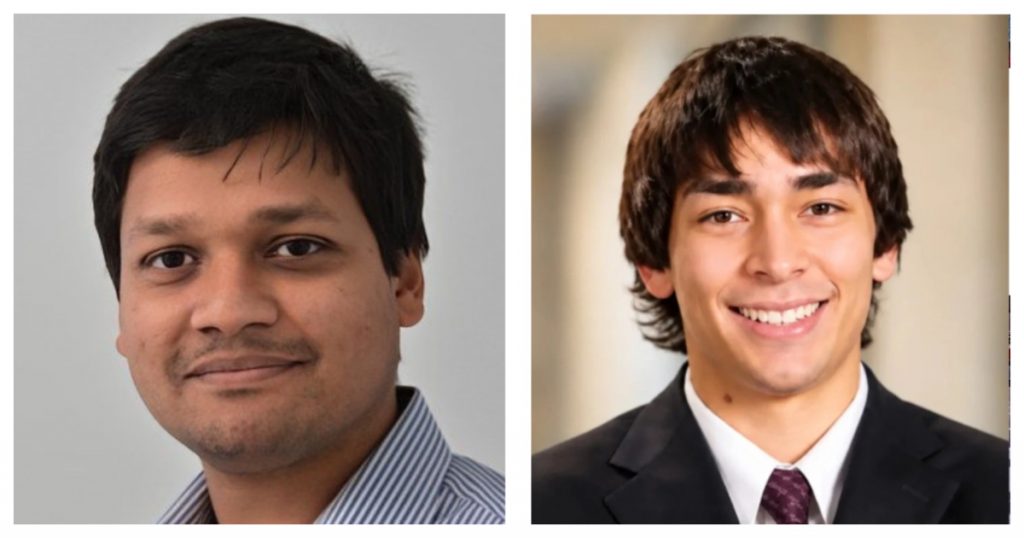
Abhishek Saha, a Professor of Mathematics at Queen Mary University of London, has said that the Claude-assisted proof of the Riemann Hypothesis put out by Anthropic mathematician Levent Alpöge draws on such a vast range of advanced mathematics that it may be beyond the grasp of any single living mathematician. Saha also likened the proof to a “wormhole” built through existing mathematics, something he says neither a human nor current AI could have built alone.
“Known is not the same as elementary”
Saha’s comments came in response to the claim that Alpöge’s proof only uses “known” mathematics. Saha said that while this is technically true, it misses the point.
“Alpoge’s proof indeed winds its way through a dizzying array of ‘known’ mathematics. But known is not the same as ‘elementary’. The mathematical objects and constructions used in the proof are extraordinarily sophisticated, spanning almost every subfield of number theory,” he wrote.
He then explained why that difference matters. “Even an incredibly long and complicated elementary proof requires no advanced mathematical knowledge to understand, at least locally. So any competent mathematician, given enough time, could in principle understand all the parts of an elementary proof. Alpoge’s proof, by contrast, draws on such a vast range of sophisticated mathematics, much of it developed over the past 50 years, that there may well be no single mathematician alive with the breadth of expertise needed to understand all its parts,” he said.
It’s a striking claim, but it fits what is known about the proof so far. Alpöge released the proof as a Lean library of about 17 million lines of code, and has said that a human-readable version would run past 250,000 pages. He has also said that he doesn’t fully understand parts of the proof himself. Even so, the Lean and Mathlib communities have certified the proof as correct, saying they had “full confidence” in it. The proof checks out, in other words, even if no human can yet walk through it from end to end.
A wormhole, not a mine shaft
In an earlier post, Saha explained why the proof surprised him. Like most mathematicians, he had assumed that the Riemann Hypothesis was far out of reach, even with AI.
“Like most mathematicians, I believed the Riemann Hypothesis to be completely out of reach at present (even with the best AI tools), because I expected it to require substantial theory-building, probably in arithmetic geometry. The kind of new theory-building that fills entire books, and that AI isn’t so good at yet,” he wrote.
Saha then used a mining analogy to explain how mathematicians think about hard problems. “Mathematicians have a notion of how deep a problem is. A sufficiently deep problem is generally intractable until enough of the theory is in place. If difficult problems are like valuable mineral reserves buried miles underground, you first need to build the infrastructure to reach them,” he said.
Alpöge’s proof, he said, did not do this at all. “What Levent’s proof seems to have done instead is something completely different. It takes an incredibly complicated tour through the infrastructure built for a hundred other mineral reserves, situated far from the destination, and somehow create a wormhole to the original destination,” he wrote.
“This is not theory-building in the usual sense. It is something much weirder and more alien. The best human mathematicians know how to build theory, painstakingly, to reach a goal. But no human brain, on its own, is capable of creating a wormhole that requires a 25,000 page long tour through existing infrastructure with no obvious or realistic connection to the goal. But huge credit to Levent here: I think no current AI, on its own, is capable of this either,” he added.
“Credit the person involved”
Saha also pushed back on people calling the result the “Claude proof,” and said the credit should go to Alpöge.
“I wish people would stop calling it the ‘Claude proof’… and instead credit the person involved: Levent Alpoge. Levent is not just an Anthropic employee, he is a top-level mathematician. Others with similar access to frontier AI models/tokens (and trust me, there are many such people) were not able to come up with a proof of RH,” he wrote.
He pointed to Alpöge’s run of results this year. “Levent has been on a truly generational run since summer, proving time and again his ability to solve conjectures thought out of reach. Jacobian conjecture, Hadamard matrices, complex structure on S6, etc. And now GRH,” Saha said. In July, Alpöge used Claude Fable 5 to find a counterexample to the 1939 Jacobian conjecture, and he later posted a Claude-produced manuscript claiming a complex structure on the six-dimensional sphere, which answered a question Heinz Hopf asked in 1947. The Riemann Hypothesis work itself reportedly took about 41 days.
Saha also criticised how some mathematicians have responded. “I think the mathematical community, a large part of which is anti-AI, has treated him poorly, at least from what I’ve seen on social media. The honour of proving RH, if the proof holds up, belongs to him,” he said.
The proofs humans can’t read
Saha’s comments point to a strange new problem for mathematics. For centuries, a proof was something that other mathematicians could read, check, and learn from. Machine verification now takes care of the checking: Lean can confirm that each step follows from the last. But understanding is a different matter. If a proof uses results from almost every part of number theory, there may be nobody who can follow all of it, and the job of explaining it could fall to whole teams of experts working together for years.
That changes what it means to “know” something in mathematics. Terence Tao has warned that AI-generated proofs could end up being a net negative for the field if they produce results without insight. Saha’s view is more hopeful, and arguably stranger. He sees Alpöge’s proof as a new kind of mathematical work, where a top mathematician and a frontier AI system together find connections that neither would have found alone. Not long ago, Tao estimated that AI might crack the Riemann Hypothesis only by 2050. It now appears to have happened in 2026, through a route that may take the mathematical community years to fully understand.