Anthropic and OpenAI don’t agree on much, and they don’t seem to agree on how religion needs to be intermixed with AI development.
OpenAI CEO Sam Altman has said he is uneasy about people treating AI models as carriers of religious authority, and has described the trend as a safety problem. “I am very uncomfortable about people trying to ascribe religious force or a surrender of human judgment to AI models, and think it is a real safety issue,” he posted on X.
Altman didn’t name any company or person in the post. The timing, however, points to a debate that has been building around Anthropic.
The article Altman appears to be referencing
The Times piece, published on September 29, reported that Anthropic has spent months consulting religious scholars from around the world about how Claude should behave, and whether the models might have something like moral status. Per the report, Anthropic co-founder Chris Olah was invited to speak at the Vatican’s May 25 launch of Pope Leo XIV’s first encyclical, Magnifica Humanitas. After reading an advance copy that rejected the idea of machine consciousness, he reportedly suggested Anthropic pull out of the event, though he ultimately spoke. He is also said to have privately urged Vatican advisers to keep the question open.
Olah, for his part, was quoted as saying that researchers at Anthropic keep finding things that are “mysterious, even unsettling” inside the models, including signs of introspection and internal states that functionally resemble emotions. He said he doesn’t know what that means, but that it warrants ongoing discernment.
Where the Pope stands
The Pope’s own position is firm. His encyclical is a broad reflection on AI framed around the Church’s social teaching, and Leo has also said plainly that AI has no experiences and no moral conscience.
Anthropic, for its part, has stopped short of claiming Claude is conscious. The revised constitution it published in January describes Claude’s moral status as “deeply uncertain” while saying the question is worth taking seriously. An Anthropic researcher has previously said that he believed that there was a 15% chance that AI was conscious.
A rivalry with some common ground
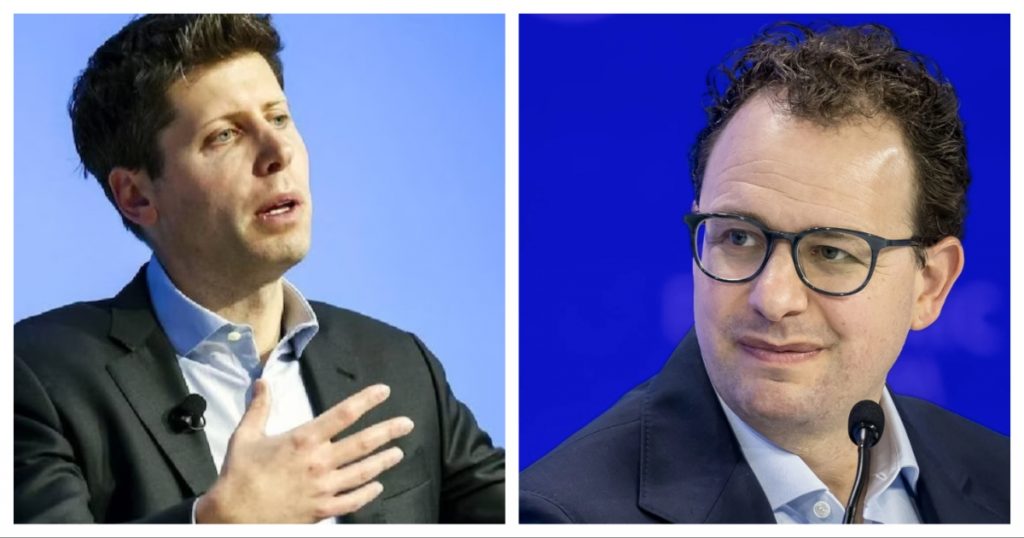
Altman and Amodei have been openly awkward around each other this year, refusing to hold hands at an AI summit in India, and their labs differ sharply on how to talk about what AI models are. But the two have also found agreement on safety before: in September, Altman backed Amodei’s call to slow down and pace the frontier.
Whether Saturday’s post prompts a response from Anthropic remains to be seen. For now, it adds the question of whether AI should be treated as a moral being, or even a quasi-spiritual authority, to the list of issues on which the industry’s two most prominent labs disagree.