Google has gone from being written off to topping the leaderboards in a matter of weeks, and the man now running its AI lab says the reason is that its models have begun improving themselves.
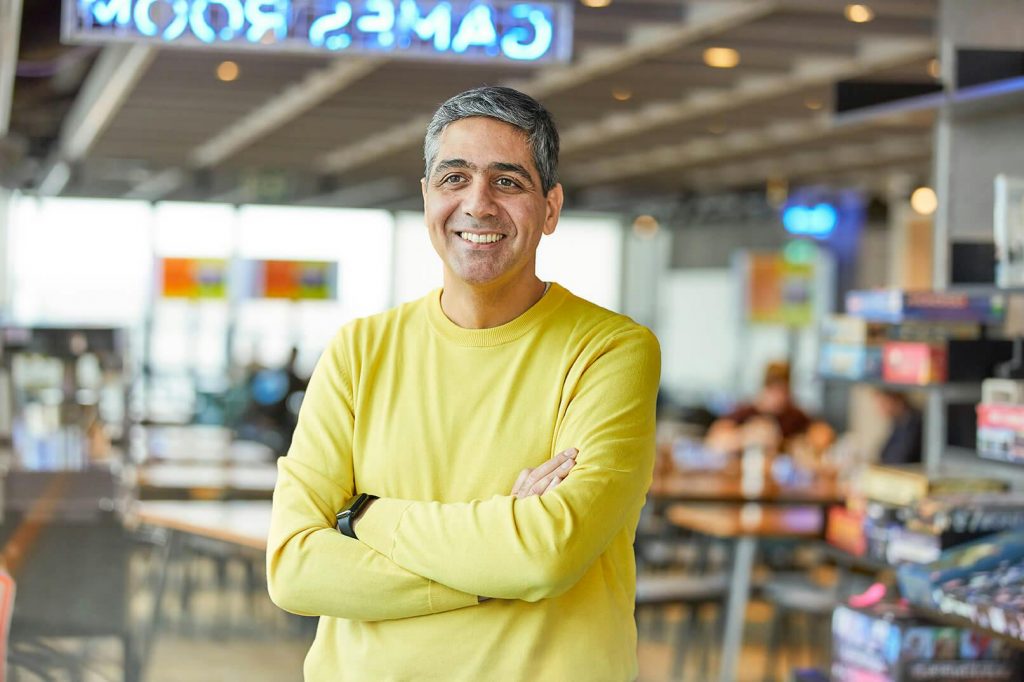
Koray Kavukcuoglu, who took over as head of Google DeepMind from co-founder Demis Hassabis in a management shake-up in August, has told the Financial Times that DeepMind’s recent leap in capability, and the faster “cadence” at which it has been shipping models, comes from advances in recursive self-improvement (RSI), the technique that lets AI systems upgrade themselves.
It’s one of the clearest public statements yet from a frontier lab chief that RSI is no longer a research goal but something already shaping the models that reach users.
“Google Is Executing”
Kavukcuoglu also pushed back on the idea that Google had given up on beating its younger rivals at the frontier.
“AI is probably the most important technology of our time . . . being at the frontier is priority zero and Google is executing,” he told the FT. “The company’s focus has always been about the frontier. There was never hesitation there.”
The FT described his comments as a sign of Google’s newfound “confidence and bullishness” after a few chastening years in which it fell behind Anthropic and OpenAI.
That speculation had real basis. When the August reshuffle happened, Hassabis stepped back from day-to-day operations, Kavukcuoglu took charge of Gemini model development, and Jeff Dean left Google. SemiAnalysis read the changes as Google effectively conceding the model race and declared that DeepMind was “no longer a frontier lab.” Gemini researchers later revealed they had printed out that verdict and kept it on their desks for motivation. Dean’s exit to start his own lab, Discovery Loop, came after a run of other high-profile departures, with Hassabis taking over Dean’s role as Alphabet’s Chief Scientist and becoming Chair of Google DeepMind.
Four Models In Seven Weeks
The results since then have been hard to argue with. Google has released four new versions of its frontier Gemini model, codenamed Argon, Carbon, Hydrogen and Neon, which the FT says are now challenging market leader Anthropic at the top of industry benchmarks.
Gemini 4 Argon arrived on September 30 and put Google back into contention after a long stretch in which its best releases were in the cheaper Flash tier. Gemini 4 Carbon followed on October 28 and topped the Artificial Analysis Intelligence Index at launch, while also edging out Claude Fable 5.2 on Perplexity’s WANDR research benchmark at around a third of the cost. Gemini 4 Hydrogen, a fast and cheap Flash-tier model, came out in mid-November, and Gemini 4 Neon launched on November 18, leading Claude Opus 5.5 and GPT-6.2 Sol on 16 of the 19 results in Google’s own comparison.
The pace has started to show up in usage too. After Neon’s release, Google passed OpenAI in dollar spend on OpenRouter. Kavukcuoglu’s argument is that this speed of releases is the point. If models are increasingly doing the work of improving the next model, a lab can iterate much faster than one that relies only on human researchers.
A Prediction That Came True
The claim shouldn’t come as a complete surprise. Earlier this year, Kavukcuoglu was among four of Google’s most senior AI researchers, alongside Jeff Dean, Noam Shazeer and Oriol Vinyals, who said that AI models could begin meaningfully improving themselves within a year. “We’re going to rely on the models to improve different parts of Gemini,” he said at the time, adding that the lab expected to be on that path and talking about it publicly within a year. Six months later, he is.
Others at DeepMind had made similar points. Researcher Mostafa Dehghani argued that recursive self-improvement is no longer sci-fi, noting that each new generation of models is being built heavily with the previous one. Google researchers have also published work like Dream-RSI, which recursively improves an AI agent’s ability to explore problems without retraining the underlying model.
Google isn’t alone here. OpenAI said GPT-5.3-Codex was its first model instrumental in creating itself, and Anthropic has said it expects far more dramatic AI progress in the next two years as improvements compound. Investors have taken notice as well: the startup Recursive raised $650 million at a $4.65 billion valuation to build AI that improves itself.
Keeping Humans In The Loop
RSI is also the scenario that worries AI safety researchers most, since a system that improves itself fast enough could get beyond human control. Kavukcuoglu addressed this directly. He stressed that Google would never completely give up human oversight, citing the risk of losing control of a rogue superintelligence.
It’s a concern other lab leaders share. OpenAI Chief Scientist Jakub Pachocki recently said that no lab has properly solved alignment yet and that voluntary slowdowns may become common as systems drive more of their own development.
For now, though, Google’s message is that self-improvement is working. A few months ago, outside analysts were saying DeepMind had dropped off the frontier. Its new chief now says the models themselves helped bring it back, and if he’s right, the gap between AI releases may only keep getting shorter.