In a blog post titled “HOLY SHIT HOLY SHIT HOLY SHIT HOLY SHIT,” the theoretical computer scientist also says that, for the first time, he feels a proof of P ≠ NP is not far away.
One of the world’s best-known theoretical computer scientists believes AI labs may already have algorithms that can break the encryption the internet relies on today.
Scott Aaronson is a professor of computer science at the University of Texas at Austin and director of its Quantum Information Center. In a blog post published on November 25, he wrote that the new mathematical results coming out of AI labs will include not just lower bounds but “shocking upper bounds,” otherwise known as algorithms, and that “some of those algorithms will break currently deployed cryptosystems.”
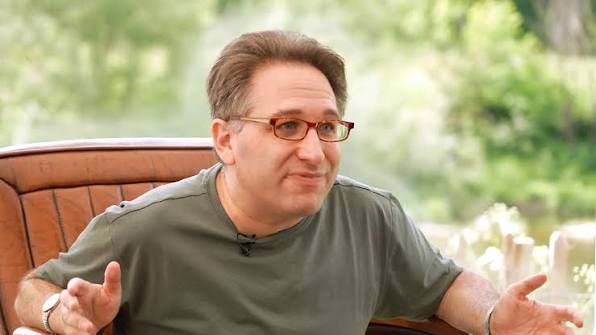
He then addressed the question he says people have been “hounding” him about: “yes, I’m virtually certain, from multiple reliable sources, that the AI labs are now sitting on one or more bombshells in that area.”
What Aaronson does and doesn’t know
Aaronson attaches a strong caveat. Until he either sees the details or hears directly from someone at a lab, he says he is “much, much less confident about the specific nature of those bombshells.” He adds that he doesn’t want to spread unverified rumors, and he worries that the exact claims “may have been mangled in a game of Telephone.”
He also sounds tired of the question. People whose main worry is their Bitcoin wallet, he writes, should “go somewhere else for rumors about whether or not ECDSA is broken or whatever.” ECDSA is the elliptic-curve signature scheme that secures Bitcoin, Ethereum and much of the web’s infrastructure.
Even so, coming from Aaronson the claim carries real weight. He spent two years at OpenAI working on the theory behind AI safety, and he has built his reputation on deflating overhyped claims, especially about quantum computers breaking encryption.
The signs are already there
AI has been steadily moving into cryptography. Anthropic has said that Claude Mythos discovered weaknesses in cryptographic algorithms, including an attack that halves the effective key strength of a post-quantum signature scheme. Claude also solved a 25-year-old mystery about where NIST’s ECDSA curve seeds came from. Just this week, Google’s Cogentic system released a paper claiming a proven fast algorithm for factoring numbers, the problem on which RSA’s security rests.
Separately, Google has shown that it could be easier to break cryptocurrency encryption with quantum computers than previously thought. If AI-discovered classical algorithms are added to that, the timeline for moving to new cryptography could shrink dramatically for banks, governments, payment networks and anyone storing data that needs to stay secret for years.
“A whole new continent of mathematical truth”
Aaronson insists that cryptography shouldn’t “overshadow the intellectual enormity of what’s happening,” and most of his post is about the math.
He describes hosting friends and colleagues for dinner on Tuesday night. They were still processing the competing proofs from Anthropic and OpenAI that VP ≠ VNP, which came hot on the heels of Levent Alpöge’s Claude-assisted proof of the Riemann Hypothesis. He says the Riemann result “already feels like last week’s news.”
Before dessert, news arrived that OpenAI claims to have proved that the exponent of matrix multiplication is exactly 9/4. OpenAI had already claimed in October that matrices could be multiplied using roughly n^2.25 operations, as part of its release of 722 manuscripts produced by an unreleased internal model. The new paper claims the matching lower bound, meaning no algorithm can do better.
Aaronson says the bigger shock is that an AI managed to prove any lower bound above 2 at all. “I never expected this challenge to be all that much easier than P ≠ NP,” he wrote. Matrix multiplication is the core operation behind modern AI, which makes 9/4 the theoretical speed limit for the arithmetic today’s neural networks run on.
During dessert, Aaronson says, OpenAI released another result: computing the Fourier Transform takes N (log N)^(1/2+o(1)) linear gates. That beats the Fast Fourier Transform’s O(N log N), which has stood since the 1960s, and again comes with a matching lower bound. “All these questions from the ancient days are now just getting … straight-up answered,” he wrote.
He compares the moment to van Leeuwenhoek first pointing a microscope at pond water, or Galileo first turning his telescope to the stars. He says the labs no longer even bother with press releases. They simply upload papers to GitHub, and his guests sat at the table with phones and a laptop out, “wondering which shoe was going to drop next.”
Then comes his most striking line: “I now feel in my bones, for the first time ever, that a proof of P ≠ NP is not far.” VP ≠ VNP is often called the algebraic cousin of P vs NP, although both papers stress that it doesn’t settle P vs NP itself. One developer is already livestreaming dozens of AI agents working on the problem.
“Don’t deny what’s happening”
Aaronson has a pointed message for skeptics. People are free, he says, to despise the AI companies for “bulldozing our garden” or to love them for opening a new vista. What he asks is that they not deny that dozens of great open problems are being solved, and not latch onto trivialities such as minor mismatches between Lean and informal proofs. His working assumption now is that any proof coming directly from OpenAI or Anthropic is correct unless there is information to the contrary.
That puts him at odds with the Association for Human Mathematics and with Terence Tao’s criticism of OpenAI’s mass release. Understanding these proofs is a real challenge: mathematician Abhishek Saha has said no single living mathematician may be able to follow all of Alpöge’s Riemann proof. Anthropic researchers have since used Claude to shrink that proof from 17.4 million lines of Lean to about 76,000.
“The beginning of an AI singularity”
Aaronson says the past week is “very much like I would’ve always imagined the beginning of an AI singularity to look and feel like.” He hopes it will “merely” be a singularity confined to the corner of the world that deals with hard math problems. If his sources are right about cryptography, though, it may not stay confined there for long.
Only weeks ago, Terence Tao suggested AI might solve the Riemann Hypothesis only by 2050, and Fields Medalist Richard Borcherds now says AI is better than him at research and teaching. Aaronson closes by encouraging readers to spend Thanksgiving with family and old friends: “May we find a world where we and our children will be happy to live at the bottom of this rollercoaster. May we work to make it so.”