For years, the standard reassurance offered to knowledge workers worried about AI was that it would make them more productive rather than replace them. One of the world’s most accomplished mathematicians now says that reassurance no longer applies to him.
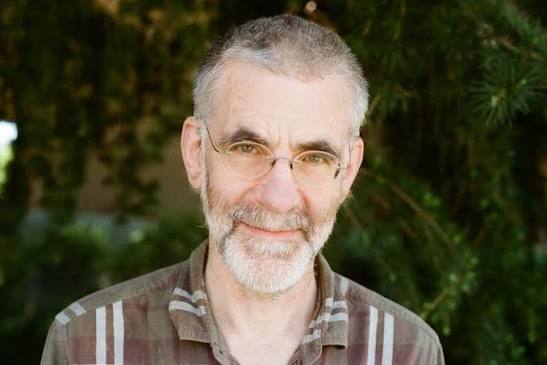
Richard Borcherds, the UC Berkeley professor who won the Fields Medal in 1998 for proving the monstrous moonshine conjecture, has delivered one of the bleakest assessments of AI’s impact on his profession yet. “AI is already better than me at everything,” he said in a recent conversation with mathematician Eric Weinstein. “It’s better at research. It’s better at teaching. There’s no reason for employing me as far as I can figure out.”
Borcherds did allow himself a small caveat, though not a comforting one. “Okay, there are currently things that I can still do better than AI, but I don’t think that will last for very much longer,” he said.
“The biggest event ever in mathematics”
Coming from almost anyone else, such statements might be dismissed as hyperbole. But Borcherds is speaking at the end of a year in which AI has upended mathematics faster than nearly anyone predicted. In May, an OpenAI model disproved Erdős’s 80-year-old planar unit distance conjecture, a result Fields Medalist Tim Gowers called a milestone in AI mathematics. In September, OpenAI said an unreleased internal model had produced a solution to the Navier-Stokes existence and smoothness problem, one of the seven $1 million Millennium Prize Problems. Then in October, the company released over 300 mathematical results produced by an internal model, including claimed proofs of the quasi-Riemann hypothesis and the Unique Games conjecture. And just days ago, a claimed proof of the Riemann Hypothesis made with Claude appeared on Anthropic mathematician Levent Alpöge’s website.
Borcherds sees the scale of this as unprecedented. “This really is the biggest event ever in mathematics,” he said. “You know, we suddenly had several hundred major problems solved.”
He isn’t alone among Fields Medalists in feeling the ground shift. Cédric Villani, once a vocal AI skeptic, described OpenAI’s Navier-Stokes result as a cataclysm unlike anything math has known. Hugo Duminil-Copin said he cried so much it woke up his daughter after OpenAI’s proof release wiped out years of his own research agenda. And this year’s Fields Medal winner, Jacob Tsimerman, joined OpenAI and predicted AI would soon do everything mathematicians do “better and faster”.
A lifetime of training, overtaken
What makes Borcherds’ remarks striking is their candour about the personal cost. Mathematics at his level is the product of decades of relentless study, and he admits it is unsettling to watch a machine overtake it. “It is a little bit disturbing to realize that, you know, I’ve been — spent my entire life training hard to do something which AI can now is, is now better at,” he said.
His comments on teaching carry weight too. Borcherds recently told Berkeley’s student newspaper that student use of AI for homework had become so widespread, and so hard to detect, that he had stopped grading homework for correctness and now grades it on completion alone. If AI can do the problem sets better than the students and explain the material as well as the professor, the traditional model of a university mathematics department starts to look shaky. Tech leaders have been predicting this for a while: Duolingo CEO Luis von Ahn has argued that AI will be better than human teachers, and Demis Hassabis has said personalised AI will take care of rote learning in schools.
“What’s the big deal?”
And yet Borcherds doesn’t seem distraught. He offers a surprisingly philosophical reframing, one that may be a useful template for anyone in a field AI is about to overtake. “On the other hand, having AI being better than me doesn’t really make that much difference,” he said. “There are many human mathematicians who are far better than me, and now instead of N entities that are better than me, there’s, there are N plus one entities that are better than me. What’s the big deal?”
It’s a point worth sitting with. Most professionals, even very successful ones, have spent their careers knowing that someone, somewhere, is better at their job than they are. That knowledge has never stopped them from finding meaning or satisfaction in the work. Borcherds is suggesting that an AI joining the ranks of “people better than me” is, emotionally at least, not a categorically new experience.
The economic question is harder to wave away, and Borcherds himself raised it first when he said he couldn’t see a reason to keep employing him. Other mathematicians are more hopeful about human-AI collaboration: Terence Tao has said AI lets him experiment and try crazier things, and has argued that “Math 2.0” must move past problem-solving now that proofs are no longer scarce. But when a Fields Medalist openly says he can’t figure out why anyone should pay him, it’s a sign that mathematics, often thought of as the purest test of human intellect, may be the first elite profession to fully confront what happens when AI gets there first. The rest of the knowledge economy will be watching closely.